

Our Verdict
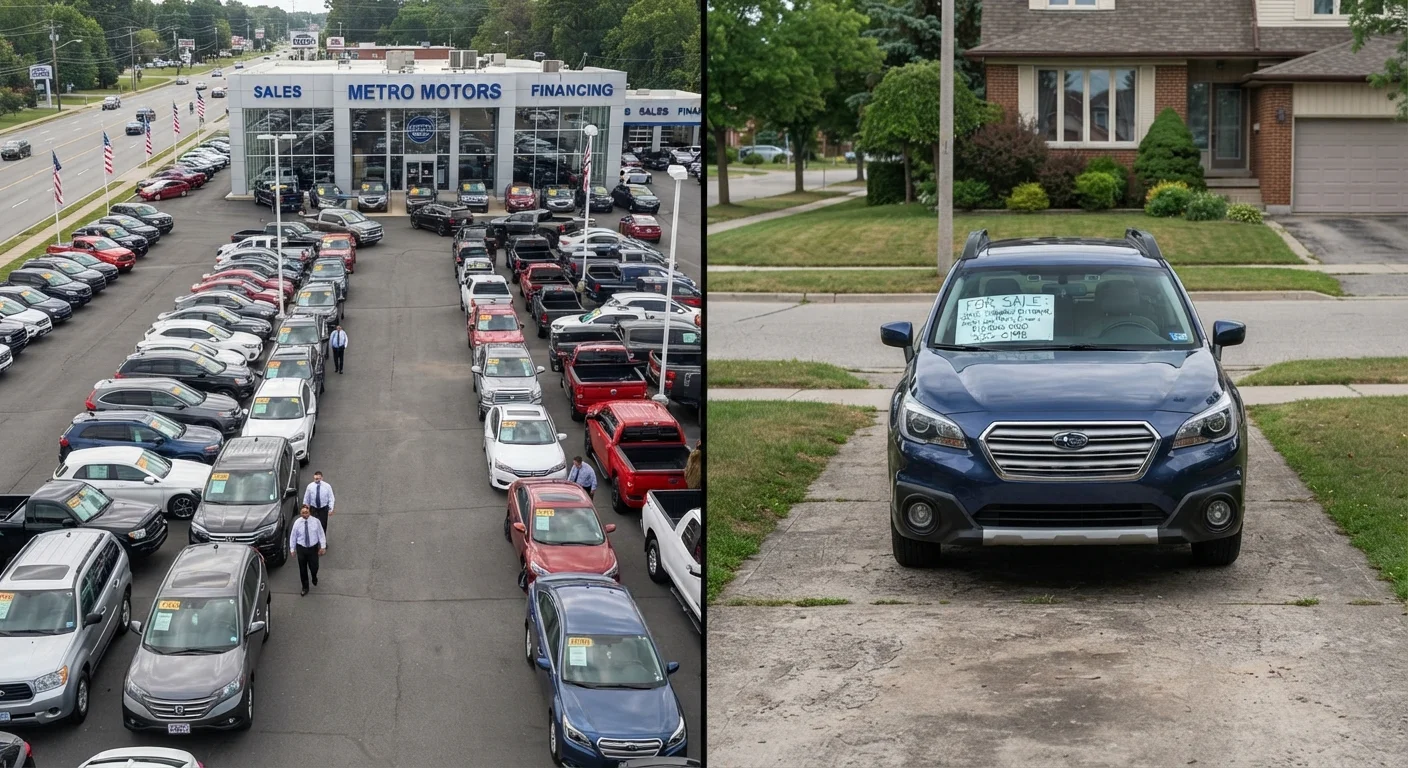
Dealerships provide more built-in safeguards and convenience, making them a stronger fit for buyers who want structured financing, warranty coverage, or recourse if something goes wrong. Private sellers can offer better pricing, but require more due diligence on the buyer's part. Neither option is universally superior — the right choice depends on your experience level, budget, and appetite for risk.
| Best for | Recommended |
|---|---|
| First-time buyers or those who want financing and warranty options | Dealership |
| Experienced buyers willing to do research to find a lower price | Private Seller |
| Buyers seeking certified pre-owned vehicles with inspection documentation | Dealership |
| Those purchasing a specific older or uncommon vehicle model | Private Seller |
How Each Buying Channel Works
When purchasing a used or new vehicle, buyers in the U.S. generally have two primary options: buying through a licensed dealership or buying directly from a private individual. Each channel operates differently in terms of pricing structure, legal protections, and transaction complexity.
Dealerships — whether franchised (selling new and used vehicles from a specific manufacturer) or independent (used vehicles only) — are regulated businesses. They must comply with state and federal consumer protection laws, maintain proper licensing, and handle title and registration paperwork. Private sellers are individual owners who are not subject to most of those requirements. Transactions are more informal, and the buyer takes on a larger share of the due diligence responsibility.
For a deeper look at how digital listings factor into both channels, see how online car shopping works and where it falls short.
Comparing the Two Options Side by Side
The table below breaks down how dealerships and private sellers compare across the criteria that matter most to buyers.
| Criterion | Dealership | Private Seller | |
|---|---|---|---|
| Typical pricing | Generally higher | Often lower | |
| Financing availability | On-site options common | Buyer arranges independently | |
| Warranty options | CPO and dealer warranties available | Sold as-is in most cases | |
| Consumer protections | State and federal regulations apply | Limited legal recourse | |
| Title and paperwork handling | Dealer manages most steps | Buyer responsible for process | |
| Vehicle inspection | Reconditioning done; CPO includes inspection | Buyer must arrange independently | |
| Negotiation flexibility | Structured; may include add-ons | Often more flexible | |
| Risk of undisclosed issues | Regulated disclosure requirements | Higher risk; due diligence essential |
Unfamiliar with terms like as-is, certified pre-owned, or title transfer? Our vehicle buying glossary explains the language you'll encounter in either transaction.
The Case for Buying from a Dealer
Licensed dealerships offer a more structured experience. Financing is typically available on-site, either through manufacturer lending arms or third-party lenders, and buyers can compare loan terms without leaving the lot. Certified pre-owned (CPO) programs — available at franchised dealers — include manufacturer-backed inspections and limited warranties, adding a layer of assurance that private sales cannot match.
Dealers are also legally required in most states to disclose known defects and provide a completed title. If a vehicle turns out to have a branded title (such as salvage or flood damage) that wasn't disclosed, buyers generally have clearer legal recourse against a dealer than against a private individual.
Get Pre-Approved Before You Visit
Arriving at a dealership with pre-approved financing from your bank or credit union gives you a concrete benchmark for comparing the dealer's financing offer. It also clarifies your budget before negotiations begin, reducing the chance of being upsold on terms rather than price. Pre-approval does not obligate you to use that financing — it's simply a useful reference point.
The trade-off is cost. Dealer pricing tends to be higher, reflecting overhead, reconditioning costs, and profit margin. Buyers may also encounter add-on products — extended warranties, paint protection packages, financing products — that can inflate the final price if not scrutinized carefully.
The Case for Buying from a Private Seller
Private sellers often list vehicles at lower prices than dealers because they have no overhead to recover. For buyers who are comfortable doing their own research, this can represent meaningful savings — particularly on older vehicles where dealer reconditioning costs would otherwise be passed on.
The risks are real, however. Most private sales occur as-is, meaning the buyer accepts the vehicle in its current condition with no warranty or implied guarantee of roadworthiness. There is no consumer protection buffer: if problems surface after purchase, the buyer typically has limited legal recourse unless fraud can be demonstrated.
Never Skip an Independent Inspection
Accepting a seller's word — or even a vehicle history report — as sufficient verification is a common and costly mistake in private sales. A vehicle history report documents past events but cannot reveal current mechanical conditions. A pre-purchase inspection by a trusted, independent mechanic can surface problems that no report will catch, and the cost is modest compared to potential repair bills after purchase.
Title issues are another area of concern. It's the buyer's responsibility to verify that the seller holds a clean, lien-free title. Running a vehicle history report and — ideally — having an independent mechanic inspect the vehicle before purchase are essential steps in any private transaction. If you're considering a classic or specialty vehicle through a different type of sale, understand how auction purchases differ before committing.
Steps That Apply to Both Channels
Regardless of where you buy, certain practices protect you in any vehicle purchase:
- Run a vehicle history report using the VIN to check for accidents, title brands, and odometer discrepancies.
- Arrange an independent pre-purchase inspection by a qualified mechanic — not one affiliated with the seller.
- Verify the title is clean and that the seller's name matches the title exactly.
- Understand what you're signing. Review all documentation before completing the transaction, including any financing agreements or warranty terms.
- Confirm registration and transfer requirements in your state, as timelines and fees vary.
Buyers who approach either channel with preparation and a clear budget are far better positioned than those who rush the process — a principle that applies to most large purchases, whether a vehicle or a home.
The content on this site is for informational purposes only and is not a substitute for professional advice. Always consult a qualified professional for guidance specific to your situation.