

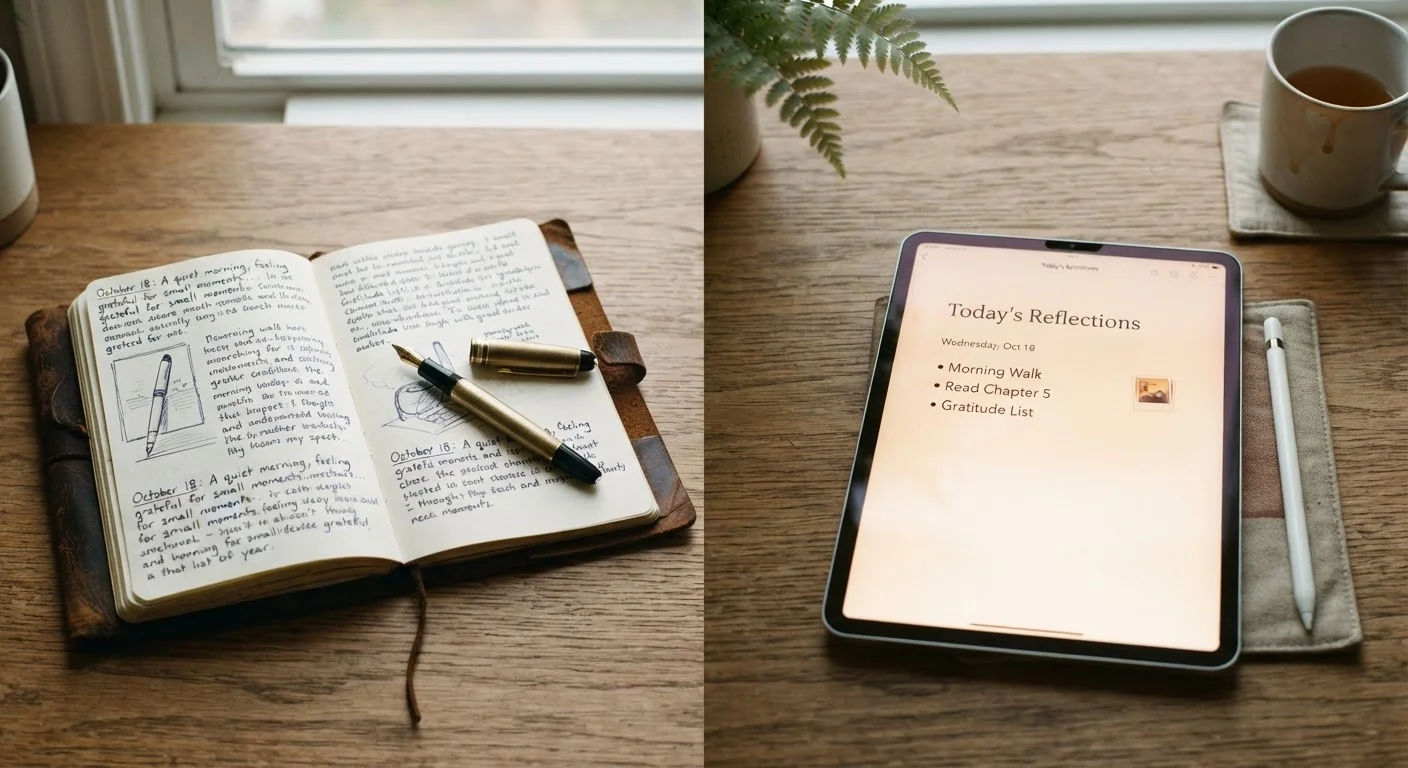
Our Verdict
Both digital and paper journaling offer genuine, research-supported benefits for emotional processing and mental wellness. Handwriting may support deeper reflection through its slower, more deliberate nature, while digital tools lower barriers to consistency and offer practical conveniences. Ultimately, the format that fits your daily routine and feels sustainable is the one most likely to help.
| Best for | Recommended |
|---|---|
| Those who value depth of reflection and minimal distractions | Pen and Paper |
| Those who prioritize accessibility, privacy, and journaling on the go | Digital Journaling |
| Those who want to track patterns and revisit past entries easily | Digital Journaling |
| Those building a mindfulness or stress-reduction practice | Pen and Paper |
Why Journaling Format Matters for Mental Wellness
Journaling has a well-established place in mental health support. Writing about thoughts, feelings, and experiences can help reduce stress, clarify emotions, and build self-awareness — benefits supported by decades of psychological research, including the foundational work of psychologist James Pennebaker on expressive writing.
But as digital tools have become central to daily life, many people face a genuine choice: reach for a notebook or open an app? The decision isn't trivial. The format you use influences how you engage with your thoughts, how consistently you write, and what you get out of the practice. Just as choosing between paper budgeting and digital tools often comes down to workflow fit, choosing a journaling format is a personal decision shaped by habit, lifestyle, and intention.
| Pen and Paper | Digital Journaling | |
|---|---|---|
| Cognitive engagement | Deeper, slower processing via handwriting | Faster input, less motor engagement |
| Distraction level | Minimal — no notifications | Moderate — device distractions possible |
| Privacy | Physical security only | Encryption and biometric lock options |
| Accessibility | Requires carrying notebook and pen | Available on any synced device |
| Searchability | Manual, time-consuming | Instant keyword search |
| Consistency support | Self-directed | Reminders, prompts, streaks available |
| Mindfulness benefit | Strong — tactile ritual aids focus | Variable — depends on app and habits |
The Case for Pen and Paper
Handwriting engages the brain differently than typing. Neuroscience research, including a 2023 study published in Frontiers in Psychology, suggests that the fine motor demands of handwriting activate broader neural networks associated with memory encoding and emotional processing compared to keyboard input. This slower pace may encourage more deliberate, reflective thinking rather than reactive venting.
Paper journaling also removes a significant environmental obstacle: the digital device itself. Screens carry notifications, social media, and the pull of other apps — all of which compete with focused introspection. A physical notebook creates a contained, distraction-free space that many writers describe as more intimate and honest.
Start Small to Build the Habit
Whether you choose paper or digital, consistency is more valuable than length. Even five minutes of unstructured writing several times a week can yield measurable stress-reduction benefits, according to expressive writing research. Set a low, manageable goal at the start and raise the bar only once the habit feels natural.
There is also something to be said for ritual. The tactile experience of choosing a notebook, uncapping a pen, and writing by hand can serve as a mindfulness cue — signaling to your brain that it's time to slow down and reflect.
The Case for Digital Journaling
Digital journaling removes many of the practical barriers that cause people to abandon a paper practice. A smartphone is almost always within reach, making it easier to capture thoughts during a lunch break, a commute, or a sleepless night. Apps designed for journaling often include reminders, mood tracking, and prompts — features that actively support consistency.
Privacy is another meaningful advantage. Digital entries can be protected with biometric locks or encryption, providing a level of security that a physical notebook simply cannot. For those writing about sensitive experiences, this protection may make honest expression feel safer. Searchability is a practical bonus too: finding an entry from months ago, or tracking how your anxiety tends to spike around certain events, is far simpler with digital tools.
For people already comfortable navigating their lives through screens — similar to how digital tools have transformed other personal decisions, such as online car shopping — a digital journal may feel like a natural, frictionless extension of existing habits.
Making the Right Choice for You
There is no universally superior format. The most effective journaling method is the one you will sustain. A few guiding questions can help clarify the fit:
- Do you want to minimize distractions? Pen and paper may serve you better.
- Do you need flexibility and portability? A digital option may be more sustainable.
- Are you processing trauma or intense emotions? Some therapists recommend handwriting specifically for deep emotional work, though personal preference is always relevant.
- Do you benefit from data and pattern recognition? Digital tools with mood-tracking features offer insights paper cannot.
Some people find value in a hybrid approach — keeping a physical journal for morning reflections and a digital app for quick, on-the-go entries. Both formats can coexist and serve different emotional needs at different moments.
This article is for informational purposes only and is not a substitute for professional mental health advice, diagnosis, or treatment. If you are experiencing significant emotional distress, please consult a qualified mental health professional.
The content on this site is for informational purposes only and is not a substitute for professional advice. Always consult a qualified professional for guidance specific to your situation.