

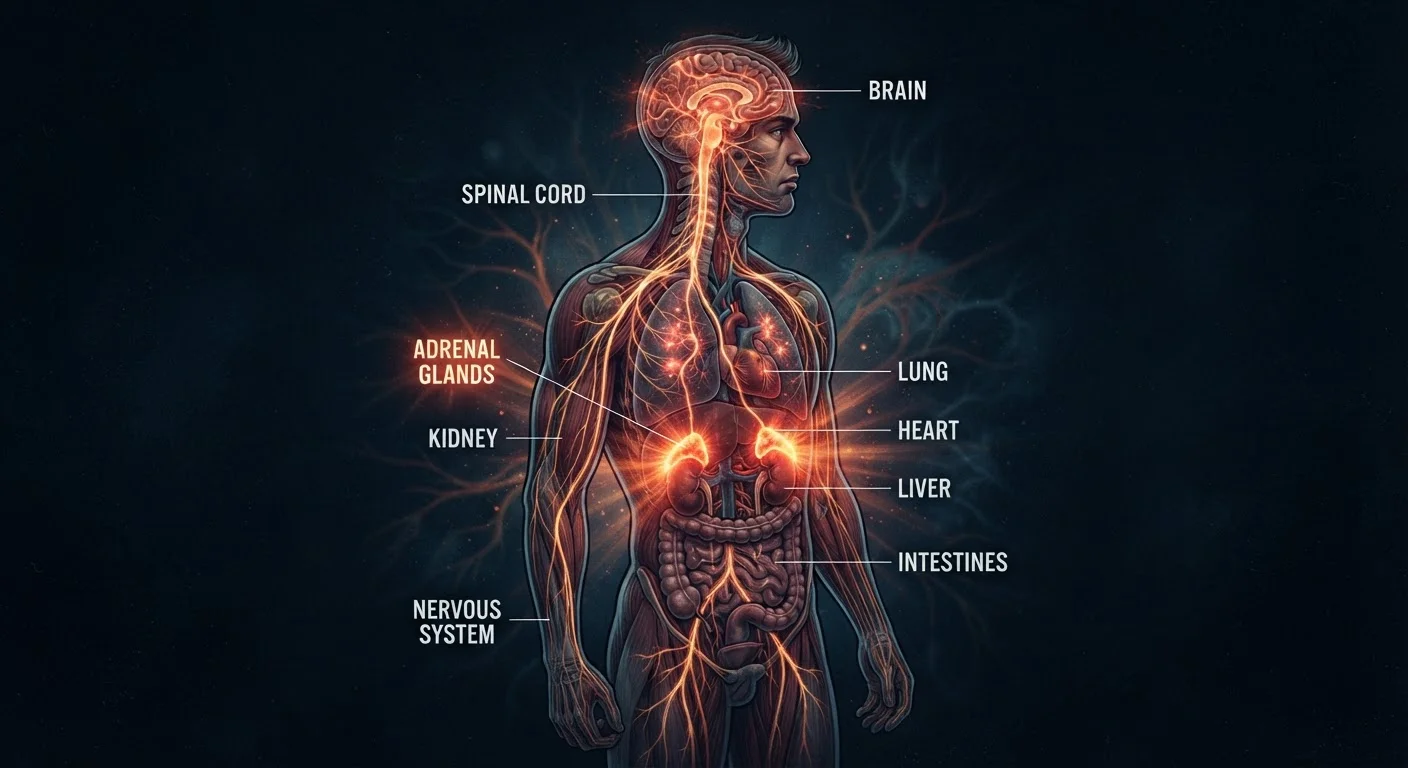
The Alarm Signal: Your Brain Starts It All
Every stress response begins in the brain, specifically in a region called the amygdala — a small, almond-shaped structure that processes emotional significance. When it detects something potentially threatening, whether a car swerving into your lane or a high-stakes work deadline, it fires an alarm signal to the hypothalamus.
The hypothalamus acts as a command center, activating two systems simultaneously: the sympathetic nervous system (which works within seconds) and the hypothalamic-pituitary-adrenal (HPA) axis (which unfolds over minutes). Together, they orchestrate every physical symptom you associate with feeling overwhelmed.
Importantly, the amygdala cannot easily distinguish between physical danger and psychological pressure. A threatening email and an oncoming car can trigger remarkably similar biological responses.
The Hormone Surge: Adrenaline and Cortisol
Within seconds of the alarm signal, the adrenal glands — located just above your kidneys — release adrenaline (also called epinephrine). This hormone immediately raises your heart rate, dilates your airways, and redirects blood flow toward your muscles. Your pupils widen to sharpen vision. Digestion slows because it is not a priority when survival is at stake.
Minutes later, the HPA axis drives the release of cortisol, often called the primary stress hormone. Cortisol sustains the response by mobilizing glucose for energy, suppressing non-essential functions such as immune activity and reproduction, and keeping the brain on high alert.
Both hormones are essential — and in short bursts, they are beneficial. The problem arises when the alarm never fully resets. Chronically elevated cortisol has been associated with increased cardiovascular risk, as detailed in our article on stress and heart health.
Physical Symptoms Explained
The body-wide changes triggered by adrenaline and cortisol account for virtually every uncomfortable physical sensation associated with stress:
- Muscle tension: Muscles contract automatically to prepare for action. Persistent tension often manifests as neck stiffness, headaches, or jaw clenching.
- Digestive upset: Blood is diverted away from the gut, which can cause nausea, cramping, or changes in bowel habits.
- Sweating: The body starts cooling itself in anticipation of exertion.
- Sleep disruption: Elevated cortisol in the evening disrupts the natural hormonal signals that initiate sleep.
- Cognitive changes: Short-term stress sharpens focus, but prolonged stress can impair memory, concentration, and decision-making.
Recognising these symptoms as biology — not personal failings — is a meaningful first step in managing them.
When the Response Becomes Chronic
The stress response evolved for short-term threats, not the sustained pressures of modern life. When the body stays in a state of activation for weeks or months, the same systems that protect you in an emergency begin to wear on your health.
Chronic stress keeps cortisol levels elevated, which can suppress immune function, promote inflammation, disturb hormonal balance, and accelerate wear on the cardiovascular system. Mental health is affected too — persistent stress is a well-documented risk factor for the development of anxiety disorders and depression.
If you notice that stress symptoms are no longer tied to specific events but have become your baseline state, it is worth paying attention. Our article on signs stress may have become something more serious offers guidance on recognizing when professional support may be helpful.
This article is for general informational and educational purposes only and does not constitute medical advice. Always consult a qualified healthcare professional regarding any health concerns or before making changes to your health regimen.
Frequently Asked Questions
When the brain perceives a threat, it signals the adrenal glands to release adrenaline. This hormone increases heart rate and breathing pace to deliver more oxygen to muscles rapidly. It's a survival mechanism that prepares the body for quick physical action.
They overlap but are not identical. Stress is typically triggered by an identifiable external cause and resolves when that cause is removed. Anxiety can persist even without a clear trigger. See our <a href="/health-wellness/mental-wellness/anxiety-and-stress-are-not-the-same-thing">guide to understanding the difference</a> for a fuller explanation.
Sustained elevation of cortisol and other stress hormones has been linked to increased inflammation, weakened immune function, digestive problems, and cardiovascular strain. Chronic stress is considered a significant contributor to a range of health conditions, though individual risk varies.
An acute stress response can peak within minutes and begin to subside once the perceived threat passes, usually within 20 to 60 minutes as cortisol is cleared from the bloodstream. When stressors are ongoing, however, the body can remain in a prolonged state of activation.
If stress is persistent, interfering with sleep, work, relationships, or daily functioning, or if it feels unmanageable, it is worth speaking with a healthcare professional. Our article on <a href="/health-wellness/mental-wellness/signs-that-everyday-stress-may-have-shifted-into-something-more-serious">signs stress has become serious</a> outlines key warning patterns.
The content on this site is for informational purposes only and is not a substitute for professional advice. Always consult a qualified professional for guidance specific to your situation.