

Start here
What Are Macronutrients?
Next
Carbohydrates: Your Body's Preferred Fuel
Then
Protein: The Body's Builder and Repairman
Also important
Fat: Essential, Not the Enemy
Put it together
How to Think About Balance
What Are Macronutrients?
Macronutrients — commonly shortened to macros — are the three categories of nutrients your body needs in relatively large quantities to function: carbohydrates, protein, and fat. Every food you eat contains at least one of them, and most contain a combination.
Unlike micronutrients (vitamins and minerals, which you need in tiny amounts), macronutrients provide the actual energy — measured in calories — that powers your heartbeat, muscles, brain, and immune system around the clock.
Macronutrient
A nutrient the body needs in large amounts to produce energy and support basic functions. The three macronutrients are carbohydrates, protein, and fat.
Amino acids
The building blocks that make up proteins. Nine of the 20 amino acids are 'essential,' meaning they must come from food because the body cannot make them.
Glucose
A simple sugar that is the body's primary energy currency. Carbohydrates are broken down into glucose during digestion.
Dietary fiber
A type of carbohydrate found in plant foods that the body cannot fully digest. Fiber supports gut health, blood sugar stability, and heart health.
Unsaturated fat
A category of dietary fat found in plant oils, nuts, seeds, and fatty fish. These fats are generally considered beneficial for cardiovascular health when consumed in appropriate amounts.
Complete protein
A protein source that contains all nine essential amino acids in sufficient quantities. Most animal-based foods are complete proteins.
Understanding what each macronutrient does, and where to find quality sources, is a foundational step toward making food choices that support your long-term health. This guide is general health education; it is not a substitute for personalized advice from a registered dietitian or your doctor.
Carbohydrates: Your Body's Preferred Fuel
Carbohydrates are the body's quickest and most readily used energy source. When you eat carbs, your digestive system breaks them down into glucose, which travels through the bloodstream to fuel cells — including brain cells, which rely on glucose almost exclusively.
Simple vs. Complex Carbohydrates
Not all carbohydrates behave the same way. Simple carbohydrates (sugars found in candy, white bread, and sweetened beverages) digest rapidly, producing quick spikes in blood glucose. Complex carbohydrates — found in whole grains, legumes, vegetables, and fruit — digest more slowly because they contain fiber and starch, providing more sustained energy.
Dietary fiber, technically a carbohydrate that the body cannot fully digest, plays its own important role in gut health and blood sugar regulation. For a deeper look at how fiber works and why many Americans fall short, see our article on fiber, gut health, and why most Americans fall short.
Choose Carbs That Do More Work
When selecting carbohydrate-containing foods, favor those that also deliver fiber, vitamins, and minerals — whole grains, legumes, and vegetables rather than refined or sugary options. These tend to produce a steadier rise in blood sugar and keep you feeling fuller for longer, without requiring you to count every gram.
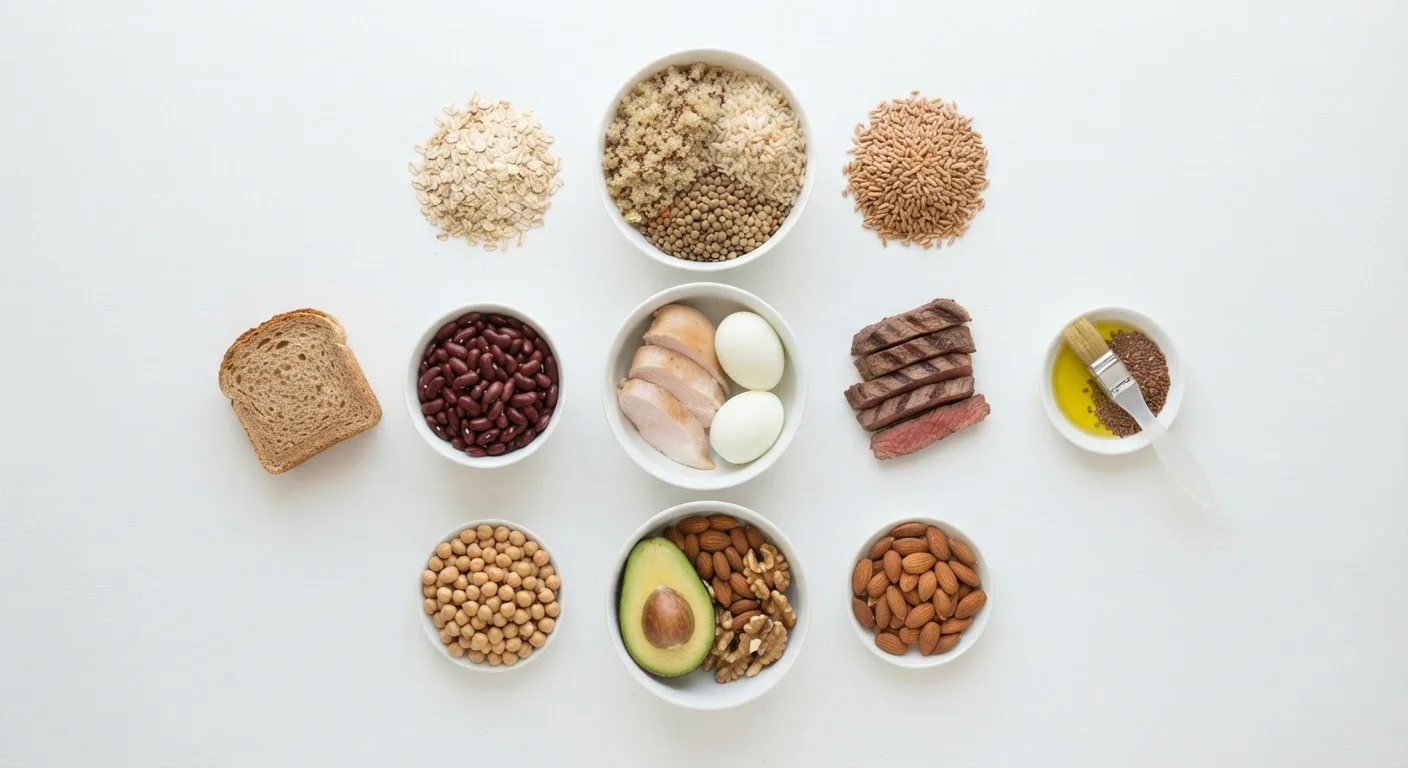
Good whole-food sources of carbohydrates: oats, brown rice, quinoa, sweet potatoes, beans, lentils, fruits, and non-starchy vegetables.
Protein: The Body's Builder and Repairman
Protein is composed of smaller units called amino acids. Of the 20 amino acids the body uses, nine are considered essential — meaning your body cannot make them and must obtain them from food. Proteins are involved in building and repairing tissues, producing enzymes and hormones, supporting immune function, and transporting molecules through the blood.
Complete vs. Incomplete Proteins
Animal-based foods — meat, poultry, fish, eggs, and dairy — are generally complete proteins, meaning they supply all nine essential amino acids. Most plant-based proteins are incomplete individually, but eating a varied plant diet across the day can reliably provide all essential amino acids.
Solid protein sources include: chicken breast, salmon, Greek yogurt, eggs, tofu, tempeh, edamame, lentils, and black beans.
Protein needs vary by age, activity level, and health status. The established general guideline from U.S. dietary authorities is 0.8 grams per kilogram of body weight daily for sedentary adults, but individual needs can differ. A registered dietitian can help you determine a target that fits your circumstances.
Fat: Essential, Not the Enemy
Dietary fat spent decades with an unfairly poor reputation. In reality, fat is essential: it supports brain development and function, helps the body absorb fat-soluble vitamins (A, D, E, and K), enables hormone production, and provides insulation for organs.
Types of Dietary Fat
- Unsaturated fats (monounsaturated and polyunsaturated): Found in olive oil, avocados, nuts, seeds, and fatty fish. Research consistently associates these with favorable heart-health outcomes.
- Saturated fats: Found in fatty cuts of meat, butter, and full-fat dairy. Current dietary guidelines suggest limiting these, as high intake is associated with increased LDL cholesterol in many people.
- Trans fats: Largely removed from the U.S. food supply following regulatory action, but still appear in very small amounts in some processed foods. Best minimized.
Healthy Fats Are Still Calorie-Dense
Foods like nuts, olive oil, and avocado are nutritionally valuable, but they are among the most calorie-dense foods available. Eating them freely can significantly increase overall calorie intake without feeling like overeating. Enjoying them in reasonable portions as part of a varied diet is the practical approach most nutrition experts recommend.
Fat provides 9 calories per gram — more than twice the calories of carbohydrates or protein — so portion sizes of high-fat foods are worth being aware of, even for healthy fat sources.
How to Think About Balance
There is no universally correct ratio of macronutrients for every person. The U.S. Dietary Guidelines for Americans provide general ranges: roughly 45–65% of daily calories from carbohydrates, 10–35% from protein, and 20–35% from fat. But these are population-level ranges, not personal prescriptions.
What the evidence does consistently support is food quality over rigid ratio-tracking. A diet built around whole grains, vegetables, legumes, lean proteins, and healthy fats — while limiting ultra-processed foods, added sugars, and excessive saturated fat — is associated with better long-term health outcomes across multiple large-scale studies.
If you have a specific health goal — managing blood sugar, building muscle, supporting recovery from illness — a registered dietitian is the most reliable resource for tailoring your intake safely and effectively.
This article provides general nutritional information and education only. It is not medical or dietary advice. Speak with a qualified healthcare professional or registered dietitian before making significant changes to your diet, especially if you have an existing health condition.
Frequently Asked Questions
Carbohydrates and protein each provide 4 calories per gram, while fat provides 9 calories per gram. Alcohol provides 7 calories per gram but is not classified as a macronutrient. These figures are the basis for calculating a food's total caloric content.
Tracking is not required for most people to eat well. Focusing on whole, minimally processed foods across all three macronutrient groups tends to produce a naturally balanced diet. Tracking can be a useful tool for specific goals, but it is not universally necessary.
Neither approach is definitively superior for everyone. Research shows both can be effective for weight management when followed consistently and built around quality foods. Individual responses vary, so speaking with a healthcare professional can help you find the right approach for your circumstances.
Many whole foods contain a mix of macronutrients. Legumes like lentils and chickpeas provide carbohydrates, protein, and a small amount of fat. Whole milk, eggs, and quinoa are other examples of foods that supply all three in meaningful amounts.
The general Dietary Reference Intake for protein is 0.8 grams per kilogram of body weight per day for sedentary adults, according to established U.S. dietary guidelines. Needs can be higher for athletes, older adults, or those recovering from illness — a healthcare provider can give personalized guidance.
No. Unsaturated fats — found in foods like olive oil, nuts, and avocados — are associated with favorable cardiovascular outcomes in research. Saturated and trans fats, found in some processed foods and fatty animal products, are more commonly linked to increased cardiovascular risk when consumed in excess.
The content on this site is for informational purposes only and is not a substitute for professional advice. Always consult a qualified professional for guidance specific to your situation.