

Our Verdict
Colonoscopy offers comprehensive detection and same-session polyp removal but involves bowel prep and sedation. Stool-based tests are less invasive and can be done at home, though they require more frequent repetition and cannot remove polyps. Both approaches are clinically valid; the most effective screening is the one a patient will actually complete and maintain.
| Best for | Recommended |
|---|---|
| Those who want a comprehensive, infrequent screening with polyp removal in one visit | Colonoscopy |
| Those who prefer a non-invasive, at-home option and have average risk | FIT or FIT-DNA (Cologuard) |
| Those with elevated risk due to family history or prior polyps | Colonoscopy (consult your doctor) |
| Those for whom colonoscopy access or preparation is a barrier | Stool-based tests as a starting point |
Why Colorectal Cancer Screening Matters
Colorectal cancer is the second leading cause of cancer-related death in the United States when men and women are considered together, yet it is also one of the most preventable through routine screening. Many cases develop silently from benign growths called polyps — catching and removing them before they become cancerous is the core goal of any screening program.
The U.S. Preventive Services Task Force (USPSTF) recommends that average-risk adults begin screening at age 45 and continue through age 75. Adults aged 76 to 85 should discuss the decision with their clinician. People with a personal or family history of colorectal cancer or polyps, or with conditions such as inflammatory bowel disease, may need to start earlier or screen more frequently — a conversation best had with a healthcare provider.
For a broader look at which preventive tests are recommended by age, see our guide to preventive screenings every American adult should know about.
Colonoscopy: The Comprehensive Standard
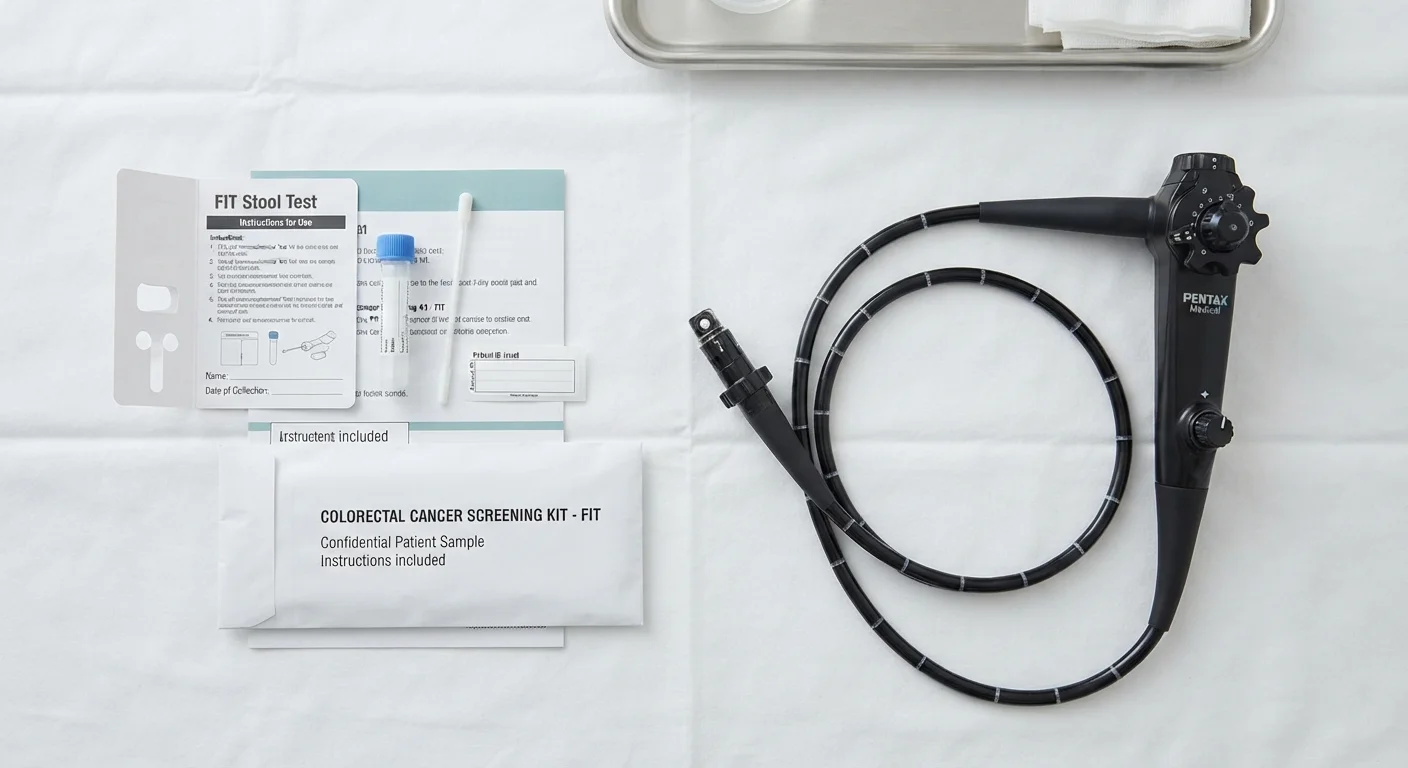
A colonoscopy allows a gastroenterologist to visually examine the entire length of the colon and rectum using a flexible, camera-equipped tube called a colonoscope. If polyps are found, they can typically be removed during the same procedure — making colonoscopy both diagnostic and therapeutic in a single visit.
Frequency: Every 10 years for average-risk individuals with normal results.
Preparation: Patients must follow a liquid diet and take a bowel-clearing preparation the day before. Sedation is used during the procedure, which typically lasts 30 to 60 minutes. A responsible adult must accompany the patient home afterward.
Advantages: High sensitivity for detecting both polyps and cancer; polyps removed immediately; least frequent testing schedule.
Considerations: Requires bowel prep and sedation; rare but possible risks include bleeding or perforation (estimated at less than 1 in 1,000 procedures); time off work is generally needed.
Preparing Well Makes a Difference
The quality of bowel preparation directly affects how thoroughly a colonoscopist can inspect the colon lining. Following your provider's prep instructions closely — including timing, fluid intake, and dietary restrictions — improves the likelihood of a complete and accurate exam. Ask your provider about split-dose prep options, which many patients find more manageable than a single large-volume preparation.
Stool-Based Tests: Non-Invasive Alternatives
Stool tests detect signs of colorectal cancer or precancerous polyps in a bowel movement sample, avoiding the preparation and sedation that colonoscopy requires. Three main types are available:
Fecal Immunochemical Test (FIT)
FIT uses antibodies to detect small amounts of blood in stool — a possible indicator of polyps or cancer. It is completed at home and mailed to a lab. Recommended annually. It does not require dietary restriction before collection.
Guaiac Fecal Occult Blood Test (gFOBT)
Similar to FIT in detecting blood, but uses a chemical reaction rather than antibodies. Certain foods and medications may affect results, and some versions require dietary modifications beforehand. Also recommended annually.
Stool DNA Test (FIT-DNA / Multi-target Stool DNA)
This test combines FIT with analysis of DNA biomarkers shed from abnormal colon cells. It is more sensitive than FIT alone for detecting advanced polyps but also has a higher rate of false-positive results. Recommended every one to three years. Requires a full bowel movement sample sent to a laboratory.
Critical point: A positive result on any stool test requires a follow-up colonoscopy. Stool tests do not remove polyps or provide a direct view of the colon.
| Colonoscopy | FIT | gFOBT | FIT-DNA (Stool DNA) | |
|---|---|---|---|---|
| Frequency | Every 10 years | Annually | Annually | Every 1–3 years |
| Invasive? | Yes (sedation required) | No | No | No |
| Polyp removal possible? | Yes, during procedure | No | No | No |
| Done at home? | No | Yes | Yes | Yes |
| Bowel prep required? | Yes | No | Dietary limits may apply | No |
| Positive result requires follow-up colonoscopy? | N/A | Yes | Yes | Yes |
| Sensitivity for advanced polyps | Very high | Moderate | Lower than FIT | Higher than FIT alone |
Choosing the Right Approach for You
Clinical guidelines from the American Cancer Society, USPSTF, and gastroenterology societies recognize all of the above methods as acceptable for average-risk adults. The key is choosing a method you will actually complete — and repeat on schedule.
~150,000
New colorectal cancer cases annually in the U.S.
The American Cancer Society estimates approximately 150,000 new colorectal cancer diagnoses each year in the United States.
~60%
Reduction in colorectal cancer mortality with screening
Research published in leading gastroenterology journals suggests regular screening can reduce colorectal cancer mortality by roughly 60% compared to no screening.
45
Recommended age to begin average-risk screening
The USPSTF and American Cancer Society both recommend colorectal cancer screening starting at age 45 for average-risk adults.
Several factors can guide the conversation with your clinician:
- Risk level: Elevated risk (family history, prior polyps, Lynch syndrome) generally calls for colonoscopy on a tighter schedule.
- Access and logistics: For patients without easy access to endoscopy centers or who cannot take time off work, stool tests offer a practical starting point.
- Comfort with follow-up: Stool tests demand annual or biannual commitment and a willingness to proceed to colonoscopy if results are abnormal.
- Insurance coverage: Coverage varies; a colonoscopy triggered by an abnormal stool test may be billed differently than a routine screening colonoscopy. Patients should verify benefits with their insurer in advance.
If you're unsure how to bring this up with your clinician, our guide on talking to your doctor about preventive care offers practical strategies for making the most of your appointment.
This article is for general informational and educational purposes only and does not constitute medical advice. Individual health needs vary. Please consult a qualified healthcare professional to determine the most appropriate screening approach for your specific circumstances.
The content on this site is for informational purposes only and is not a substitute for professional advice. Always consult a qualified professional for guidance specific to your situation.