

Our Verdict
Each plan type is built around a different trade-off between cost and flexibility. HMOs and HDHPs generally cost less month-to-month but impose meaningful restrictions; PPOs offer the widest access at a premium price; EPOs land somewhere in between. The best choice depends on how often you use care, whether your preferred providers are in-network, and how you'd handle a large out-of-pocket expense.
| Best for | Recommended |
|---|---|
| Cost-conscious enrollees who rarely need specialist care | HMO |
| Those who want maximum provider flexibility and can afford higher premiums | PPO |
| Enrollees who want lower premiums and commit to staying in-network | EPO |
| Generally healthy individuals who want to build tax-advantaged savings for future care | HDHP |
Why Plan Type Matters More Than You Might Think
When comparing health insurance options, most people focus on the monthly premium — what they'll pay regardless of whether they use care. But the plan type determines something equally important: how and where you can actually get care, and what you'll owe when you do.
The four plan types you'll encounter most often are the HMO (Health Maintenance Organization), PPO (Preferred Provider Organization), EPO (Exclusive Provider Organization), and HDHP (High-Deductible Health Plan). Each one reflects a distinct philosophy about the balance between cost, access, and structure. Before comparing premiums, understanding these structures can prevent costly surprises. For a plain-language guide to terms like deductible, copay, and coinsurance, see Health Insurance Decoded.
The Four Plan Types, Explained
HMO — Health Maintenance Organization
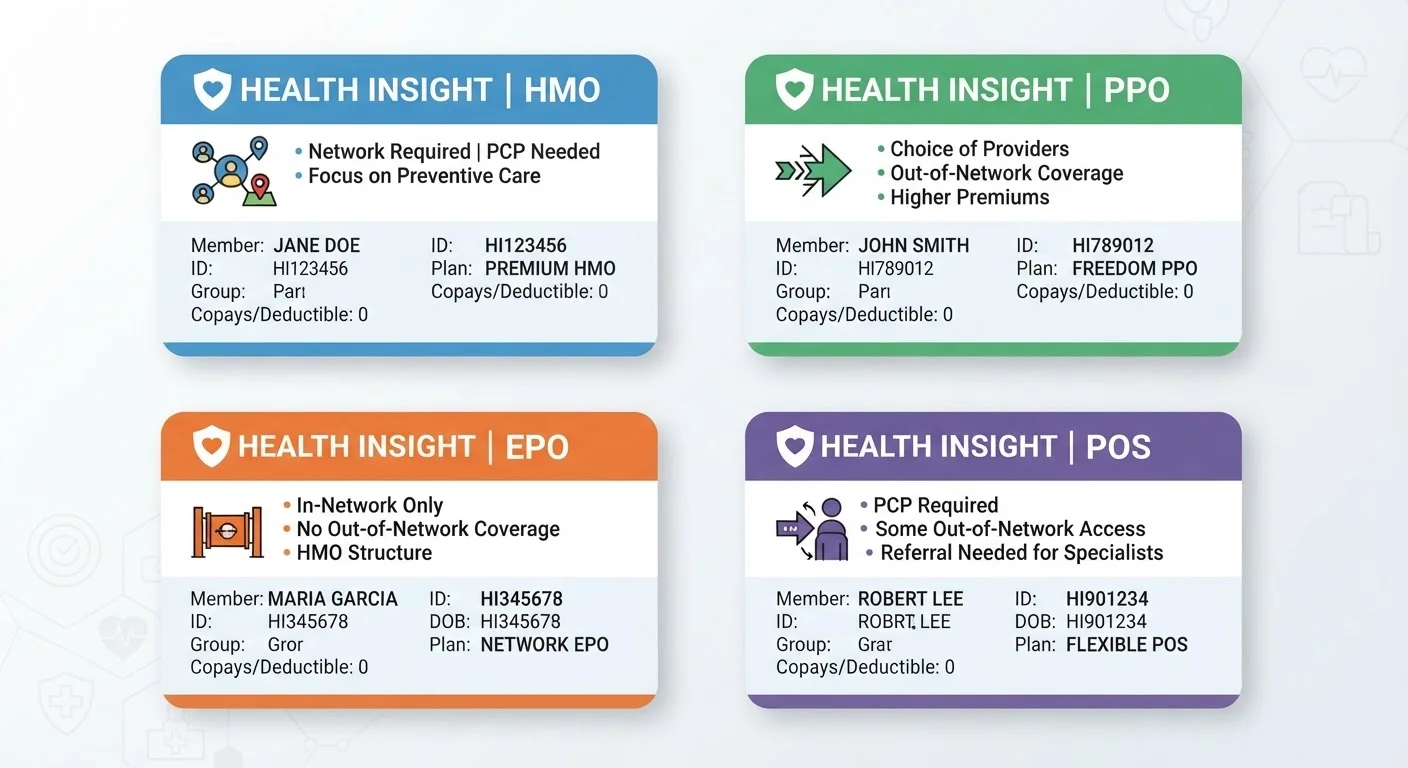
An HMO requires you to select a primary care physician (PCP) who coordinates all your care. To see a specialist, you typically need a referral from your PCP first. Coverage is almost always limited to providers within the plan's network; going outside that network means paying the full bill yourself, except in emergencies.
Who it tends to suit: Enrollees who see the same doctor regularly, prefer coordinated care, and are comfortable working within a structured system. Premiums and out-of-pocket costs are often lower than other plan types.
PPO — Preferred Provider Organization
A PPO gives you the most freedom. You can see any doctor — specialist or primary care — without a referral, and you can go out-of-network, though at a higher cost. In-network care is significantly discounted, so using preferred providers still saves money.
Who it tends to suit: People managing complex or chronic conditions who need frequent specialist access, or those whose preferred providers don't participate in narrow networks. Expect higher monthly premiums in exchange for that flexibility.
EPO — Exclusive Provider Organization
An EPO is a hybrid: like a PPO, you typically don't need referrals to see specialists. Like an HMO, you must stay within the plan's network — there is generally no out-of-network coverage except in emergencies.
Who it tends to suit: Enrollees who want direct specialist access without referral paperwork but are willing to confirm that their preferred providers are in-network before enrolling.
HDHP — High-Deductible Health Plan
An HDHP is defined by federal thresholds: the deductible must meet a minimum set annually by the IRS, and out-of-pocket maximums are capped accordingly. Premiums are typically lower, but you pay significantly more before insurance kicks in for most services. Crucially, HDHPs are the only plan type that allows you to open and contribute to a Health Savings Account (HSA). See how an HSA works with a high-deductible plan for a full breakdown of that tax advantage.
Who it tends to suit: Generally healthy individuals with few routine medical needs who can afford to cover higher costs if something unexpected happens — and who want to build tax-sheltered savings for future healthcare expenses.
| HMO | PPO | EPO | HDHP | |
|---|---|---|---|---|
| Monthly premium | Generally low | Generally high | Moderate | Generally low |
| Deductible | Low to moderate | Moderate | Low to moderate | High (IRS minimum) |
| Requires PCP / referrals | Yes | No | No | Varies by plan |
| Out-of-network coverage | No (emergencies only) | Yes, at higher cost | No (emergencies only) | Varies by plan |
| HSA eligible | No | No | No | Yes |
| Best for flexibility | Low | High | Moderate | Low to moderate |
| Best for predictable costs | Yes | Moderate | Moderate | Only if healthy |
Key Questions to Ask Before You Choose
Run the Numbers Before Deciding
Don't compare plans on premium alone. Add up your expected annual costs: premium × 12, plus estimated copays, deductibles, and prescription costs for your typical year of care. In many cases, a higher-premium PPO costs less overall for frequent users than a low-premium HDHP. A benefits counselor or licensed insurance agent can help you model these scenarios for your specific situation.
Working through a few practical questions can narrow your options significantly:
- Are your current doctors in the plan's network? Network restrictions are where people most often get caught off guard. Verify before enrolling, not after. For more on how to use in-network coverage effectively, see getting the most out of a health plan you already have.
- How often do you need care? If you rarely see a doctor, a lower-premium HDHP may cost less overall. If you have ongoing prescriptions or specialist visits, a higher-premium PPO might actually be cheaper once you add up all your costs.
- Could you cover a large unexpected bill? HDHPs shift more financial risk to you. Only choose one if you have savings or an HSA to absorb that exposure.
- Are you choosing through an employer or the Marketplace? Not all plan types are available in every context. Employer-sponsored and Marketplace plans differ in what types they offer and how premiums are structured.
- Could a life event change your needs mid-year? If you're anticipating a major change — a new baby, a job switch — understanding special enrollment periods can help you plan ahead.
This article is for general informational purposes only and does not constitute personalized insurance, financial, or legal advice. Coverage terms, network rules, and costs vary by insurer, employer, and state. Always review your plan documents carefully and consult a licensed insurance professional for guidance specific to your situation.
The content on this site is for informational purposes only and is not a substitute for professional advice. Always consult a qualified professional for guidance specific to your situation.