

Option A
The 50/30/20 Rule
The percentage-based framework for flexible, big-picture budgeting.
Best for: People who want a simple structure without tracking every dollar.
Option B
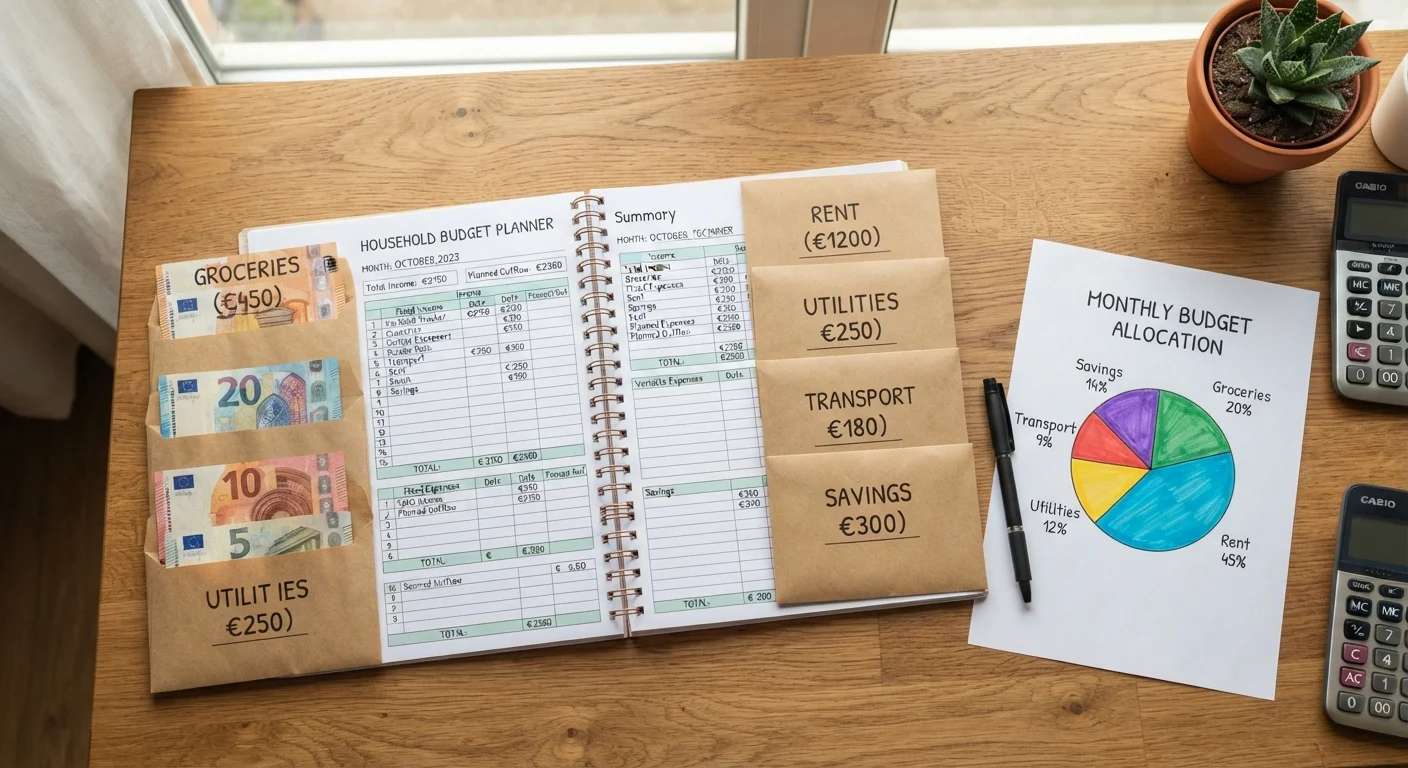
Envelope Budgeting
The hands-on, category-by-category cash control system.
Best for: People who need firm spending limits and tend to overspend in specific categories.
How Each Method Works
The 50/30/20 rule divides your monthly after-tax income into three buckets: 50% toward needs (rent, utilities, groceries, insurance), 30% toward wants (dining out, subscriptions, entertainment), and 20% toward savings and debt repayment. The math is straightforward — multiply your take-home pay by each percentage and those numbers become your category ceilings.
Envelope budgeting works differently. At the start of each pay period, you assign a specific dollar amount to each spending category — groceries, gas, clothing, dining, and so on — and either place physical cash into labeled envelopes or fund digital equivalents. When an envelope is empty, spending in that category stops until the next period. There are no broad buckets; every dollar has a named destination.
If you're starting from scratch and want a structured walkthrough before choosing either method, see our step-by-step first budget guide for the fundamentals.
| Criterion | 50/30/20 Rule | Envelope Budgeting |
|---|---|---|
| Structure | 3 broad percentage buckets | Many specific dollar-amount categories |
| Tracking effort | Low — monthly check-in | High — ongoing per-category tracking |
| Spending control | Moderate — broad limits only | High — hard stop per category |
| Best income type | Stable, predictable income | Variable or irregular income |
| Flexibility | High within each bucket | Low — strict per-envelope limits |
| Setup time | Minutes | 30–60 minutes per pay period |
| Tools needed | Basic calculator or spreadsheet | Cash envelopes or budgeting app |
| Savings visibility | Built-in as a fixed 20% target | Savings is its own envelope |
Strengths and Limitations of Each Approach
The 50/30/20 rule's biggest advantage is its simplicity. You don't need to categorize every purchase — you just need to stay within three broad bands. That low friction makes it easier to sustain long-term. The trade-off is precision: lumping all "needs" together means a rent spike and a grocery splurge look identical on paper. If you're prone to overspending in a particular area, the broad categories can mask the problem.
Envelope budgeting forces accountability at the category level. It's harder to rationalize overspending on takeout when the dining envelope is visibly empty mid-month. Research on mental accounting — the psychological tendency to treat money differently based on how it's labeled — suggests that concrete, separate buckets reduce impulsive spending more effectively than aggregate targets. The limitation is effort: managing a dozen or more envelopes demands consistent attention, and it works best when most of your spending is in cash or trackable categories.
~33%
Americans with a detailed household budget
Gallup polling has consistently found that fewer than one-third of U.S. adults maintain a detailed monthly budget, suggesting most people rely on rough mental estimates.
78%
Workers living paycheck to paycheck
Multiple workforce surveys in recent years have found roughly three-quarters of American workers report living paycheck to paycheck at least some of the time, underscoring the practical need for structured budgeting.
20%
Savings and debt repayment target
The 50/30/20 rule dedicates a fixed fifth of after-tax income to savings and debt — a target financial educators broadly endorse as a sustainable baseline for building financial resilience.
One area both methods handle imperfectly is irregular expenses — annual subscriptions, car maintenance, medical bills. Before committing to either framework, review our article on spending categories most budgets get wrong to make sure those costs are accounted for.
Choosing the Right Fit — or Combining Both
Neither method is universally superior. The right choice depends on your spending behavior, how variable your income is, and how much time you're willing to invest each month.
If your income is stable, your bills are mostly automated, and your main goal is building savings steadily, the 50/30/20 rule gives you a reliable framework without demanding much ongoing effort. If you frequently run out of money before the month ends, or if certain spending categories reliably blow your plans, envelope budgeting's hard limits are more effective than percentage targets.
A hybrid approach works well for many people: use the 50/30/20 percentages to set your overall income allocation, then apply envelope-style limits within the "wants" category — the area where overspending most commonly occurs. This captures the simplicity of the former and the discipline of the latter.
Digital Envelopes Are a Valid Alternative
Physical cash isn't required for envelope budgeting to work. Several budgeting apps replicate the envelope method digitally, letting you assign dollar amounts to virtual categories and track spending against them in real time. If you prefer to keep cash in the bank, a digital envelope system offers the same psychological benefit of category-level limits without handling paper money. For a comparison of tools that support both approaches, see our overview of paper, spreadsheet, and app-based budgeting.
Whichever method you use, a monthly review keeps it honest. Our monthly budget audit checklist walks through a practical 30-day self-check routine to keep your budget aligned with reality. And if discretionary spending flexibility is a concern, this piece on discretionary spending examines how to set sensible limits without making your budget feel punishing.
This article is for general informational purposes only and does not constitute personalized financial advice. Consult a licensed financial professional for guidance tailored to your individual circumstances.
The content on this site is for informational purposes only and is not a substitute for professional advice. Always consult a qualified professional for guidance specific to your situation.