

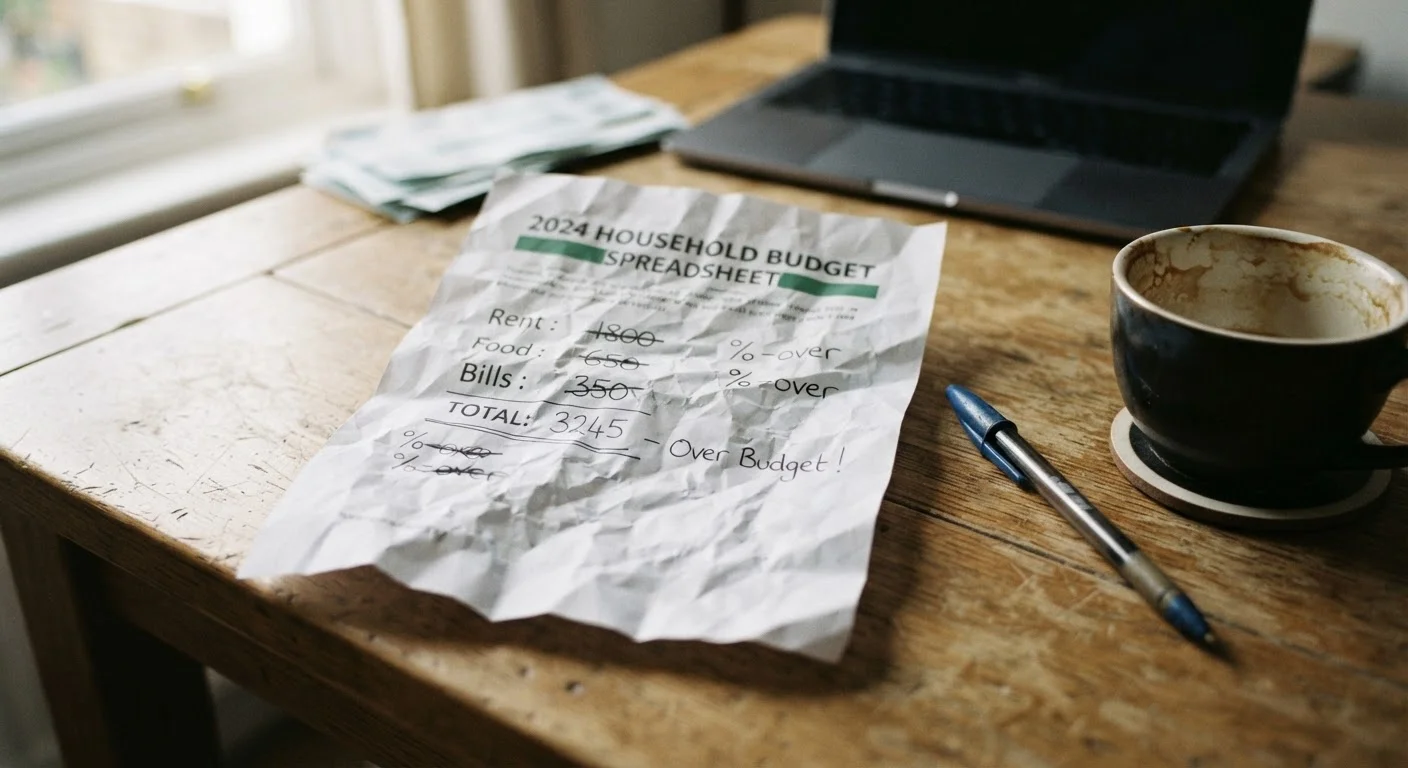
The Month-Two Problem Is Real
Starting a budget feels motivating. You list your income, map out your expenses, and tell yourself this time will be different. Month one often goes reasonably well — you're paying attention, the numbers are fresh, and the plan feels manageable.
Then month two arrives. An irregular bill lands. A social event blows the dining category. Motivation fades, and the spreadsheet gets ignored. Within weeks, the budget is effectively abandoned.
This pattern is common enough that researchers and financial counselors treat it as a predictable failure point. The problem usually isn't discipline — it's that the budget was built in a way that was never going to survive contact with real life. If you're starting from scratch, a structured starting point can help you lay a better foundation from day one.
Building the budget on idealized spending rather than actual past behavior.
Why it happens: When setting up a budget for the first time, most people estimate what they think they should spend — not what they actually do. The result is categories that are systematically too low.
Treating all expenses as monthly when many are annual, quarterly, or completely irregular.
Why it happens: Monthly budgets naturally focus on recurring costs like rent and utilities. One-time or infrequent costs — car repairs, vet bills, back-to-school spending — get forgotten until they hit.
Leaving no buffer for spending variation, making any overage feel like failure.
Why it happens: A tight, zero-slack budget looks disciplined on paper. But real spending varies month to month, and a single overage with no contingency breaks the whole plan psychologically.
Relying entirely on willpower to track and maintain the budget rather than using structure and automation.
Why it happens: People assume that wanting to succeed is enough. But motivation is inconsistent, and manual tracking requires effort that competes with everything else in a busy month.
Abandoning the entire budget after one bad week or an overspent category.
Why it happens: Many people treat a budget lapse as evidence the whole plan is broken — an all-or-nothing mindset that turns small setbacks into full stops.
How to Build a Budget That Outlasts Month Two
The mistakes above share a common thread: they treat budgeting as a fixed plan rather than a living system. A durable budget is designed to flex.
~80%
Of budgeters who quit within 3 months
Financial behavior research consistently finds that the large majority of people who start a formal budget abandon it within the first quarter, often citing the plan feeling too rigid.
3x
Irregular expense underestimation
Consumer spending studies suggest people routinely underestimate non-monthly costs by a factor of two to three when building a budget for the first time.
Start with your actual spending history. Pull three months of bank and credit card statements and use those real numbers — not aspirational ones — as your category baselines. This surfaces the categories most budgets get wrong, like annual subscriptions, medical copays, and irregular home costs.
Build an irregular-expense fund. Tally up all the non-monthly bills you expect in the next 12 months — car registration, insurance premiums, holiday gifts, back-to-school costs — divide by 12, and transfer that amount to a separate account each month. When the bill arrives, the money is already waiting.
Automate your savings before you spend. Treat savings as the first line item, not what's left over. Even a modest automatic transfer — scheduled for the same day as your paycheck deposit — removes the decision entirely. For those with a variable paycheck, budgeting on an irregular income requires a slightly different approach, but the automation principle still applies.
Schedule a monthly review. A monthly budget audit doesn't need to take more than 20 minutes. Review what you spent against what you planned, adjust any categories that are consistently off, and carry forward any lessons. Budgets that get reviewed regularly survive; ones that don't get quietly abandoned.
Don't Confuse a Budget App With a Budget
Downloading a budgeting app is not the same as having a plan. Apps are useful tools, but they don't automatically categorize your priorities, set realistic limits, or flag structural problems. Use technology to support a budget you've actually thought through — not as a substitute for doing that thinking.
Consistency over time is what turns a budget into a habit. Budgeting habits that hold up are less about perfect monthly execution and more about building a system you can return to when things go sideways — because they will.
This article is for general informational and educational purposes only and does not constitute personalized financial advice. Consider consulting a qualified financial professional for guidance specific to your situation.
The content on this site is for informational purposes only and is not a substitute for professional advice. Always consult a qualified professional for guidance specific to your situation.