

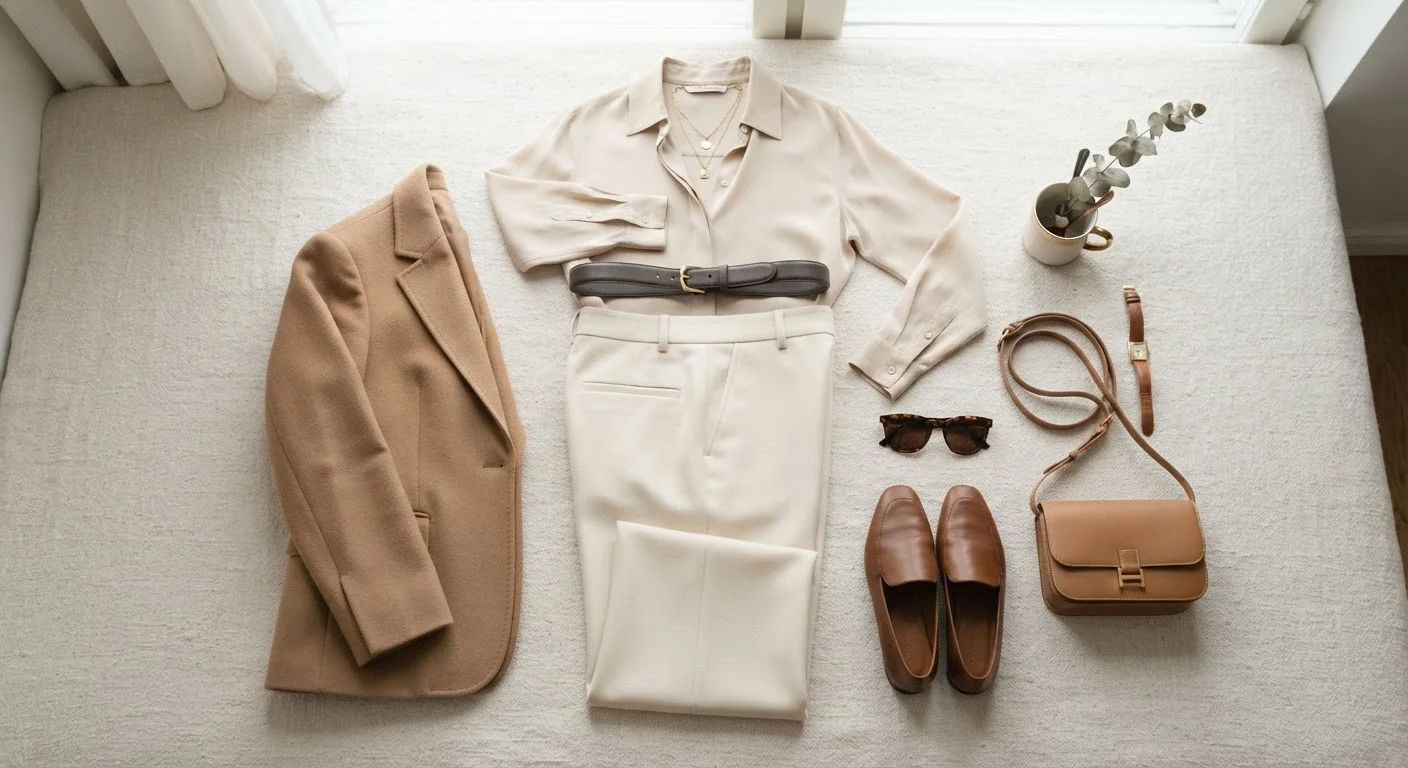
The Invisible Expiration Date on Your Wardrobe
Most people don't wake up one day and decide to look dated. It happens gradually — a pair of jeans bought three years ago, a go-to blouse that still fits, a signature makeup look that felt fresh when you first nailed it. The clothes aren't worn out. The technique isn't bad. But somehow the overall effect feels like it belongs to a different era.
The good news: the gap between "this feels off" and "this feels current" is usually narrower than people think. You don't need a full wardrobe overhaul or a makeup counter intervention. In most cases, it comes down to a handful of small, specific habits that quietly signal a time stamp — and equally small corrections that erase it. If you've ever felt like your closet is full but your outfits aren't quite landing, this look at wardrobe planning pitfalls is worth a read alongside this guide.
Below, we've identified seven of the most common unintentional dating mistakes — and straightforward ways to address each one without starting from scratch.
Wearing proportions that match each other too closely
When a top and bottom are the same volume — both oversized, or both fitted — the silhouette can feel shapeless or oddly uniform. Current styling tends to contrast volumes intentionally: a relaxed, flowy top with slim-leg trousers, or a fitted top with wide-leg pants. This creates visual interest and a sense of intention.
Simple fix: Pick one piece to be the statement volume and let the other recede. You don't need new clothes — just experiment with what you already own in different combinations.
Contrast volumes intentionally — one relaxed piece, one fitted, never both the same.
Over-matchy accessories and hardware
Perfectly coordinated accessories — bag, belt, shoes, and jewelry all in the same metal tone or color family — was once considered polished. Today it can read as overly rigid. Mixed metals and varied textures feel more natural and current.
Simple fix: Break one match on purpose. If your belt and bag are both tan leather, swap in a bag in a contrasting neutral or texture. If your jewelry is all gold, try mixing in one silver or oxidized piece.
Breaking one accessory match on purpose reads as intentional, not careless.
Pointy-toe shoes from an earlier era
Shoe silhouettes shift slowly, but they do shift. Very sharp, elongated pointed toes were dominant in certain periods and can anchor an otherwise updated outfit in that era. Almond, square, or softly rounded toes tend to feel more current across a wider range of styles.
Simple fix: If replacing shoes isn't in the budget right now, focus on updating other visible elements — proportions, accessories, outerwear — so the shoes are less of a focal point. Budgeting strategies can help you plan for gradual wardrobe updates over time.
Shoe toe shape is one of the quietest but most consistent indicators of a style's era.
Jeans with an outdated rise or leg opening
Denim is the most era-specific item most people own. Ultra-low rises, very wide flare openings (without intentionality), or heavily whiskered and distressed finishes can signal a specific decade immediately. Mid- to high-rise cuts with a straight or slightly tapered leg tend to have the most longevity.
Simple fix: Rather than discarding older jeans, experiment with how you style them. A deliberate, fashion-aware approach to a flare can feel current; the same flare styled without intention looks accidental. Try different top lengths and footwear to see what reframes the silhouette. Common style myths may also be shaping how you think about what's "allowed."
Denim is the most era-specific item most people own — how you style it matters as much as the cut.
Over-defined or heavily drawn brows
Brow trends have swung dramatically over the decades — from pencil-thin arches to blocked, heavily outlined, and stenciled shapes. Very dark, hard-edged brow fills that don't follow the natural hair growth pattern can date a face look significantly.
Simple fix: Follow your natural brow shape as a guide, fill with light feathery strokes rather than outlining, and match as closely as possible to your natural hair color. If you're streamlining your overall makeup approach, minimal-product makeup techniques offer a practical starting point.
Following your natural brow shape — not a trend template — is the most timeless approach.
Skirt or dress hems that sit in an awkward zone
Midi hems that hit at the widest part of the calf, or mini lengths that were cut specifically for a trend moment, can be tricky to restyle. The hem length interacts with shoe height, so what felt balanced in one era may not translate across footwear changes.
Simple fix: Adjust your footwear. A hem that feels off with flat sandals may land perfectly with a low heel or chunky loafer. Before assuming the garment is unwearable, try it with three or four different shoe options — the hem's effect changes dramatically.
A hem that feels awkward with one shoe type can be completely transformed by another.
Wearing everything in your outfit at full intensity
Heavy patterning, saturated color, and statement detailing across every piece simultaneously was a common approach in certain trend cycles. Allowing one element to be the focal point and keeping the rest quieter tends to feel more balanced and intentional today.
Simple fix: If you love a bold printed top, pair it with a solid, neutral bottom. If you're wearing an embellished skirt, keep the top simple. Letting one piece lead makes the whole outfit read more confidently. This principle alone can refresh pieces you may have written off as "too much."
Let one piece lead — the rest of the outfit should support it, not compete with it.
A Few Final Thoughts
Looking current isn't about chasing trends or spending more. It's about paying attention to the details that accumulate quietly over time. As you work through these adjustments, remember that the goal isn't to look like someone else — it's to make sure the way you present yourself actually reflects your taste right now, not a version of it from several years back.
Start with one change, not seven
Trying to address every item on this list at once can feel overwhelming and expensive. Pick the one habit that resonates most — whether it's your brow technique, your denim styling, or your accessory matching — and spend a few weeks experimenting there first. Small, confident changes tend to stick better than full resets.
If your beauty routine also feels like it's running on autopilot, it might be worth checking whether your skincare routine needs an audit too. And for readers who want to modernize without overspending, seasonal wardrobe transition strategies can help you get more from what you already own. Style confidence doesn't require a big budget — just a more intentional eye.
The content on this site is for informational purposes only and is not a substitute for professional advice. Always consult a qualified professional for guidance specific to your situation.