

Summary
28 items · 30–60 minutes
Why Cruise Packing Demands a Different Strategy
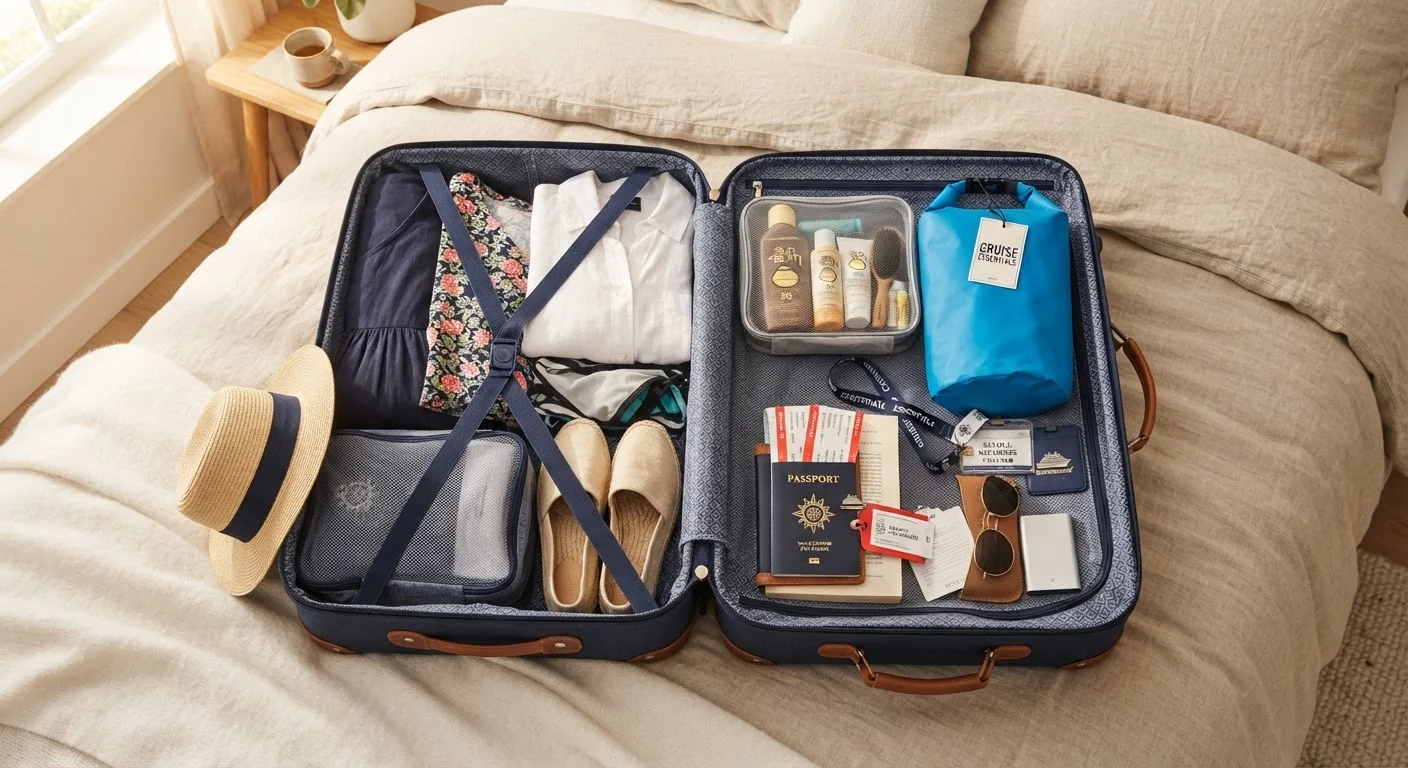
Packing for a cruise isn't like packing for a resort stay or a road trip. Your cabin — often called a stateroom — is engineered for efficiency, not storage. Interior cabins commonly measure between 150 and 185 square feet, and while every inch is cleverly designed, two adults sharing the space quickly learn that overpacking creates real daily friction. Drawers fill up fast, closets are shallow, and floor space is at a premium.
There's also a financial argument for packing deliberately. As explored in The Real Cost of a Cruise Vacation, onboard spending adds up quickly — and that includes toiletries, sundries, and medications sold at the ship's boutique at inflated prices. Bringing what you need from home is one of the simplest ways to keep discretionary spending in check.
Finally, cruise ships do have packing restrictions. Surge-protected power strips, clothing irons, and certain aerosols are commonly prohibited. Policies vary by cruise line, so always verify the current prohibited items list directly with your carrier before you sail.
Documents and Essentials
Clothing and Layering
Health, Sun, and Comfort
Cabin Organisation and Power
Shore Excursion Readiness
Things to Leave Behind
What Experienced Cruisers Always Leave Behind
Knowing what not to pack is just as valuable as knowing what to bring. First-time cruisers routinely haul items that either duplicate what's already provided or simply don't earn their weight. If you're still learning the rhythms of cruise travel, Things First-Time Cruisers Consistently Get Wrong is worth a read before you zip up your bag.
Full-size shampoo and conditioner bottles are a classic offender — most cruise lines provide toiletries in the cabin, and even if the quality isn't your preference, a small travel-size bottle from home takes up a fraction of the space. Hair dryers are almost universally supplied in cabins, so those can stay home too. Beach towels are another bulk item you can skip: ships provide them at the pool and at port, though you may be asked to return them or face a replacement fee if they don't come back.
Formal wear excess is another trap. Ships typically have one or two formal nights per sailing, but one versatile dressy outfit per person is usually enough. The rest of the time, cruise dress codes skew toward smart-casual — a fact that surprises many first-timers who overpack elegant attire.
Laundry Onboard Is More Expensive Than You'd Expect
Most cruise ships offer laundry services, but per-item pricing can be steep — a single shirt pressed and returned can cost several dollars. Some ships have self-service launderettes on select decks, which are far more economical. If you're on a longer sailing, pack a small amount of travel laundry soap for handwashing basics in the sink, or plan ahead by choosing quick-dry fabrics that can be rinsed and hung overnight.
Ultimately, the most experienced cruisers treat their suitcase like a small apartment closet: curated, intentional, and with room to bring a few souvenirs home.
Tools and Gear Worth Every Inch of Space
Beyond clothing and toiletries, a handful of practical items consistently appear in the bags of experienced cruisers — and they're almost never mentioned in generic travel guides.
Magnetic Hooks (set of 4–6)
Attach to metal cabin walls and doors to create extra hanging storage for bags, lanyards, and wet swimsuits.
Non-surge Power Strip with USB Ports
Expands the limited outlet count in cruise cabins for charging multiple devices simultaneously — verify your cruise line permits it.
Dry Bag or Waterproof Backpack
Protects phones, cameras, and documents during water excursions, beach days, and rain-prone port visits.
Compact Packable Daypack
Serves as your port-day carry bag without taking up significant luggage space when folded.
Portable Power Bank
Keeps your phone charged during full-day shore excursions when you're away from your cabin for extended periods.
Over-Door Shoe Organiser (travel-size)
Hangs on the bathroom door to organise small items and reclaim limited counter space in compact cruise bathrooms.
For context on how all of this fits into your broader cruise planning journey, Planning a Cruise from Start to Finish walks through the full arc from booking to boarding day — a useful companion to this checklist as you prepare.
Always Verify Prohibited Items With Your Cruise Line
Prohibited items policies vary between cruise lines and can change. Items commonly restricted include clothing irons, candles, surge-protected extension cords, and certain aerosols. Bringing a prohibited item can result in it being confiscated at embarkation. Check the official prohibited items list on your cruise line's website — not third-party summaries — before you pack.
The content on this site is for informational purposes only and is not a substitute for professional advice. Always consult a qualified professional for guidance specific to your situation.