

Why Body Style Terminology Matters
When shopping for a passenger car, consumers encounter a consistent set of terms — coupe, hatchback, sedan, wagon — without always having a clear sense of what separates one from another. These are not just marketing labels. Each term describes a specific structural approach to organizing a vehicle's cabin, roofline, and cargo access, and those structural differences translate directly into how a vehicle fits daily life.
Understanding body styles also helps when reading vehicle listings, comparing options, or simply knowing what you're looking at on the road. For a broader map of how passenger cars fit among trucks, SUVs, and other vehicle categories, see this overview of motor vehicle types.
4
Core passenger car body style categories
Coupe, hatchback, sedan, and wagon represent the primary closed-roof passenger car configurations used by manufacturers worldwide.
2–4
Typical door count range across body styles
Coupes traditionally use two doors; sedans, hatchbacks, and wagons typically use four — though variations exist across model lines.
~50%
U.S. new vehicle sales accounted for by SUVs/crossovers
According to industry sales data, SUVs and crossovers have taken a dominant share of the U.S. market, accelerating the relative decline of traditional sedan and wagon segments.
The Coupe: Style and Compromise in Equal Measure
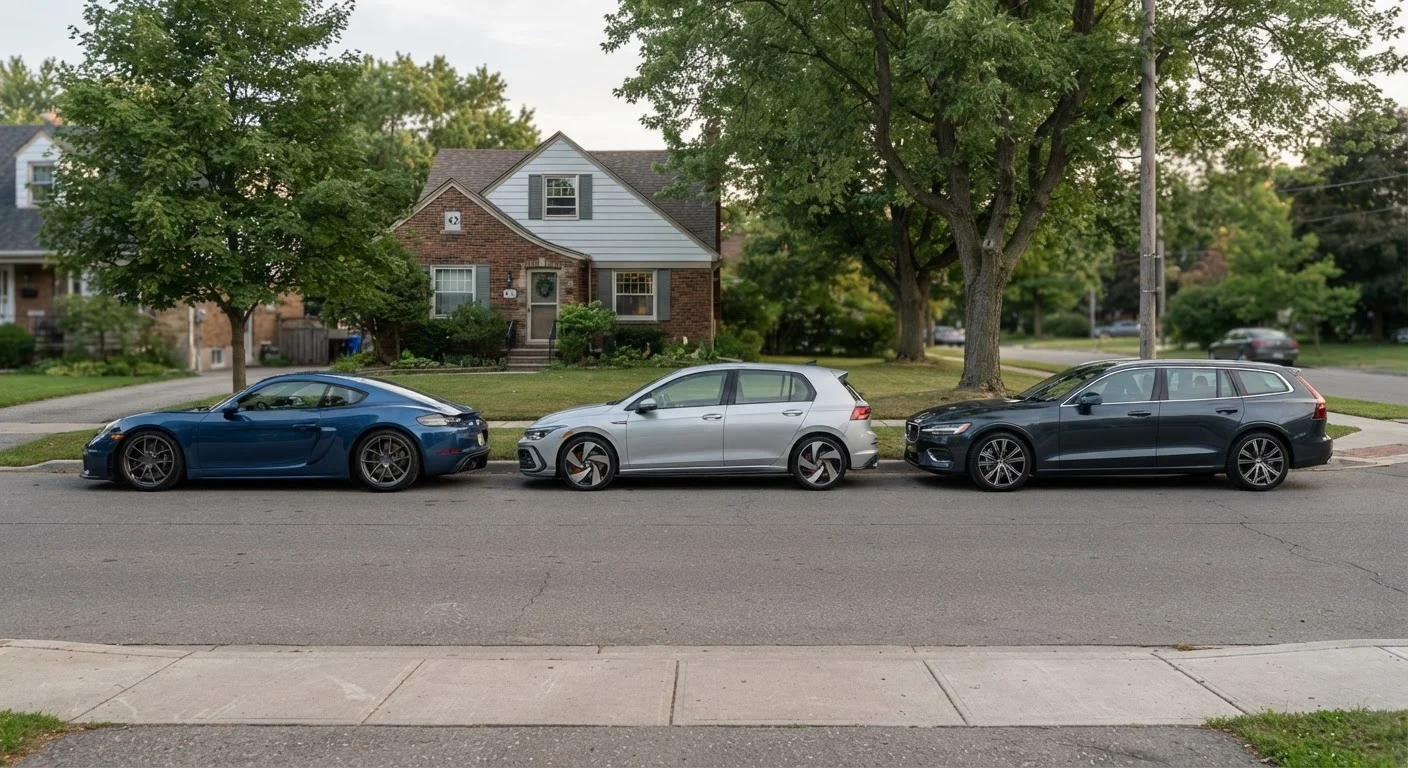
A coupe is traditionally defined as a two-door closed vehicle with a fixed roof. Its most recognizable feature is a roofline that slopes more steeply toward the rear than a sedan's, giving the vehicle a lower, sportier silhouette. That design choice comes with real trade-offs.
Rear-seat access in a coupe is typically more difficult because the doors are longer and the rear headroom is reduced by the descending roofline. For two occupants, a coupe can be entirely comfortable. For frequent rear-seat passengers, the experience is more constrained. Cargo capacity also tends to be modest — most coupes have a conventional trunk rather than a liftgate, limiting the size of items that can be loaded.
The coupe's appeal lies in its proportions. The long hood, short rear deck, and swept roofline are design priorities that attract buyers who value driving character and appearance. For those interested in how coupe-adjacent body styles like convertibles differ structurally, this article on open-air vehicles covers the engineering realities of removing the roof entirely.
“A vehicle's body style is essentially its structural promise to the buyer — it tells you where the trade-offs are before you ever open the door.”
— Automotive Design Researcher, Vehicle Architecture and Consumer Ergonomics Specialist
The Hatchback: Compact Footprint, Flexible Cargo
A hatchback is defined by its rear liftgate — a door that swings upward and encompasses the rear window, opening the passenger cabin to a combined cargo and seating area. Unlike a sedan's separate trunk, the hatchback's cargo space is continuous with the interior, which means larger, bulkier items can often be accommodated with the rear seats folded.
Most hatchbacks are compact or subcompact vehicles, which makes them practical for urban driving and parking while still offering meaningful utility. The trade-off is that cargo is visible from outside the vehicle and not acoustically separated from the cabin, which can introduce more road and load noise.
Hatchbacks occupy a middle ground: more practical than a coupe, more maneuverable than a wagon or minivan. They are a common choice for city dwellers who occasionally need to haul gear without the size of a larger vehicle.
Check the Cargo Opening, Not Just the Volume
When evaluating cargo capacity, manufacturers list total cubic feet — but that number doesn't tell you how wide or tall the opening is. A hatchback with a broad liftgate opening may be more practical for everyday loading than a vehicle with a slightly larger but narrower trunk. Physically measuring the opening against items you frequently transport is a useful exercise before committing to a body style.
The Wagon: Maximum Utility in a Car-Height Package
A station wagon — commonly shortened to wagon — extends the roofline of a sedan rearward rather than sloping it down, creating a tall, boxy cargo area behind the rear seats. This design maximizes interior volume while keeping the vehicle's overall height lower than an SUV or minivan.
Wagons typically offer four doors plus a rear liftgate or tailgate, and their load floors are often lower than comparable crossovers, making it physically easier to slide cargo in and out. The extended roofline also preserves rear headroom for passengers, which can be an advantage over coupes or fastback-style vehicles.
In the American market, wagons have declined in popularity relative to SUVs and crossovers, though they remain available from several manufacturers. Buyers who want the space and cargo practicality of a larger vehicle but prefer a lower, car-based driving feel sometimes find wagons a compelling option. For comparison, three-row SUVs offer more seating but often involve significant compromises in cargo access and legroom.
The Sedan: The Benchmark Body Style
The sedan is the reference point against which other body styles are often measured. It uses a three-box design: a distinct engine compartment, an enclosed passenger cabin, and a separate trunk. Four doors provide straightforward access to both rows of seating, and the closed trunk keeps luggage separated from the cabin.
Sedans sacrifice some cargo flexibility — the trunk opening limits what can be loaded — but they offer practical advantages in refinement. The separation of cabin and cargo reduces noise intrusion and keeps items out of view. They also tend to have a lower roofline than wagons while providing better rear-seat access than coupes.
The sedan remains a foundational category in the passenger car segment, even as SUVs and crossovers have claimed a larger share of the market. For readers thinking through which body style fits their actual routine, this practical framework for matching vehicle type to lifestyle is a useful next step. And if you're actively researching vehicles, our vehicle shopping hub covers the broader research and buying process.
Manufacturer Naming Doesn't Always Match Definitions
Some automakers apply body style terms loosely for marketing purposes. A vehicle labeled a 'coupe' may have four doors if it features a fastback roofline; a 'hatchback' variant of a sedan model may differ only in its rear-end treatment. When body style matters to your decision, look at the actual door configuration and cargo access design rather than relying solely on the name used in advertising.
Frequently Asked Questions
A sedan has a separate, enclosed trunk compartment (three-box design), while a hatchback integrates the cargo area with the passenger cabin behind a rear liftgate. Hatchbacks generally offer more flexible cargo loading because the opening is larger, but sedans keep luggage more separated from the passenger space.
Broadly, yes — but the distinction involves more than door count. Coupes typically have a lower roofline and a more steeply raked rear window compared to a sedan. Some manufacturers apply the 'coupe' name to four-door models with a fastback silhouette, which has blurred the traditional definition in recent years.
Not necessarily. Wagons often have substantial cargo capacity and a lower load floor than many SUVs, making them easy to load. However, tall SUVs and crossovers may offer greater total volume. The comparison depends heavily on the specific vehicles involved rather than the body style category alone.
Several manufacturers market certain four-door vehicles as 'coupes' based on their fastback roofline and sporty profile. This is a marketing characterization more than a strict engineering category. Traditionally, a coupe has two doors, and industry classifications often still define it that way.
Body style alone does not determine fuel efficiency — the drivetrain, engine, weight, and aerodynamics all play significant roles. That said, smaller, lighter body styles such as compact hatchbacks tend to be associated with better fuel economy in practice, though there is wide variation within every category.
There is no single answer, as family needs vary widely. Wagons and hatchbacks are frequently noted for their cargo flexibility and practicality. However, minivans and three-row SUVs are also common family choices. Evaluating interior dimensions, door configuration, and cargo access for your specific situation is more useful than relying on body style alone.
The content on this site is for informational purposes only and is not a substitute for professional advice. Always consult a qualified professional for guidance specific to your situation.