

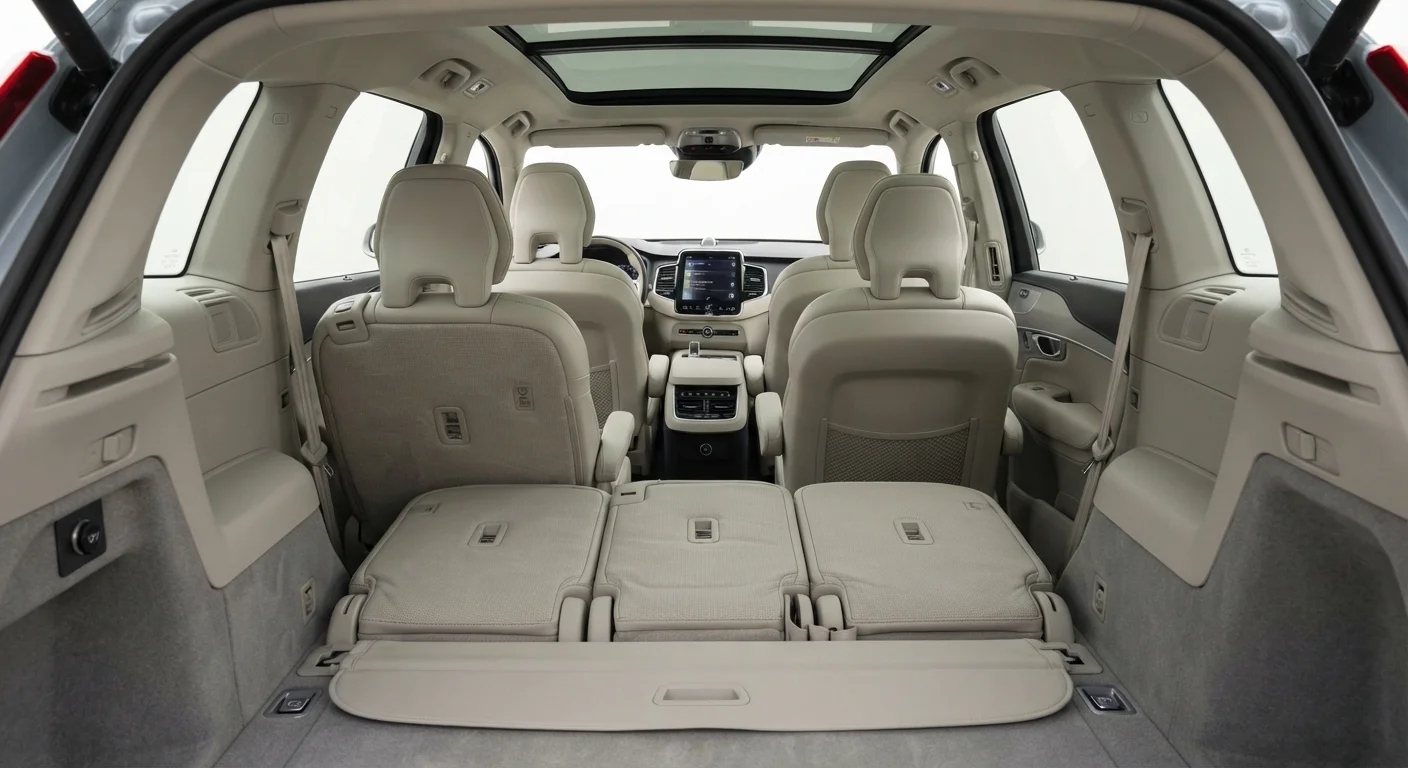
Why Three-Row SUVs Get Misread at the Shopping Stage
The appeal of a three-row SUV is easy to understand: one vehicle that can seat the whole family, handle cargo, and still project a capable road presence. But the gap between what shoppers expect and what they experience after delivery is wide enough to generate consistent buyer regret. The core problem is that "three rows" describes a configuration, not a usability standard.
Vehicle shopping research — whether online or at a dealership — tends to surface seat count, passenger capacity, and towing ratings rather than the harder-to-market figures: third-row legroom, behind-the-third-row cargo volume, and second-row entry dynamics. Until shoppers know which numbers to interrogate, they're navigating an incomplete picture. For a broader orientation to how vehicle categories are defined before you narrow down, see this overview of motor vehicle types.
Assuming all three-row SUVs offer equivalent passenger space across all rows.
Why it happens: Marketing materials emphasize seat count and overall passenger capacity, which leads shoppers to equate "seven seats" with "seven comfortable seats."
Overlooking the cargo penalty that comes with the third row in the upright position.
Why it happens: Shoppers focus on passenger capacity and rarely think through what happens to luggage space when all rows are occupied simultaneously.
Treating a crossover-based three-row as structurally equivalent to a body-on-frame three-row SUV.
Why it happens: The visual similarity between crossovers and traditional SUVs obscures meaningful differences in wheelbase, interior packaging, and towing capacity.
Ruling out minivans without comparing interior volume and access side by side.
Why it happens: Cultural stigma around minivans causes many family shoppers to dismiss the segment outright, prioritizing the SUV's image over its actual functional performance.
Ignoring how second-row configuration affects third-row entry and daily convenience.
Why it happens: Shoppers evaluate rows in isolation during a brief dealership walkthrough rather than simulating real-world loading and unloading sequences.
Selecting a three-row SUV based on a static vehicle photo or floor plan diagram rather than physical dimensions.
Why it happens: Online research is convenient, but flat diagrams and marketing photos use angles and styling cues that exaggerate apparent interior volume.
The Practical Tradeoffs Buyers Frequently Discover Too Late
Space in a three-row SUV is always a balancing act. Wheelbase determines how much interior length is available, and that length must be divided between three rows and a cargo zone — all within a vehicle envelope that still fits in a standard garage. The math rarely favors all passengers equally.
~12–16 cu ft
Typical cargo space behind the third row
Many popular three-row crossover SUVs offer between 12 and 16 cubic feet of cargo space with all seats occupied, limiting luggage capacity on full-capacity trips.
~28–32 in
Common third-row legroom range
Third-row legroom in most mainstream three-row crossovers falls between 28 and 32 inches — comfortable for children, but tight for average-height adults on longer drives.
Larger body-on-frame SUVs built on truck platforms generally have more interior length to distribute, which is why their third rows tend to be meaningfully more usable than those in unibody crossovers. But they also cost more, consume more fuel, and handle differently in urban settings. The decision requires honest trade-off analysis, not just a seat-count comparison.
Seat Count Is Not the Same as Usable Space
A vehicle listing seven or eight seats does not guarantee that all positions are comfortable for adults or even older children. Manufacturers meet legal seating requirements with dimensions that may be impractical for real-world use. Before committing to a three-row SUV, physically sit in every row — with passengers of your actual household — during any test drive.
It's also worth considering whether the vehicle format itself is the right fit for your life. A structured framework for matching vehicle type to actual lifestyle needs can help clarify whether a three-row SUV is genuinely the right tool, or whether a different configuration serves you better. Families who have compared three-row SUVs side by side with minivans often find the minivan delivers more usable space per dollar — an outcome the real-world minivan data supports.
Third-Row Access Can Be a Daily Frustration
Many three-row crossover SUVs use a tip-and-slide second row to reach the third row, a maneuver that becomes genuinely cumbersome when car seats or booster seats are installed. If your household regularly uses child safety seats, test the specific entry and exit process before purchasing. Some body styles make third-row access so difficult that the row goes unused in practice.
The content on this site is for informational purposes only and is not a substitute for professional advice. Always consult a qualified professional for guidance specific to your situation.