

How Motorcycle Licensing Works in the United States
In the U.S., operating a motorcycle on public roads requires a separate endorsement or license beyond a standard driver's license. Most states issue an M1 or M2 endorsement — sometimes called a motorcycle license class — added to a standard driver's license rather than issued as a standalone credential. The specific letters and rules vary by state, but the underlying logic is consistent: different categories of two- and three-wheeled vehicles carry different risk profiles and operating demands.
The most common path is completing a state-approved motorcycle safety course — typically the Motorcycle Safety Foundation's (MSF) Basic RiderCourse — followed by a written knowledge test and, in most states, a skills evaluation. Passing the MSF course often waives the DMV riding test requirement.
Understanding the category system also matters for insurance. How your bike is classified affects your premium calculation. See our overview on auto insurance fundamentals for context on how vehicle type influences coverage needs.
M1 vs. M2: The Core License Split
Most states structure their motorcycle endorsements around two tiers:
- M1 (Unrestricted Motorcycle): Authorizes the rider to operate any two-wheeled motorcycle, including high-displacement sport bikes, cruisers, touring rigs, and adventure bikes. This is the full endorsement and carries no restrictions based on engine size or style.
- M2 (Restricted Motorcycle): Limits the rider to motorized bicycles, mopeds, scooters under a defined engine displacement (commonly 150cc), or in some states, three-wheeled vehicles only. Some states use M2 as a learner-level permit before M1 graduation.
California is one of the clearest examples of this two-tier system, explicitly defining M1 and M2 in its DMV code. Other states use different letter codes (such as Class M or Class E) but apply similar logic. Always verify your state's DMV definitions directly, as classification specifics differ across jurisdictions.
M1 Endorsement
An unrestricted motorcycle license category used in many U.S. states that permits operation of any two-wheeled motorcycle regardless of engine size or style.
M2 Endorsement
A restricted motorcycle category covering lower-powered vehicles such as mopeds, motorized bicycles, and small-displacement scooters. Some states use it as a learner permit.
Displacement (cc)
Engine displacement, measured in cubic centimeters, indicates engine volume. Higher cc generally means greater power output. Many license restrictions hinge on displacement thresholds.
MSF Basic RiderCourse
A standardized motorcycle safety training program offered by the Motorcycle Safety Foundation. Completion is accepted by most state DMVs as a skills test substitute.
Moped
A low-speed motorized two-wheeler, typically with an engine under 50cc and a top speed below 30 mph. Usually covered under restricted license categories or no motorcycle endorsement at all in some states.
Fairing
An aerodynamic outer shell attached to a motorcycle frame. Full fairings are common on sport bikes; cruisers and standard bikes often have minimal or no fairings.
Motorcycle Style Categories and What They Mean for Riders
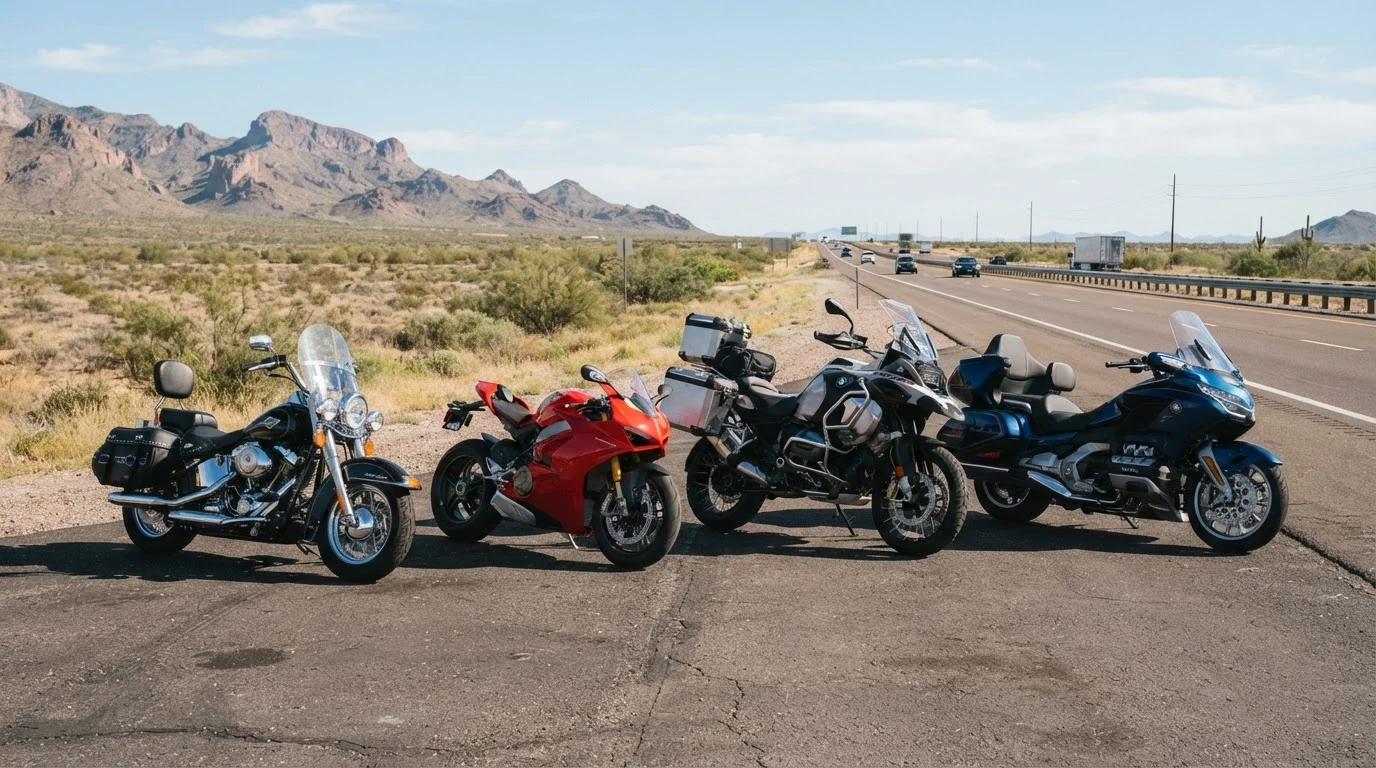
Licensing categories tell you what you're legally permitted to ride — but the motorcycle industry uses its own style-based classifications that describe the riding experience itself. These are not legal license categories, but they're the vocabulary every prospective rider should know:
Standard / Naked Bikes
Upright seating, moderate engine displacement, and minimal fairings. Often recommended as entry-level machines for new M1 holders due to their neutral ergonomics and manageable power curves.
Cruisers
Low seat height, forward foot controls, and a relaxed riding posture. Engine displacement typically ranges from 650cc to over 1,800cc. Popular for highway commuting and leisure riding.
Sport Bikes
Aggressive forward-leaning posture, high-revving engines, and aerodynamic full fairings. Often high-displacement (600cc–1,000cc+) and the most performance-oriented category. Require M1 licensure and demand more rider skill to operate safely.
Touring / Bagger
Large, long-distance machines with integrated luggage, wind protection, and comfort features. Some touring bikes exceed 1,800cc. These are M1-class vehicles and are quite different in feel from the motorhomes described in Class A, B, and C motorhome classifications, though both are built for extended travel.
Adventure / Dual-Sport
Designed for both paved and unpaved terrain. Tall seat heights and long-travel suspension make these versatile but demanding for shorter riders or beginners.
Scooters and Mopeds
Typically covered under M2 or state-equivalent restricted endorsements when under 150cc. Higher-displacement scooters (150cc+) generally require M1 in most states.
8.6M
Registered motorcycles in the U.S.
According to the Federal Highway Administration's most recent published count of registered motor vehicles by type.
~80%
Of fatal motorcycle crashes involving riders without proper endorsement or training
NHTSA research has repeatedly found that a significant share of crash-involved riders lacked a valid motorcycle endorsement or had completed no formal training.
49 states + D.C.
Jurisdictions requiring a separate motorcycle endorsement or license
All U.S. states and the District of Columbia require some form of motorcycle-specific credential to legally operate on public roads.
Three-Wheelers, Sidecars, and Edge Cases
The growth of three-wheeled motorcycles — such as tadpole-style trikes with two wheels in front — has prompted many states to clarify their classification rules. Some states require only a standard driver's license for factory-built three-wheelers, while others require an M1 endorsement. The treatment varies significantly by jurisdiction.
Sidecars attached to a traditional motorcycle generally require the same M1 endorsement as the host bike. Retrofitting a sidecar does not typically downgrade the license requirement.
Electric motorcycles and electric scooters are classified by the same displacement-equivalent and speed thresholds in most states — it's the vehicle's top speed and power output, not its fuel source, that usually determines the license category needed.
For a broader look at how vehicle classifications shape safety ratings, fuel economy standards, and insurer risk models — not just for motorcycles but across all vehicle types — see what the vehicle class system means in practice.
Always Verify Your State's DMV Rules
Motorcycle license classifications, age requirements, test waiver policies, and three-wheeler rules differ materially from state to state. The information in this article reflects general national patterns, not the specifics of any single jurisdiction. Before applying for an endorsement, check your state's official DMV website for current requirements and fee structures.
The content on this site is for informational purposes only and is not a substitute for professional advice. Always consult a qualified professional for guidance specific to your situation.