

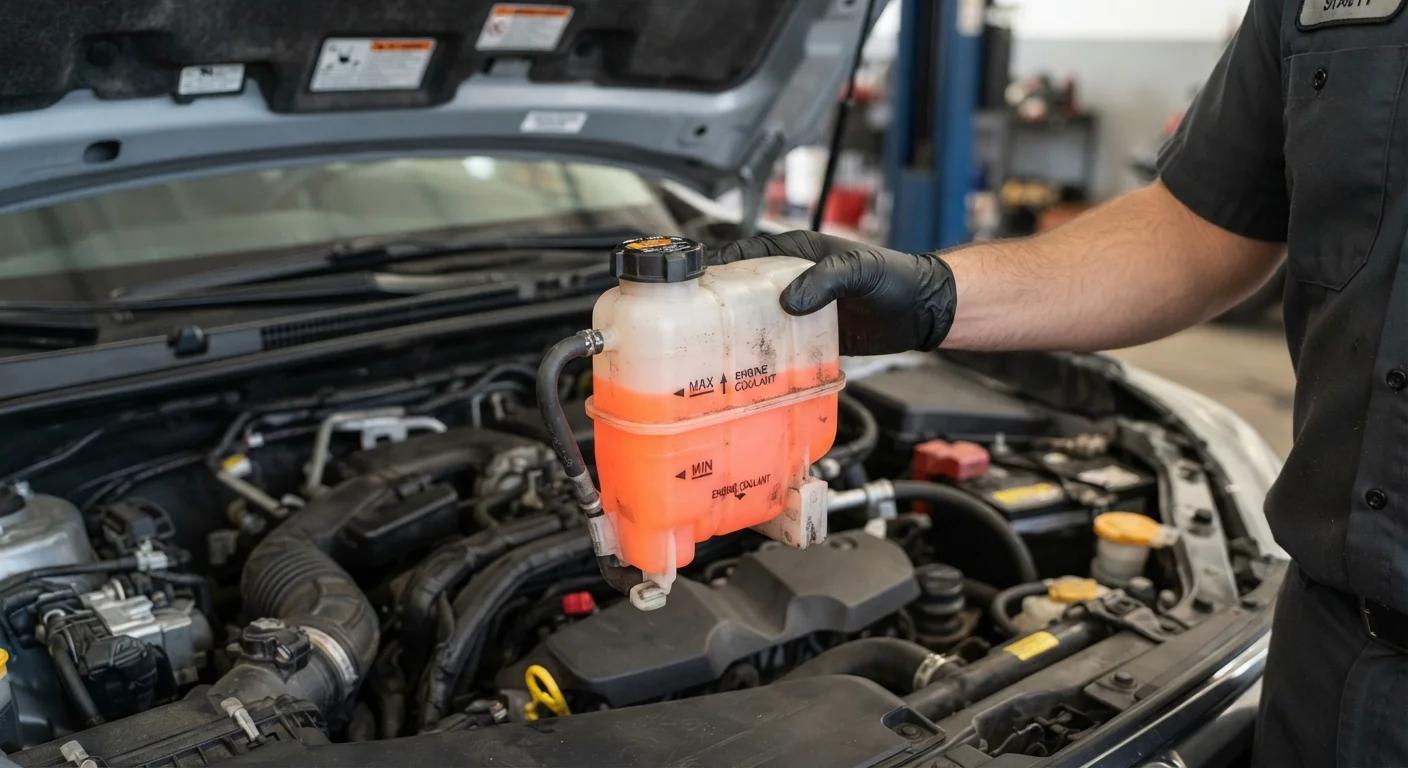
What Coolant Actually Does — and Why It Wears Out
Most drivers know coolant keeps the engine from overheating in summer. Fewer realize it also prevents freezing in winter and, critically, protects metal components from corrosion year-round. Antifreeze is a blend of a base fluid (usually ethylene glycol) and a package of chemical additives — including corrosion inhibitors, pH buffers, and scale preventers — that do the real work of protecting your cooling system.
The problem is that those additives are consumed over time. Heat cycles, oxygen exposure, and the natural chemistry of the cooling system gradually neutralize them. Long before your coolant turns an alarming color or your temperature gauge climbs, the protective chemistry has already started breaking down. That's why visual inspection alone is an unreliable guide to coolant condition.
Coolant Is Hazardous — Dispose of It Properly
Used coolant contains ethylene glycol and heavy metals picked up from the cooling system, making it toxic to animals and harmful to waterways. Never pour old coolant down a drain or onto the ground. Most auto parts stores and municipal recycling centers accept used coolant for proper disposal or recycling.
This is also why simply topping off the reservoir — a common quick fix when the level looks low — doesn't address the underlying issue. As discussed in our look at the hidden costs of deferred maintenance, what seems like a minor shortcut can compound into expensive repairs.
The Real Damage Neglected Coolant Causes
When coolant loses its corrosion inhibitors, it becomes acidic. Acidic coolant attacks aluminum components — a major concern in modern engines where aluminum is used extensively in cylinder heads, intake manifolds, and water pumps. It also promotes rust in cast-iron components and causes scale to build up inside the radiator, reducing its ability to transfer heat efficiently.
The downstream consequences can be significant: a corroded water pump may begin to leak or fail, a scaled radiator loses cooling capacity, and a damaged heater core can be expensive to replace. Engine overheating, even a single severe episode, can warp cylinder heads or damage head gaskets — repairs that typically run into the thousands of dollars.
50%
Of roadside breakdowns linked to cooling system failure
Industry estimates from automotive service organizations suggest cooling system failures are among the most common causes of non-collision roadside breakdowns in the U.S.
$1,000+
Typical cost of a head gasket repair
Engine overheating events caused by cooling system neglect can lead to head gasket or cylinder head damage, with repair costs often exceeding $1,000 depending on vehicle make and model.
30K–50K miles
Common manufacturer coolant flush interval
Many vehicle manufacturers recommend a coolant flush within this mileage range, though modern long-life OAT formulas can extend intervals further when the correct fluid is used.
Drivers who stay on top of commonly overlooked maintenance intervals are far less likely to encounter these compounding failure patterns.
Understanding Coolant Types and Service Intervals
Not all coolants are the same, and mixing incompatible types can accelerate the very corrosion you're trying to prevent. The three main categories are:
- IAT (Inorganic Additive Technology): The traditional green formula, typically requiring replacement every 2 years or 30,000 miles.
- OAT (Organic Acid Technology): Often orange, red, or pink; common in many modern vehicles with longer service intervals of 5 years or 150,000 miles.
- HOAT (Hybrid OAT): A blend of both; found in many European and Asian makes with varying intervals.
Your owner's manual specifies which type your vehicle requires. Using the wrong coolant — or mixing types without a full flush — can cause additive reactions that reduce protection. This is a case where the conventional wisdom about coolant being a set-and-forget fluid can mislead drivers.
Check Your Coolant With a Test Strip
Before your next scheduled service, pick up an inexpensive coolant test strip at any auto parts store. Dip it in the coolant reservoir and compare the result to the chart on the package — it will show you pH level and freeze protection. If either reading is out of range, it's a reliable signal that a flush is overdue, regardless of mileage or color.
How to Stay Ahead of Cooling System Problems
The most straightforward approach is following the manufacturer's recommended interval in your owner's manual and not relying on appearance alone to assess coolant health. A simple coolant test strip — available at most auto parts stores — measures pH and freeze protection and can flag degradation before it causes damage.
When communicating with a shop about this service, it helps to know your coolant type and mileage since the last flush. Our guide to communicating effectively with your mechanic covers how to describe what you know and ask the right questions so you understand exactly what service is being performed and why.
A properly executed flush includes draining the old fluid, flushing the system with water or a dedicated flush solution, refilling with the correct coolant type at the correct concentration (typically a 50/50 mix with distilled water), and bleeding any air from the system. Air pockets in a cooling system can cause localized overheating even when fluid levels appear normal.
This article is for general informational purposes only. Always consult your vehicle's owner's manual and a qualified mechanic for maintenance decisions specific to your vehicle.
Frequently Asked Questions
Intervals vary by vehicle and coolant type, but most manufacturers recommend every 30,000 to 50,000 miles or every 2 to 5 years. Always consult your owner's manual for the specific interval recommended for your vehicle, as modern long-life coolants can differ significantly from older formulas.
Over time, degraded coolant loses its ability to prevent corrosion and regulate temperature effectively. This can lead to rust and scale buildup inside the cooling system, damage to the water pump and radiator, and in serious cases, engine overheating — one of the most costly failures a car can experience.
Topping off the reservoir addresses low fluid levels but does not remove the degraded, contaminated fluid already in the system. The old coolant's depleted additives and accumulated debris remain, so a full flush is necessary to restore cooling system health.
Basic coolant changes are a DIY task for mechanically inclined owners, but the job involves handling hazardous fluid and properly disposing of old coolant — which is toxic to animals and should never be poured down a drain. Many drivers prefer to have this done by a qualified mechanic to ensure the system is bled of air pockets and refilled correctly.
Signs include a brown or rusty color, visible debris, a sweet smell from the engine bay, or a low level that keeps dropping. An inexpensive test strip can check freeze protection and pH, giving you a more accurate picture than color alone.
The content on this site is for informational purposes only and is not a substitute for professional advice. Always consult a qualified professional for guidance specific to your situation.