

Why Preventive Care Access Is Not Equal
Preventive care — annual wellness visits, cancer screenings, blood pressure checks, immunizations — is widely recognized as one of the most effective tools for reducing long-term disease burden. Yet access to these services is distributed unevenly across the United States, with underserved communities bearing a disproportionate share of the gap.
This isn't a matter of individual preference or health literacy alone. The disparities are structural. Race, income, geography, language, and insurance status each function as independent risk factors for missed or delayed preventive care. Where they overlap, the effect compounds. A low-income, uninsured resident of a rural county without a nearby primary care provider faces a qualitatively different landscape than a middle-income, insured person living near a major medical center.
Understanding what drives these gaps — rather than attributing them to lifestyle choices — is essential for anyone seeking to make sense of America's persistent health disparities. For readers navigating their own preventive health, it also provides important context for why access varies so dramatically. To understand how preventive services are defined and covered, see our overview of how preventive and diagnostic care differ.
30M+
Americans without health insurance
According to U.S. Census Bureau data, tens of millions of Americans remain uninsured, reducing their access to routine preventive services.
~20%
Rural Americans in provider shortage areas
The Health Resources and Services Administration estimates that a significant share of rural residents live in federally designated Health Professional Shortage Areas.
60%+
FQHCs serving racial/ethnic minority patients
HRSA data indicates that federally qualified health centers serve a patient population that is majority racial or ethnic minority, reflecting their role as safety-net providers.
The Structural Barriers That Drive Disparities
Insurance coverage gaps. Despite expansions under the Affordable Care Act, millions of Americans remain uninsured or underinsured. Without coverage, individuals are far less likely to establish a relationship with a primary care provider — a prerequisite for most preventive screenings. Even when screenings are available at reduced cost, the absence of a usual source of care creates inertia. Our guide to what's covered before your deductible explains how coverage works for insured patients.
Geographic isolation. Rural counties often have fewer primary care physicians per capita than urban areas. When the nearest clinic is an hour's drive away, a routine annual check-up requires time off work, childcare arrangements, and fuel — costs that are invisible in national screening rate statistics but very real to patients.
Provider shortages and workforce composition. Health Professional Shortage Areas (HPSAs), designated by the federal government, highlight regions where provider supply falls well below population need. These shortages are concentrated in rural and low-income urban areas. Additionally, racial and ethnic concordance between patients and providers — patients being treated by someone who shares their background — is associated with improved communication and trust, yet the physician workforce does not reflect the full diversity of the patient population.
Finding Care in Underserved Areas
If you or someone you know lacks a regular source of preventive care, federally qualified health centers (FQHCs) can be located using the HRSA Health Center Finder at findahealthcenter.hrsa.gov. These centers serve patients regardless of insurance status and use sliding-scale fees based on income. State and local health departments may also offer free or low-cost preventive screenings and immunizations.
Language and literacy barriers. Patients who are not proficient in English face compounding obstacles: translated materials may be unavailable, interpreters may not be offered, and consent processes may be difficult to navigate. These barriers reduce both initial engagement with care and ongoing follow-through on recommendations.
The Role of Mistrust and Historical Context
Medical mistrust in communities of color — particularly among Black Americans — is not irrational. It is grounded in a documented history of unethical medical experimentation, segregated care, and systemic mistreatment. Research published in peer-reviewed journals has consistently linked higher levels of institutional medical mistrust to lower preventive care utilization, including cancer screenings and vaccination.
Addressing mistrust requires more than communication campaigns. It requires sustained investment in community-based health workers, patient navigators, and care models that prioritize trust-building over transactional encounters. Public health authorities and health systems increasingly recognize this, though implementation remains uneven.
“Health equity means that everyone has a fair and just opportunity to be as healthy as possible. This requires removing obstacles to health such as poverty, discrimination, and their consequences.”
— Centers for Disease Control and Prevention, U.S. federal public health agency
For readers who want practical guidance on making the most of healthcare interactions they do have access to, our article on how to talk to your doctor about preventive care offers concrete strategies.
What Community Health Infrastructure Provides
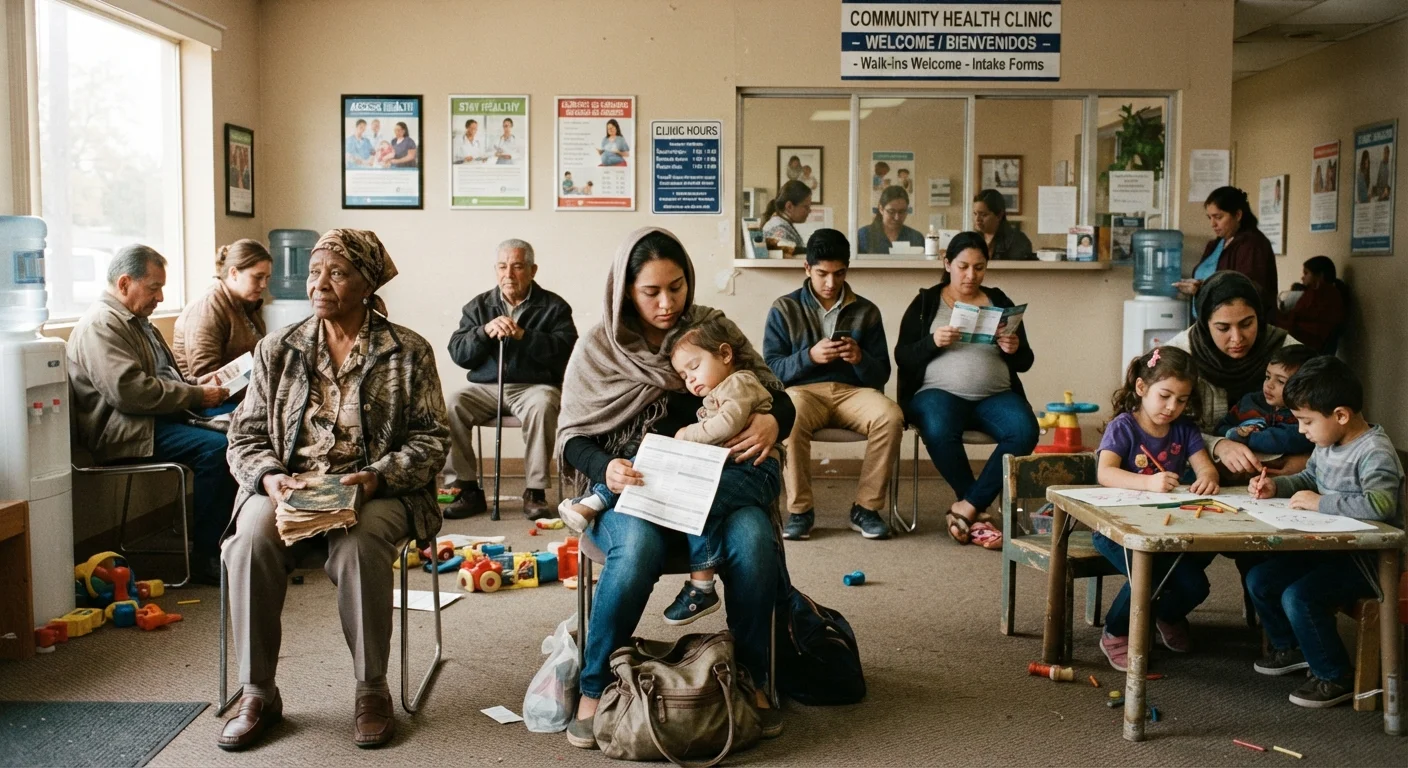
Federally Qualified Health Centers (FQHCs) are a cornerstone of preventive care delivery in underserved areas. Funded in part by the federal Health Resources and Services Administration (HRSA), these centers are required to serve all patients regardless of ability to pay, and they offer sliding-scale fees based on income. FQHCs provide primary care, preventive screenings, dental services, behavioral health, and pharmacy services — often under one roof.
Community health workers (CHWs), sometimes called promotores in Spanish-speaking communities, play a related role. These trusted, community-embedded individuals help connect residents with available services, navigate insurance enrollment, and support follow-through on care recommendations. Research suggests CHW programs can meaningfully improve preventive care uptake in communities where institutional trust is low.
Still, community health infrastructure is not uniformly available, and demand frequently exceeds capacity. Understanding both the resources that exist and the barriers that remain is part of building a more accurate picture of preventive health in America. Readers interested in how everyday habits intersect with these barriers can explore habits that quietly undermine preventive care.
This article is for general informational and educational purposes only. It does not constitute medical, legal, or financial advice. Please consult a qualified healthcare professional for guidance specific to your personal health situation.
Frequently Asked Questions
Preventive care gaps stem from a combination of factors including lack of insurance, limited transportation, shortage of providers in certain areas, language barriers, and historical mistrust of medical institutions. No single cause explains the disparity — it is the overlap of these barriers that creates persistent gaps in care.
Federally qualified health centers (FQHCs) and community health clinics offer sliding-scale fees based on income, making preventive services more affordable. However, uninsured patients generally do not have automatic access to the no-cost preventive benefits that insured individuals may receive under their health plans.
Rural and remote areas often face a shortage of primary care physicians, specialists, and health facilities. Patients may need to travel significant distances for routine care, and that logistical burden frequently leads to skipped or delayed preventive visits.
Yes — research consistently shows that insured individuals are more likely to receive recommended preventive screenings and immunizations. Insurance reduces out-of-pocket costs and increases the likelihood of having an established relationship with a primary care provider.
When healthcare providers communicate in a patient's preferred language and demonstrate cultural awareness, patients are more likely to engage with care, ask questions, and return for follow-up visits. Culturally competent care is considered a foundational element of reducing health disparities.
Federally qualified health centers (FQHCs), free clinics, public health departments, and community-based organizations often provide low- or no-cost preventive services. The HRSA Health Center Finder is one public resource for locating nearby federally funded health centers.
The content on this site is for informational purposes only and is not a substitute for professional advice. Always consult a qualified professional for guidance specific to your situation.