

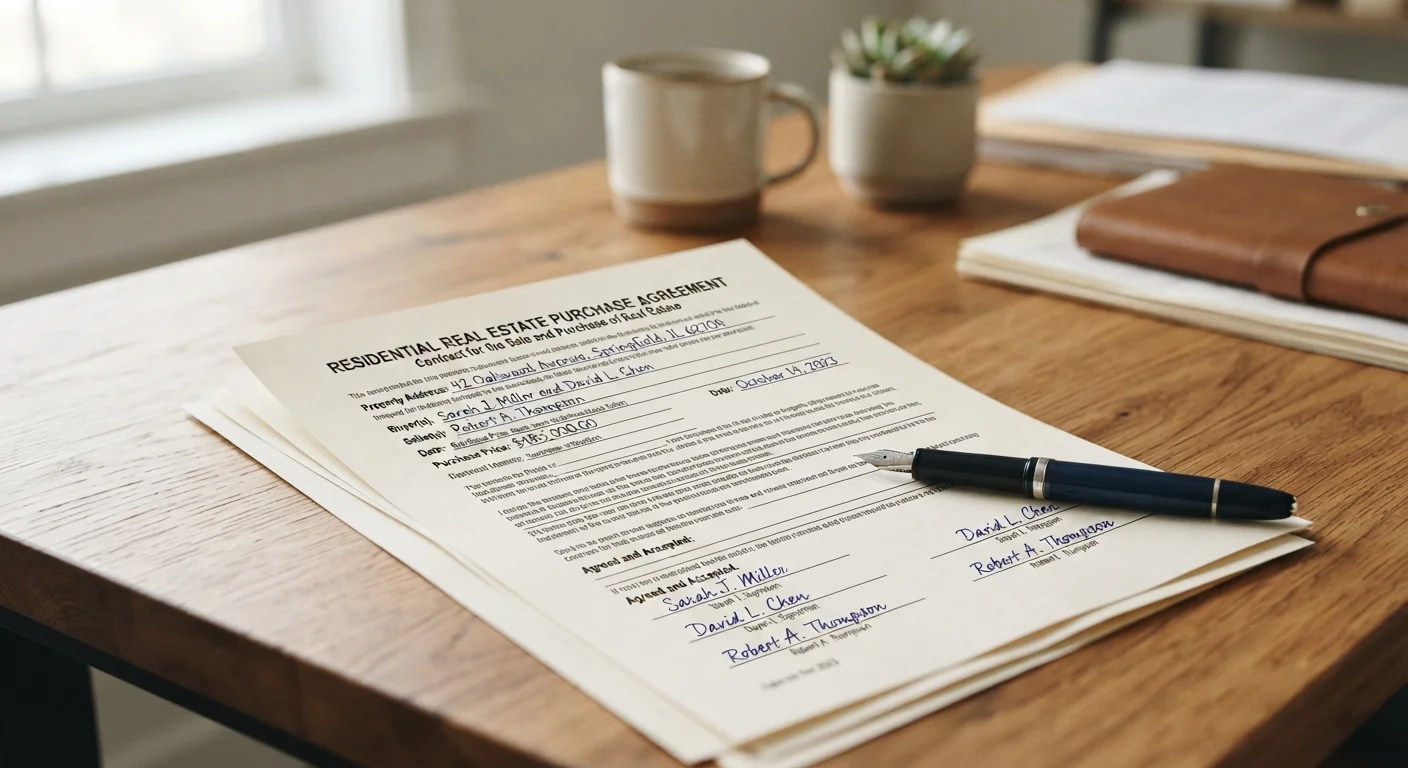
The Core Building Blocks of Every Purchase Agreement
A standard purchase contract is more than a handshake put on paper — it's a roadmap that governs every stage between accepted offer and closing day. While exact forms vary by state, most agreements share the same foundational elements.
Purchase price and financing terms come first. The contract states the agreed sale price, how the buyer intends to pay (cash, conventional loan, FHA, VA, etc.), and the loan amount if financing is involved. This section directly affects what happens if a lender later declines to fund the purchase.
Earnest money deposit terms follow. The contract specifies the dollar amount, the deadline for delivering it, and the escrow agent who holds it. This deposit shows the seller you're serious — and it's the first thing at risk if the deal falls apart outside of a protected contingency.
Closing date and possession clauses define the target date for transferring ownership and when the buyer can physically take possession of the property. These are negotiable and can be extended by mutual written agreement, but missing a deadline without that agreement can put a buyer in breach.
For a broader picture of how the contract fits into the overall transaction, see The American Homebuying Process, From Offer to Closing.
1%–3%
Typical earnest money deposit range
Industry practice across U.S. real estate markets, though exact norms vary by region and price point.
7–14 days
Standard home inspection window
Most purchase contracts allow buyers this window after signing to complete a professional inspection and respond to findings.
30–45 days
Average time from contract to closing
According to general industry timelines; financed transactions typically take longer than all-cash purchases.
Contingencies: Your Built-In Exit Ramps
Contingencies are the clauses that protect buyers by making the contract conditional on specific outcomes. If a condition isn't met, the buyer can typically cancel and recover the earnest money. Understanding each one is essential.
- Financing contingency: Allows the buyer to exit if they cannot secure a mortgage under the terms specified. It usually names a loan amount, interest-rate ceiling, and deadline to obtain approval.
- Inspection contingency: Gives the buyer the right to have the home professionally inspected and either request repairs, negotiate a price reduction, or walk away based on the findings. The window is typically 7–14 days from contract acceptance.
- Appraisal contingency: Protects buyers if the lender's appraiser values the home below the purchase price. Without it, the buyer must make up the difference or forfeit the deposit.
- Title contingency: Ensures the seller can deliver clear ownership, free of liens, unpaid judgments, or ownership disputes that would cloud the buyer's title.
- Sale contingency: Less common in competitive markets, this allows buyers to cancel if they cannot first sell their current home by a specified date.
Waiving contingencies to strengthen an offer is a real risk. Common Homebuying Myths That Can Cost You at the Negotiating Table explains how pressure to compete can lead buyers into decisions they later regret.
Review Contingency Deadlines on a Calendar
As soon as you have a signed contract, map every contingency deadline to a physical calendar. Inspection periods, financing approval windows, and appraisal deadlines can pass quickly in the midst of a busy transaction. Missing a deadline — even by a day — can cost you the legal protection that contingency was designed to provide.
Disclosures, Addenda, and What Gets Attached
The main purchase agreement rarely stands alone. Sellers are legally required in most states to disclose known material defects — issues like water damage history, lead paint (for homes built before 1978), mold, or major structural repairs. These disclosures become part of the contract record and are worth reading carefully, not skimming.
Addenda are supplementary pages that modify or expand the base contract. Common ones include:
- Home warranty addendum — specifies whether a home warranty will be purchased and who pays for it.
- Repair addendum — documents agreed-upon repairs following an inspection, including scope and deadline.
- HOA addendum — outlines the buyer's right to review homeowners association documents and financials before committing.
- As-is addendum — states the buyer accepts the property in its current condition, limiting repair requests.
Every page attached to the contract carries the same legal weight as the main document. Read each one before signing. If you want to understand how this level of scrutiny also applies to rental agreements, Decoding a Lease Agreement: What Every Clause Actually Means offers a useful parallel breakdown.
To understand where buyers most commonly shortcut this review process — and the consequences — see Rushing Through Due Diligence: Where Homebuyers Tend to Cut Corners.
Contract Forms Vary by State
Most states have standardized purchase agreement forms developed by their real estate associations or licensing boards. These forms are widely used but not universal — some transactions, particularly those involving attorneys or commercial properties, use custom agreements. Always confirm you understand which form governs your transaction and consider having a real estate attorney review it before you sign.
This article is for general informational purposes only and does not constitute legal or financial advice. Purchase contract laws vary by state. Consult a licensed real estate attorney or agent for guidance specific to your situation.
Frequently Asked Questions
You can exit, but the consequences depend on your contingencies. If you're still within a valid contingency period — such as inspection or financing — you can typically withdraw and recover your earnest money. Outside those windows, backing out may mean forfeiting your earnest money deposit or facing legal action from the seller.
Earnest money is a good-faith deposit paid by the buyer shortly after the contract is signed. It signals serious intent and is held in escrow until closing. Typical amounts range from 1% to 3% of the purchase price, though this varies by local market norms and negotiation.
If the appraisal comes in low and your contract includes an appraisal contingency, you have options: renegotiate the price, pay the difference in cash, or walk away and reclaim your earnest money. Without an appraisal contingency, you may be obligated to proceed or risk losing your deposit.
In most transactions, the buyer's agent drafts the initial offer using a standardized form approved by the state's real estate association. Both parties (and their agents or attorneys) may negotiate changes through written counter-offers or addenda before both sides reach a final agreement.
It is the date by which a buyer must either satisfy or formally waive a specific contingency. Missing this deadline can give the seller grounds to cancel the contract or keep the earnest money, depending on the contract language and state law.
The content on this site is for informational purposes only and is not a substitute for professional advice. Always consult a qualified professional for guidance specific to your situation.