

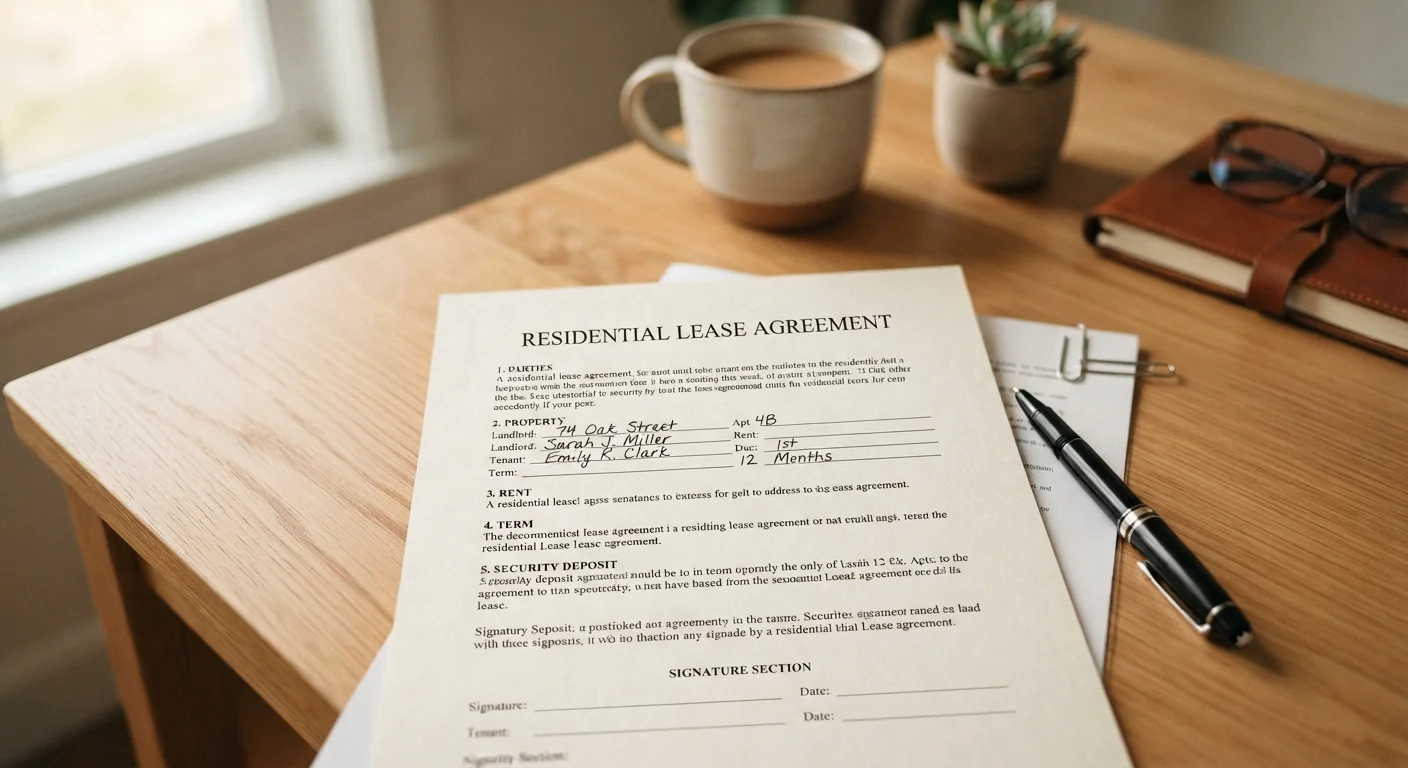
Why Reading Every Line Actually Matters
Most renters skim a lease, sign it, and move in — only to discover months later that a clause they overlooked is costing them money or freedom. A lease isn't boilerplate to be taken for granted; it's a contract with real legal weight. Every provision you agree to becomes enforceable the moment you sign.
Understanding the structure of a standard lease helps you spot problems before they become disputes. Most residential leases in the United States follow a similar format, covering parties and property, rent and fees, duration, security deposits, maintenance, and conduct rules. The language may vary, but the core concerns are consistent.
For a sense of how lease commitments compare to longer-term housing decisions, see what a real estate purchase contract actually says.
~52%
Renters who experienced a security deposit dispute
A survey by Apartment List found roughly half of renters reported disagreements with landlords over deposit returns at some point during their renting history.
14–30 days
Typical state deadline to return security deposit
Most U.S. states require landlords to return security deposits within 14 to 30 days of move-out; specific timelines vary by state law.
36%
Share of U.S. households that rent
According to U.S. Census Bureau data, more than a third of American households reside in rental housing, making lease literacy a widely relevant skill.
The Clauses Renters Most Often Misread
Security Deposit Terms
A security deposit clause defines how much you'll pay upfront, what it can be used for, and when you'll get it back. State law governs the maximum amount a landlord can charge — typically one to two months' rent — and sets deadlines for its return, often 14 to 30 days after move-out. The clause should also specify what counts as damage versus normal wear and tear. Misunderstanding that distinction is the most common source of deposit disputes.
Rent Payment and Late Fees
This clause states the monthly rent amount, the due date, the grace period (if any), and the late fee. Grace periods are not universal — some leases make rent legally due on the first with no grace period at all. Late fees are typically capped by state law; check whether your lease's fee is within legal limits for your area.
Maintenance and Repair Responsibilities
Leases assign specific maintenance tasks to either the landlord or tenant. Landlords are generally responsible for keeping the unit habitable — functional heating, plumbing, and structural integrity. Tenants are usually responsible for minor upkeep like changing light bulbs or HVAC filters. Any gray area should be clarified in writing before you sign.
Document Everything at Move-In
Before unpacking, do a thorough walkthrough and photograph every room, noting any existing damage. Submit a written move-in checklist to your landlord and keep a copy. This documentation is your primary defense if a landlord later claims you caused pre-existing damage — and it directly affects how much of your security deposit you'll recover.
Subletting and Guest Policies
Many leases prohibit subletting without written landlord approval. If you sublet without permission, you may be in breach of contract and face eviction. Guest policies often limit how long a non-tenant can stay — commonly no more than 14 consecutive days — before they're considered an unauthorized occupant. This matters particularly if a partner or family member stays with you long-term.
Early Termination and Lease-Breaking Penalties
This clause defines what happens if you need to leave before the lease ends. Penalties vary widely: some leases require you to pay rent through the end of the term; others allow you to pay a flat fee. Many states require landlords to mitigate damages by trying to re-rent the unit. Understanding your exit options before signing is important — especially if your job or life circumstances may shift. For flexibility considerations, compare fixed-term and month-to-month leases to see which structure suits you better.
Red Flags Worth Questioning Before You Sign
Not all lease clauses are standard or legal. Some landlords include provisions that contradict state tenant protection laws — and an unenforceable clause doesn't disappear just because it's in writing. Here are a few provisions that warrant a closer look:
- Waiving the right to habitable conditions: Landlords cannot legally contract away their duty to provide a livable unit in most states. A clause claiming otherwise is likely unenforceable.
- Blanket no-pet policies with no exceptions: Federal fair housing law requires landlords to make reasonable accommodations for assistance animals, regardless of a no-pet policy. This is a legal obligation, not a discretionary favor.
- Automatic renewal with very short notice windows: If the lease renews automatically and requires 60 days' notice to exit, but buries that requirement in fine print, you could be locked into another year without realizing it.
- Vague entry clauses: Most states require landlords to provide advance notice — typically 24 to 48 hours — before entering a rental unit except in emergencies. A clause that grants unrestricted entry may conflict with your legal right to quiet enjoyment.
State Law Can Override Lease Clauses
If a lease clause violates state tenant protection law, the law typically takes precedence — even if you signed agreeing to the clause. However, relying on this protection in practice may require you to formally dispute the clause, sometimes in court. Knowing your state's tenant rights before signing is far less stressful than discovering protections after a conflict arises.
If you're unsure whether a clause is enforceable in your state, contact a local tenant rights organization or consult a licensed attorney before signing. Many cities and counties offer free or low-cost tenant legal resources.
This article is for general informational purposes only and does not constitute legal advice. Laws governing leases and tenant rights vary by state and locality. Consult a qualified attorney or tenant rights organization for guidance specific to your situation.
Frequently Asked Questions
Generally, no. Once both parties sign a lease, its terms are fixed for the duration of the agreement. Changes require a written addendum signed by both the landlord and tenant. However, at renewal, landlords can propose new terms.
Early termination typically triggers penalties outlined in the lease, such as forfeiting your security deposit or paying rent for the remaining months. Some states require landlords to make a reasonable effort to re-rent the unit, which can reduce what you owe. Always review your early termination clause carefully before deciding.
A verbal lease can be valid for short-term rentals (typically month-to-month) in many states, but it's very difficult to enforce because there's no written record of the agreed terms. A written lease protects both parties and is strongly recommended.
Yes, many landlords are open to adjusting specific clauses before signing. Pet policies, parking arrangements, and lease start dates are often negotiable. See our guide on <a href="/home-real-estate/renting-smart/negotiating-rent-whats-typically-on-the-table-and-what-isnt">what renters can reasonably negotiate</a> for more detail.
An automatic renewal clause means your lease will roll over into a new term — often a full year — unless you give notice to vacate by a specified deadline. Missing that window can lock you into another lease period, so note the notice requirement on your calendar.
In most states, tenants cannot simply stop paying rent over unresolved repairs. However, many states allow rent withholding, rent escrow, or repair-and-deduct remedies under specific conditions. Consult a tenant rights organization or attorney in your state before taking any such action.
The content on this site is for informational purposes only and is not a substitute for professional advice. Always consult a qualified professional for guidance specific to your situation.