

Our Verdict
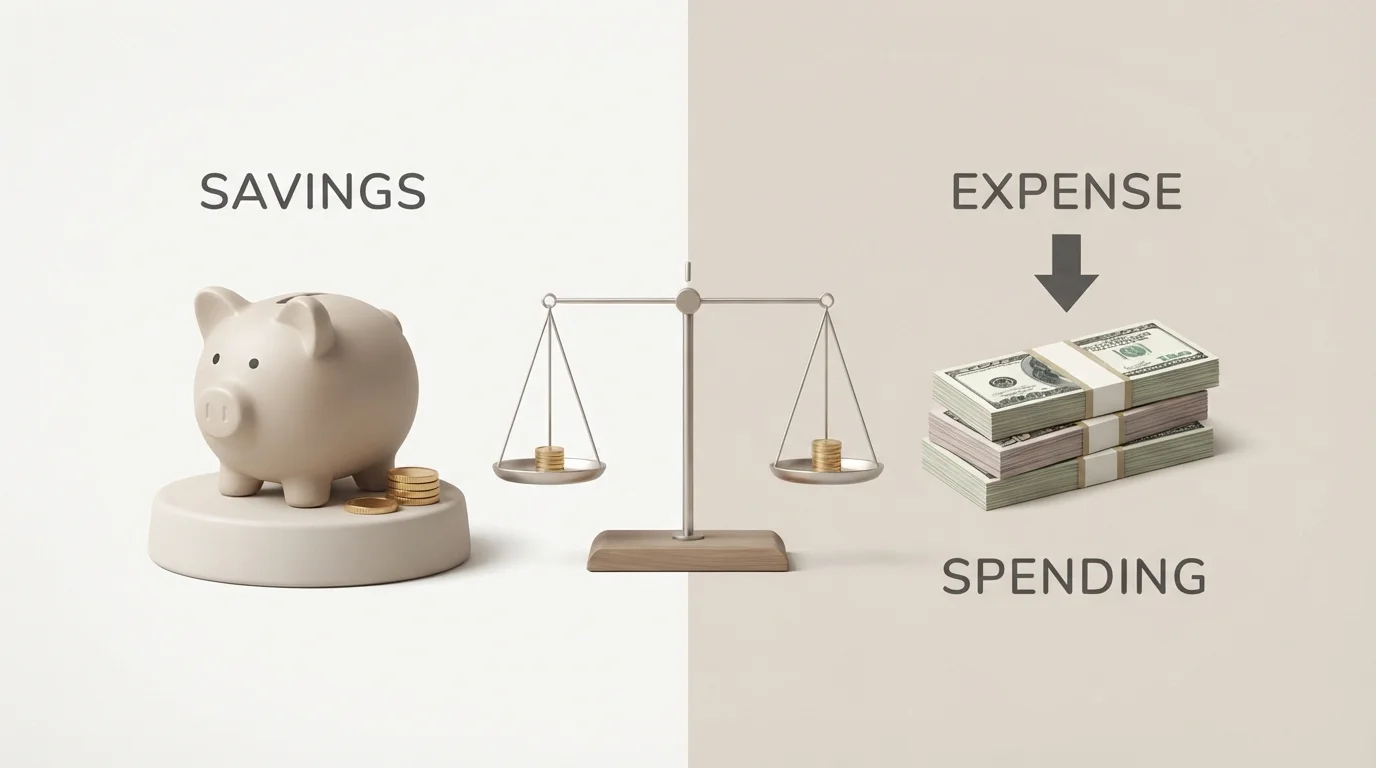
Neither saving nor paying off debt is universally the right first move — it depends on the interest rates involved, whether you have any emergency cushion, and your access to employer benefits. For most people, the practical answer is a structured hybrid: build a starter emergency fund, capture any employer match, then direct remaining funds toward high-interest debt before broadening savings goals.
| Best for | Recommended |
|---|---|
| Those carrying high-interest debt (above roughly 7–8%) | Prioritize debt payoff |
| Those with no emergency fund and stable low-interest debt | Prioritize saving first |
| Those with employer 401(k) matching available | Split: contribute enough for the match, then attack debt |
| Those with a mix of debt types and moderate savings | Hybrid approach — allocate proportionally by interest rate |
Why This Decision Is Harder Than It Looks
Most personal finance advice treats saving and paying off debt as competing priorities, but the reality is more nuanced. Both build your net worth — one by reducing what you owe, the other by growing what you own. The challenge is that every dollar can only do one job at a time, so the sequence matters.
The core tension comes down to interest rates. If your debt carries a 20% annual percentage rate (APR) and your savings account yields 5%, every dollar sitting in savings is effectively costing you 15 cents a year in net interest. But if you have zero emergency savings and an unexpected expense hits, you may take on more debt to cover it — erasing the progress you made. Understanding these trade-offs is the starting point for a decision that actually holds up. For a broader look at how these goals fit together, see our complete financial roadmap.
Saving vs. Paying Off Debt: The Core Trade-Offs
Before comparing these two paths side by side, it helps to be clear about what each one actually delivers.
| Saving First | Paying Off Debt First | |
|---|---|---|
| Guaranteed return | No — savings rates fluctuate | Yes — eliminates fixed interest cost |
| Liquidity | High — funds remain accessible | Low — equity locked until sold or refinanced |
| Interest cost reduction | None — debt continues accruing | Immediate and compounding |
| Emergency readiness | Strong — cash available if needed | Weak — no buffer for unexpected costs |
| Net worth impact | Increases assets | Reduces liabilities — same net effect |
| Best suited for | Low-rate debt, employer match available | High-interest debt above ~7–8% APR |
Notice that neither column is a clear winner in every row. Debt payoff wins on guaranteed return and interest savings; saving wins on liquidity and psychological security. That asymmetry is exactly why a hybrid approach often outperforms going all-in on either side.
The Cases for Saving First
You have no emergency fund. Financial planners generally suggest keeping at least one to three months of essential expenses in an accessible account before aggressively paying down debt. Without that buffer, a car repair or medical bill can push you straight back onto a credit card — often at a higher rate than the debt you just paid down.
Your debt carries a low interest rate. Mortgages, subsidized student loans, and some auto loans often carry rates below 5%. If you can reliably earn more than that through investing — which is not guaranteed and involves risk — the math may favor directing extra dollars toward savings or a diversified portfolio rather than accelerating payoff. Always weigh this against your personal risk tolerance and time horizon.
You have access to an employer match. A 401(k) employer match is one of the few truly risk-free returns available to most workers. If your employer matches 50 cents on every dollar up to 6% of salary, passing that up to pay down debt is leaving compensation on the table. Contributing at least enough to capture the full match is widely considered a priority even when carrying debt. See our Investing Essentials hub for foundational context on retirement accounts.
Start Small With Your Emergency Fund
If building a full three-to-six month emergency fund feels out of reach right now, start with a target of $500 to $1,000. That modest cushion handles most common financial surprises — a car repair, a utility spike, a small medical bill — without requiring you to reach for a credit card. Once high-interest debt is under control, you can grow the fund further. Small wins compound into meaningful financial stability over time.
The Cases for Paying Off Debt First
Your interest rate is high. Credit card debt commonly carries APRs between 20% and 30%. No federally insured savings account or investment with a comparable risk profile reliably matches that return. Paying down a 25% APR balance is a mathematically certain 25% return on that dollar — something no savings product can promise.
Debt is affecting your cash flow. High minimum payments leave less room for saving, investing, or handling emergencies without borrowing again. Eliminating balances frees up monthly cash flow, which itself becomes a financial resource. Our guide on strategies that help people pay down debt faster outlines evidence-backed habits for accelerating this process.
The psychological burden is real. Research in behavioral economics consistently shows that debt stress impairs decision-making and overall well-being. If debt is causing significant anxiety, the non-financial benefit of eliminating it may justify a more aggressive payoff approach even when the numbers are close. For choosing the order in which to pay balances, see the comparison of debt avalanche and debt snowball methods.
Minimum Payments Are Non-Negotiable
No matter which strategy you choose, always make at least the minimum required payment on every debt. Missing payments triggers late fees, can raise your interest rate through penalty APR clauses, and damages your credit score — all of which make your situation harder to resolve. Redirecting money toward savings or other debts only makes sense after all minimums are covered.
Building a Framework That Works for You
Rather than choosing one priority in absolute terms, a sequenced framework gives most people a practical path forward:
- Build a starter emergency fund — aim for $1,000 to one month of expenses before anything else.
- Capture any employer retirement match — contribute the minimum needed to receive the full match.
- Pay off high-interest debt aggressively — generally anything above roughly 7–8% APR, starting with the highest rate first or smallest balance depending on your motivation style.
- Expand your emergency fund — grow it toward three to six months of expenses as debt falls.
- Broaden savings and investment goals — once high-interest debt is cleared, redirect those payments toward savings, retirement, or other goals.
This isn't a rigid prescription — it's a starting framework. Your income stability, family obligations, and risk tolerance all matter. Before making extra payments, run through this checklist to make sure the move fits your current situation. For a structured payoff plan, our guide on mapping out a realistic debt payoff plan walks through the full process step by step.
This article is for general informational purposes only and does not constitute personalized financial, tax, or investment advice. Consult a licensed financial professional for guidance specific to your situation.
The content on this site is for informational purposes only and is not a substitute for professional advice. Always consult a qualified professional for guidance specific to your situation.