

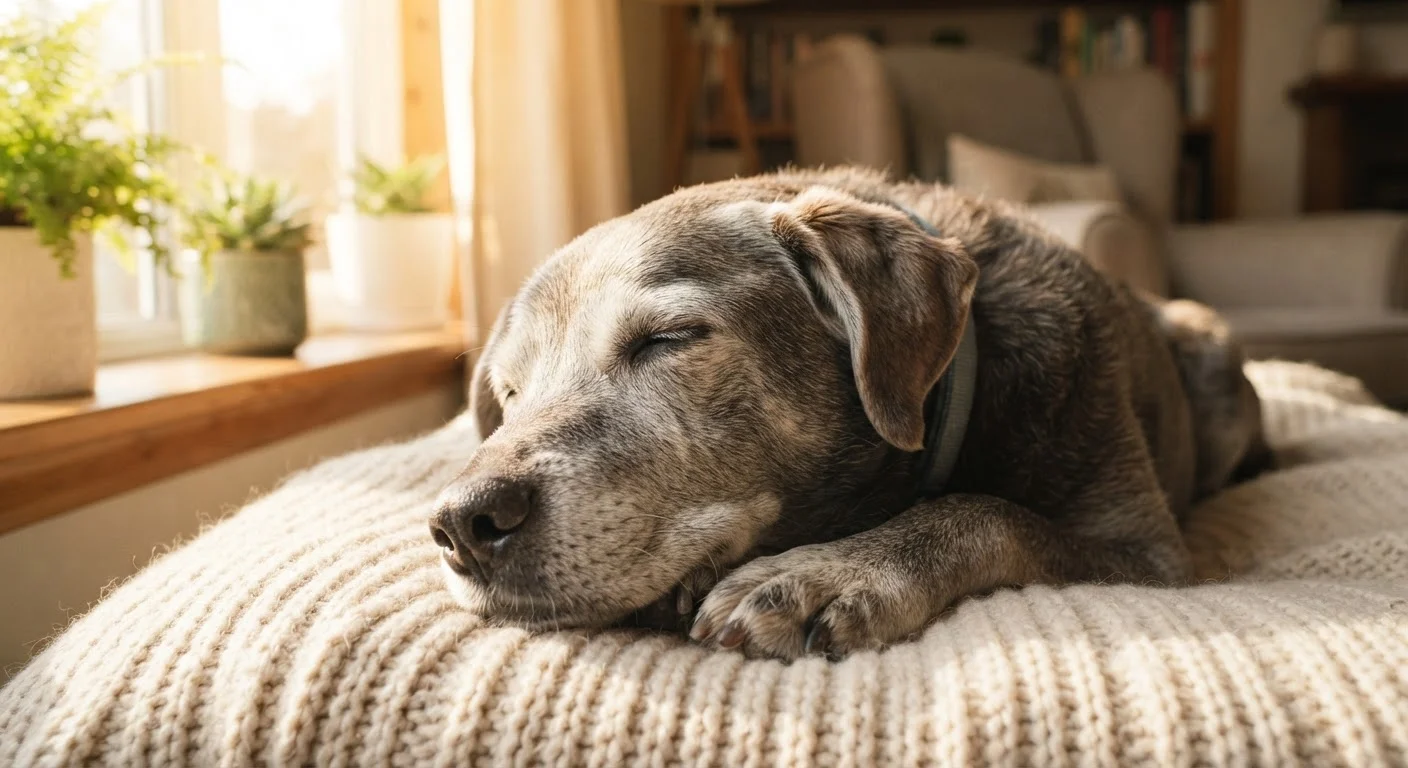
When 'Getting Older' Becomes a Care Signal
Most pet owners notice the gray around the muzzle long before they recognize that daily routines may need to change. Aging in pets isn't a single event — it's a gradual shift that unfolds across months and years, and it affects everything from metabolism and joint function to cognition and immune response.
Dogs are generally considered senior at around age 7, though large and giant breeds age faster and may reach that threshold earlier. Cats typically enter their senior phase around age 10 to 11. These aren't hard cutoffs — they're prompts to start paying closer attention. The pet health changes that matter most are often the quiet ones: a reluctance to climb stairs, sleeping in different spots, eating more slowly than before.
Understanding what's behind these shifts — and how to respond — is the foundation of responsible senior pet care. Below are the key signs that your pet's needs are evolving, along with practical guidance on how care should adapt.
Reduced Activity and Reluctance to Move
A senior pet that skips morning play, lingers on the stairs, or hesitates before jumping onto a favorite surface isn't just being lazy. Decreased activity is one of the earliest and most common signs of joint pain, muscle loss, or cardiovascular change. Arthritis, in particular, affects a significant portion of older dogs and cats — and it often progresses quietly.
Care adjustment: Work with your vet to assess joint health. Exercise shouldn't stop, but it should become lower-impact and shorter in duration. Gentle walks on flat surfaces, swimming (for dogs), and structured gentle play can maintain muscle mass without stressing inflamed joints.
Hesitation on stairs or during play is often the first visible signal of joint discomfort in older pets.
Changes in Appetite or Weight
Weight loss in senior pets can reflect dental disease (making eating painful), reduced digestive efficiency, kidney disease, hyperthyroidism in cats, or cancer. Weight gain, by contrast, may signal hypothyroidism or reduced activity combined with unchanged caloric intake. Either direction warrants a veterinary evaluation rather than a diet change made in isolation.
Care adjustment: Senior-formulated diets are designed around different protein, phosphorus, and caloric needs than adult foods. Your vet can help determine whether a dietary shift is appropriate based on bloodwork and body condition scoring — not just visual appearance. For deeper context, how health needs shift as animals age covers nutritional changes in detail.
Unexplained weight loss in a senior pet should always prompt a veterinary evaluation, not just a diet swap.
Behavioral and Cognitive Shifts
Disorientation, nighttime restlessness, increased vocalization, house-soiling after years of reliability, or unusual clinginess can all point to Cognitive Dysfunction Syndrome (CDS) — the animal equivalent of dementia. These changes are frequently misread as behavioral problems rather than neurological ones, which delays appropriate care.
Care adjustment: A structured daily routine, mental enrichment through puzzle feeders or scent games, and veterinary assessment for underlying medical causes are all part of a management approach. Medications and supplements exist that may help — your vet can discuss what's appropriate given your pet's full health picture.
Nighttime restlessness and disorientation in older pets may be cognitive dysfunction, not just bad behavior.
Changes in Bathroom Habits
Increased urination and thirst together (known as PU/PD — polyuria and polydipsia) are classic warning signs of kidney disease, diabetes, or Cushing's disease. Accidents in a previously house-trained pet can also reflect mobility limitations, urinary tract infections, or cognitive decline. Straining, blood in urine, or changes in stool consistency are also worth reporting promptly.
Care adjustment: Don't dismiss bathroom changes as behavioral regression. Document what you're observing — frequency, volume, consistency — and bring that information to your vet. Urinalysis and bloodwork can quickly narrow down the cause. Reading the signs your pet is in pain can help you connect these physical symptoms to broader discomfort patterns.
Drinking and urinating more than usual is a classic clinical signal that warrants bloodwork and urinalysis.
Sensory Decline — Vision and Hearing
Cataracts, nuclear sclerosis (a normal age-related cloudiness), and progressive retinal atrophy can all reduce a senior pet's vision. Hearing loss is also common and often gradual — owners may first notice a dog that stops responding to commands or seems startled when approached from behind.
Care adjustment: Pets adapt remarkably well to sensory loss when their environment stays consistent. Avoid rearranging furniture abruptly; use hand signals if hearing declines; approach a visually impaired pet from the front with a gentle verbal cue. Your vet can distinguish normal age-related changes from those requiring treatment.
Consistent home environments and adapted communication methods help pets navigate age-related sensory loss effectively.
Coat, Skin, and Nail Changes
A dull, dry, or unkempt coat in a previously well-groomed pet — particularly cats who stop self-grooming — can indicate pain (grooming hurts when joints ache), thyroid imbalance, or nutritional deficiency. Thickened, overgrown nails are also more common in senior pets that are less active and wear them down less naturally.
Care adjustment: Increase grooming assistance to maintain coat condition and to give you a regular opportunity to check skin for lumps, irritation, or parasites. More frequent nail trims are often needed. Changes in coat quality should be mentioned at vet visits, as they can be early indicators of systemic health issues.
A cat that stops grooming itself is often signaling physical discomfort, not a change in personality.
Adapting Your Approach Over Time
Caring for a senior pet is less about managing decline and more about staying attentive and responsive. Many of the changes described above develop slowly, which means consistent observation is one of your most useful tools. Keep a simple log of appetite, mobility, sleep patterns, and bathroom habits — even rough notes help you spot trends before they become problems.
Track Changes Between Vet Visits
Keep a simple written or phone-based log of your senior pet's appetite, activity level, sleep patterns, and bathroom habits. Even informal notes taken weekly give your veterinarian much more useful information than memory alone. Patterns that seem minor in isolation often become meaningful when viewed across several weeks.
Your veterinarian is your most important partner during this stage. Semi-annual wellness visits (rather than annual) are widely recommended for senior pets, giving your vet a clearer baseline and earlier visibility into any shifts. Bloodwork, urinalysis, and physical assessments can detect organ changes, thyroid imbalances, or early-stage arthritis before symptoms become pronounced.
Environmental changes matter too. Non-slip rugs, lower food and water bowls, orthopedic bedding, and ramps or steps near furniture can all make daily life more comfortable for a pet dealing with joint stiffness. These aren't luxuries — they're practical supports for an animal whose body is working differently than it once did.
For a broader picture of the habits that benefit pets across their whole lifespan, see responsible pet health habits that make a difference over time. And because pain in older animals is so often missed, it's worth reviewing why pets hide pain and how owners can spot the signs — the instinct to conceal discomfort doesn't diminish with age.
This article is for general informational purposes only and is not a substitute for professional veterinary advice. Always consult a licensed veterinarian for guidance specific to your pet's health and circumstances.
The content on this site is for informational purposes only and is not a substitute for professional advice. Always consult a qualified professional for guidance specific to your situation.