

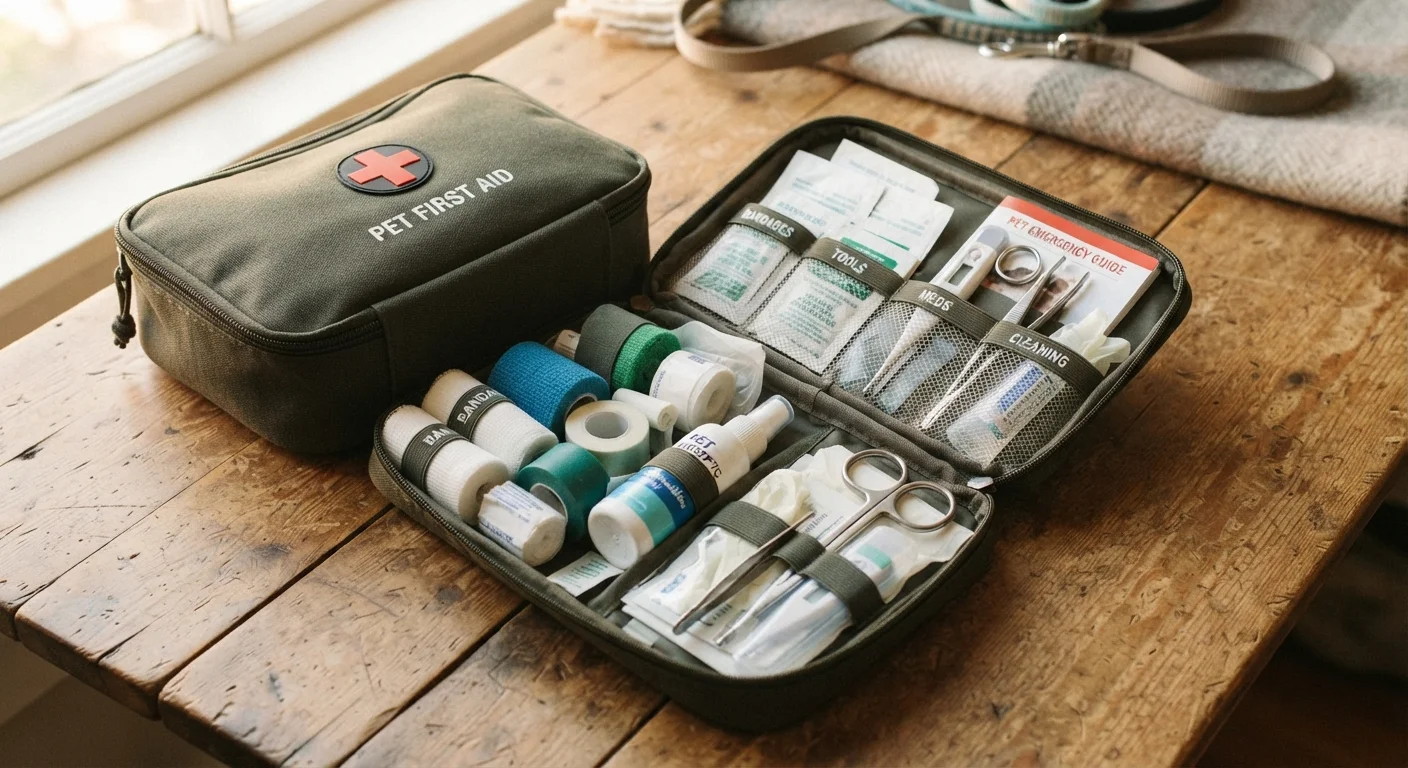
Summary
22 items · 30–60 minutes to assemble and label
Why the "Know How to Use It" Part Matters
Most pet owners intend to build a first-aid kit. Fewer actually do — and fewer still take the time to understand what the items inside are for. In an emergency, a box of unfamiliar supplies can slow you down as much as having nothing at all.
This checklist is built differently. Every item is paired with its purpose so that when something happens — a cut paw on a hiking trail, a sting at the park, a suspected toxic ingestion — you act with purpose rather than panic. Think of it as prep work that runs parallel to the everyday health habits that keep your pet well year-round.
Before you shop, two things to do first:
- Call your vet and ask if they have species-specific recommendations for your pet's size, age, or health conditions.
- Save emergency contacts — your primary vet, a 24-hour emergency animal hospital, and the ASPCA Animal Poison Control Center number — somewhere in the kit itself, not just in your phone.
This article is for general informational purposes only and is not a substitute for professional veterinary advice. In any serious emergency, contact a licensed veterinarian immediately.
Sealable plastic storage container
Keeps all kit contents organized, dry, and easy to grab in one unit.
Waterproof document pouch
Protects your pet's medical records and emergency contact card from moisture.
Pet first-aid reference card
Provides a quick visual guide to basic procedures such as bandaging, choking response, and signs of shock.
Digital pet thermometer
Accurately measures your pet's core temperature to detect fever or hypothermia.
The Complete Pet First-Aid Kit Checklist
Work through each group below when assembling your kit. Items marked must are the non-negotiables; should items are strongly recommended; nice to have items add useful capability without being essential. If you're a first-time pet owner, start with every "must" item before filling in the rest.
Wound Care
Examination Tools
Restraint and Safety
Documentation and Contacts
Medications (Vet-Approved Only)
First Aid Is Not a Substitute for Veterinary Care
Every item in this kit is designed to stabilize your pet until you can reach a veterinarian — not to replace professional treatment. Even if your pet appears to recover quickly after an incident, a vet examination is often still warranted. When in doubt, call your vet or an emergency animal hospital before, during, or after administering first aid.
Maintaining and Actually Using Your Kit
Building the kit is step one. Keeping it functional is the ongoing job. Set a calendar reminder every six months to check expiration dates on medications and antiseptics, replace used or degraded items, and confirm your emergency contact numbers are still current.
Store the kit somewhere accessible to adults in the household but out of reach of children and pets. A clearly labeled, sealable container kept near your leashes or pet supplies works well — the goal is that anyone in your home can find it fast.
Consider taking a pet first-aid course through a reputable organization such as the American Red Cross, which offers pet-specific training. Knowing how to bandage a limb or perform the Heimlich maneuver on a dog before you need to is far more valuable than reading instructions mid-emergency.
Pet first aid is one piece of a larger picture. For a broader look at building good preventive habits, see the Pet Care Basics hub, or explore what a full year-one health roadmap looks like for new owners.
Never Give Human Medications Without Vet Approval
Many medications that are safe for people — including ibuprofen, acetaminophen, and certain antihistamines — are toxic to dogs, cats, and other pets. Do not add any medication to your kit or administer it without first confirming with your veterinarian that it is safe for your specific animal's species, weight, and health status.
The content on this site is for informational purposes only and is not a substitute for professional advice. Always consult a qualified professional for guidance specific to your situation.