

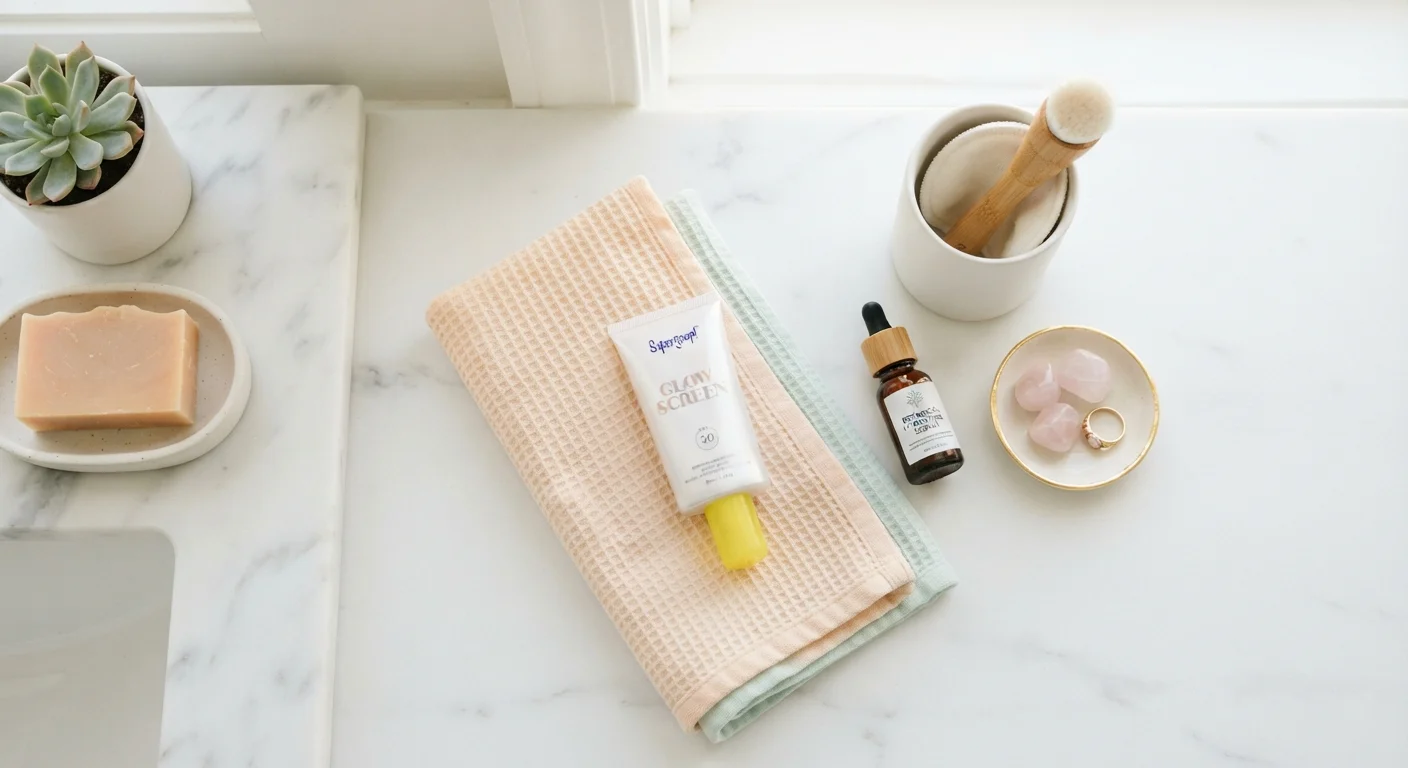
Why UV Exposure Is a Daily Reality
Most people reach for sunscreen only when they're headed to the beach or planning a long day outside. But ultraviolet radiation doesn't take days off — and neither should your SPF. UVA rays, the type most associated with premature aging and long-term skin damage, penetrate clouds, fog, and even glass. That morning commute, the desk near a window, the quick errand run on an overcast Tuesday — all of it counts as UV exposure.
Dermatologists widely regard daily sunscreen use as the single most impactful preventive skin habit available. It's not about vanity; it's a genuine form of everyday health maintenance. As part of a broader approach to preventive care, consistent SPF use fits squarely alongside habits like staying hydrated and getting regular screenings.
Up to 80%
UV rays that penetrate cloud cover
According to the Skin Cancer Foundation, up to 80% of UV rays can pass through clouds, making overcast days no safer than sunny ones.
SPF 30
Minimum daily SPF recommended by dermatologists
The American Academy of Dermatology recommends using a broad-spectrum sunscreen with at least SPF 30 for everyday use.
Best Practices for Making SPF Stick
Knowing you should wear sunscreen daily is one thing. Building it into your actual morning without fuss is another. These practices help bridge that gap.
Apply sunscreen as the very last step of your morning skincare routine, every single day.
Consistency is the whole game with sun protection. Making SPF the ritual closing step of your AM routine — rain, shine, or work-from-home day — removes the decision-making that leads to skipping. It also ensures proper layering so other products work as intended.
Choose broad-spectrum SPF 30 or higher for everyday facial use.
SPF 30 blocks roughly 97% of UVB rays under laboratory conditions. Broad-spectrum coverage adds protection against UVA rays, which are responsible for photoaging. Going lower leaves meaningful gaps in protection.
Reapply every two hours when you're spending extended time outdoors.
Sunscreen degrades with UV exposure, sweat, and physical contact. A morning application doesn't hold all day — especially during outdoor activity. Reapplication is where most people leave themselves unprotected without realizing it.
Don't forget high-exposure areas beyond the face — ears, neck, and hands.
The face gets most of the SPF attention, but the neck and hands age visibly and are exposed equally. Ears are a surprisingly common site for skin damage that goes unnoticed until a dermatologist flags it.
Use a nickel-sized amount (about a quarter teaspoon) for the face and neck.
Studies consistently show that people apply far less sunscreen than the amounts used to measure SPF ratings. Under-application means the actual protection is significantly lower than the label promises.
Where Sunscreen Fits in Your Routine
One reason people skip sunscreen is confusion about where it belongs in a multi-step routine. The answer is straightforward: sunscreen goes on last in your skincare sequence, right before makeup if you wear it. Applying it after moisturizer ensures your other active products absorb properly without the SPF film creating a barrier that blocks them.
Our skincare layering guide explains the logic in more detail, but the short version is: thinnest to thickest, with sunscreen as the final protective layer. If your morning routine doesn't currently include SPF as the closing step, that's the first adjustment worth making.
Morning Routine Placement Matters
Sunscreen should always be the final step before makeup — not before serum, not mixed into moisturizer. Applying it last keeps the SPF film intact on your skin's surface where it can do its job. If you mix sunscreen into another product, you dilute its effectiveness and disrupt its protective chemistry.
Sunscreen is strictly a morning habit — there's no UV protection needed while you sleep, so your evening routine focuses on repair and hydration instead. If you've been applying it inconsistently, a quick routine audit can help you spot where the gap lives.
Choosing a Formula You'll Actually Use
The best sunscreen is the one you wear consistently. Chemical sunscreens absorb UV rays and convert them to heat; mineral sunscreens (containing zinc oxide or titanium dioxide) sit on the skin's surface and physically deflect UV. Neither is universally superior — it comes down to your skin type, preferences, and lifestyle.
Mineral vs. Chemical: Quick Reference
Mineral sunscreens are often recommended for sensitive skin since they're less likely to cause irritation. Chemical formulas tend to feel lighter and blend invisibly, which many people prefer for everyday wear under makeup. Neither type is inherently better — efficacy depends on correct application, not formula type. If you have specific skin concerns, a dermatologist can help guide your choice.
Regardless of formula, the key numbers are SPF 30 or above and broad-spectrum protection (meaning coverage for both UVA and UVB rays). Apply what most dermatologists describe as about a nickel-sized amount for the face alone, and don't forget ears, neck, and the backs of hands.
“Sunscreen is the closest thing we have to a fountain of youth. If you're only going to do one thing for your skin, make it wearing sunscreen every day.”
— Henry W. Lim, Dermatologist and past president of the American Academy of Dermatology
If you've struggled to find a formula that works with your skin, consider it worth experimenting — the friction of a formula you dislike is one of the most common reasons people quietly undermine their own preventive habits. Once you find a texture you enjoy, the habit tends to lock in fast.
The content on this site is for informational purposes only and is not a substitute for professional advice. Always consult a qualified professional for guidance specific to your situation.