

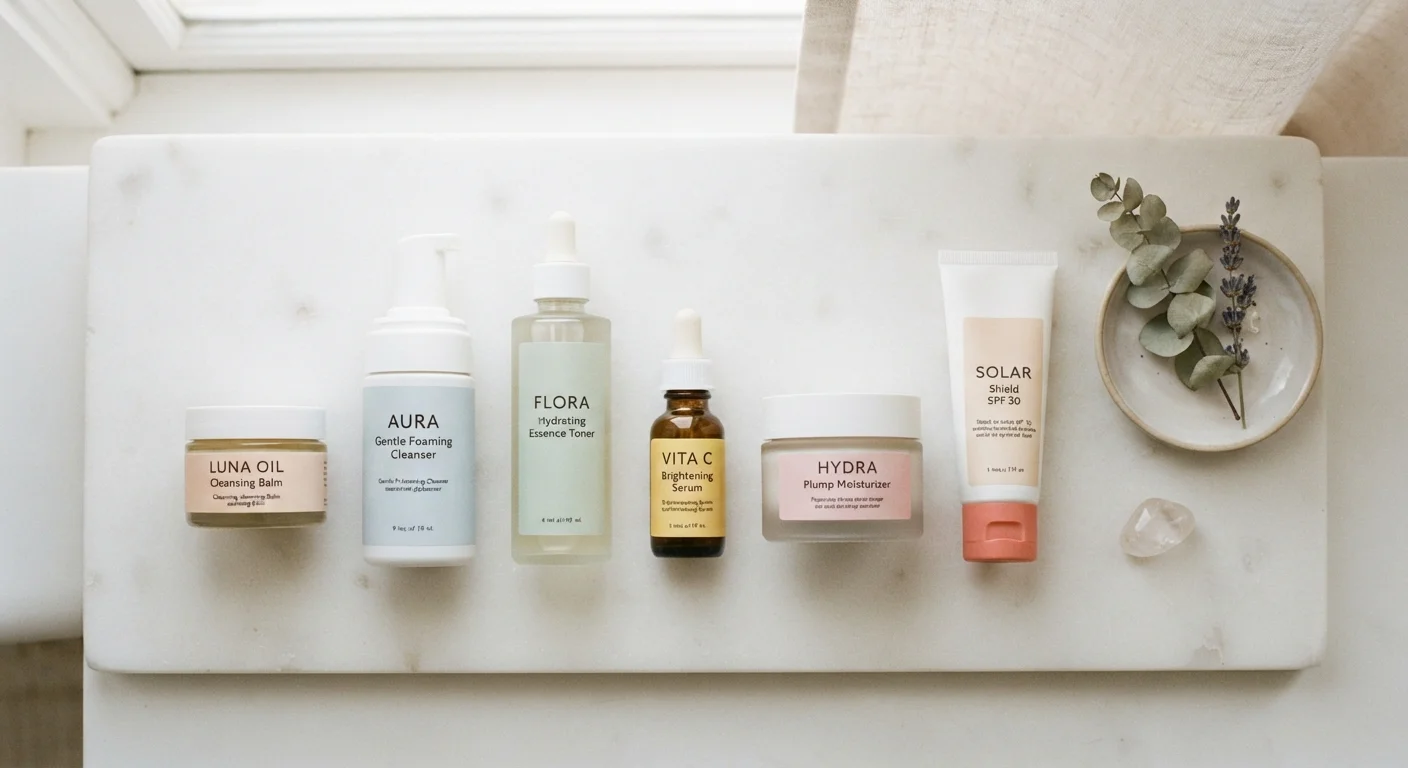
The Core Logic: Thin to Thick
If there's one rule that covers almost every skincare layering question, it's this: start with the thinnest texture and finish with the thickest. Thin, watery formulas — like micellar water, toners, and essences — have small molecules and are designed to absorb quickly into skin. Heavier products, like creams and facial oils, form a layer that seals in everything underneath.
Apply them in the wrong order and that heavier layer acts like a door that never opened. Your lighter serums and actives sit on top of the occlusive film, unable to reach the deeper skin layers where they're intended to work. The product is still there — it's just not doing much.
This is also why oil-based products generally come after water-based ones. Oil and water don't mix, and water-based products can't penetrate an oil layer effectively. Think of it like trying to water a garden through a tarp.
Quick Texture Test
Not sure where a product falls in your lineup? Pick it up and feel it. If it's watery or gel-like, it goes earlier. If it feels thick, creamy, or oily, it goes later. When in doubt, thinner always comes before thicker.
A Practical Step-by-Step Framework
Here's a clear sequence that works for most people, morning or evening:
- Cleanser — Always the starting point. Clean skin allows everything that follows to absorb properly. For a deeper look at what each foundational step accomplishes, see what each core step actually does.
- Toner or essence — Lightweight, water-based, and applied to damp or freshly dried skin. Some toners simply balance pH; others deliver a first layer of hydration or actives.
- Targeted serums and treatments — This is where active ingredients like vitamin C, niacinamide, or hyaluronic acid live. Apply them before moisturizer so they can penetrate unimpeded.
- Eye cream (if used) — Typically goes on around this stage, before heavier moisturizers, since most are lighter in consistency than face creams.
- Moisturizer — Locks in hydration and helps support the skin barrier. Heavier than serums but lighter than facial oils.
- Facial oil (if used) — Goes on after moisturizer, not before. Oils seal in moisture rather than deliver it.
- Sunscreen (morning only) — Always the final step in an AM routine. It sits on top of your skin to create a protective shield and should not have anything applied over it. Read more about why daily SPF is non-negotiable.
7+
Average steps in a typical skincare routine
Consumer surveys consistently find that American adults use between 5 and 9 skincare products daily, making layering order a practically important concern.
~60%
Skin absorption affected by application order
Research on topical drug delivery has established that occlusive formulations significantly reduce the penetration of subsequently applied active ingredients.
Navigating Active Ingredients
Active ingredients — retinol, AHAs, BHAs, vitamin C, peptides — are where layering gets a little more nuanced. Some actives interact with each other in ways that can reduce effectiveness or cause irritation, and the order you apply them matters beyond just texture.
A few reliable principles:
- Acids (AHAs/BHAs) generally go on before other treatments, after cleansing and toning, when skin is clean and prepped. Understanding chemical exfoliation can help you know when and how to use them safely.
- Retinol is typically an evening-only ingredient and is applied after toner, before moisturizer. It can increase skin sensitivity, so pairing it with other strong actives in the same application isn't usually recommended. The full picture is worth understanding — see how retinol works and who should approach it carefully.
- Fragrance-containing products are worth thinking about too — they can cause irritation that gets mistaken for a reaction to an active ingredient. Fragrance in skincare is a topic worth understanding when you're troubleshooting a routine.
Introducing New Actives Gradually
When adding a new active ingredient to your routine, dermatologists generally recommend introducing one product at a time over several weeks. This makes it much easier to identify what's causing a reaction if your skin responds negatively. Layering order and ingredient interactions can both be variables, so changing one thing at a time gives you cleaner feedback.
When to Revisit Your Routine
Even a well-intentioned routine can go sideways — and sometimes the problem isn't the products themselves but the order, frequency, or combination. If your skin seems consistently congested, irritated, or just not improving, layering order is one of the first things worth reviewing. Signs your routine needs an audit offers a useful checklist for spotting common gaps.
If you're also curious about how to read a skincare label, understanding what's in each product can sharpen your sense of where it belongs in the sequence. A well-layered routine with fewer products almost always outperforms a chaotic one with many.
This article is for general informational and educational purposes only and is not a substitute for advice from a qualified dermatologist or skincare professional. Individual skin types and conditions vary; consult a licensed professional for personalized guidance.
Frequently Asked Questions
Yes, sequence affects how well each product absorbs and performs. A heavy moisturizer applied before a serum can physically block the serum from reaching the skin. Following the thin-to-thick rule gives every product its best chance to work.
Sunscreen goes last in a morning routine, after moisturizer. It's designed to sit on the skin's surface and create a protective layer, so applying other products on top of it would compromise that protection.
Both are active ingredients, and many skin experts suggest using them at different times — vitamin C in the morning, retinol at night — to minimize potential irritation and stability issues. Always introduce one new active at a time and monitor how your skin responds.
A short wait of 30–60 seconds between each step is generally enough for most products. Certain actives like AHAs or BHAs may benefit from a slightly longer absorption window before you layer on top.
The thin-to-thick principle applies to both, but the product lineup differs. Morning routines prioritize protection, ending with SPF; evening routines lean into repair and recovery, often including retinol or richer treatments. Learn more about how <a href="/style-beauty/beauty-basics/morning-routine-vs-evening-routine-how-skincare-goals-shift-with-the-time-of-day">AM and PM routines differ</a>.
You may not see serious harm, but you'll likely see diminished results. Active ingredients applied over occlusive creams may not penetrate effectively, meaning you've paid for benefits your skin never actually received.
The content on this site is for informational purposes only and is not a substitute for professional advice. Always consult a qualified professional for guidance specific to your situation.