

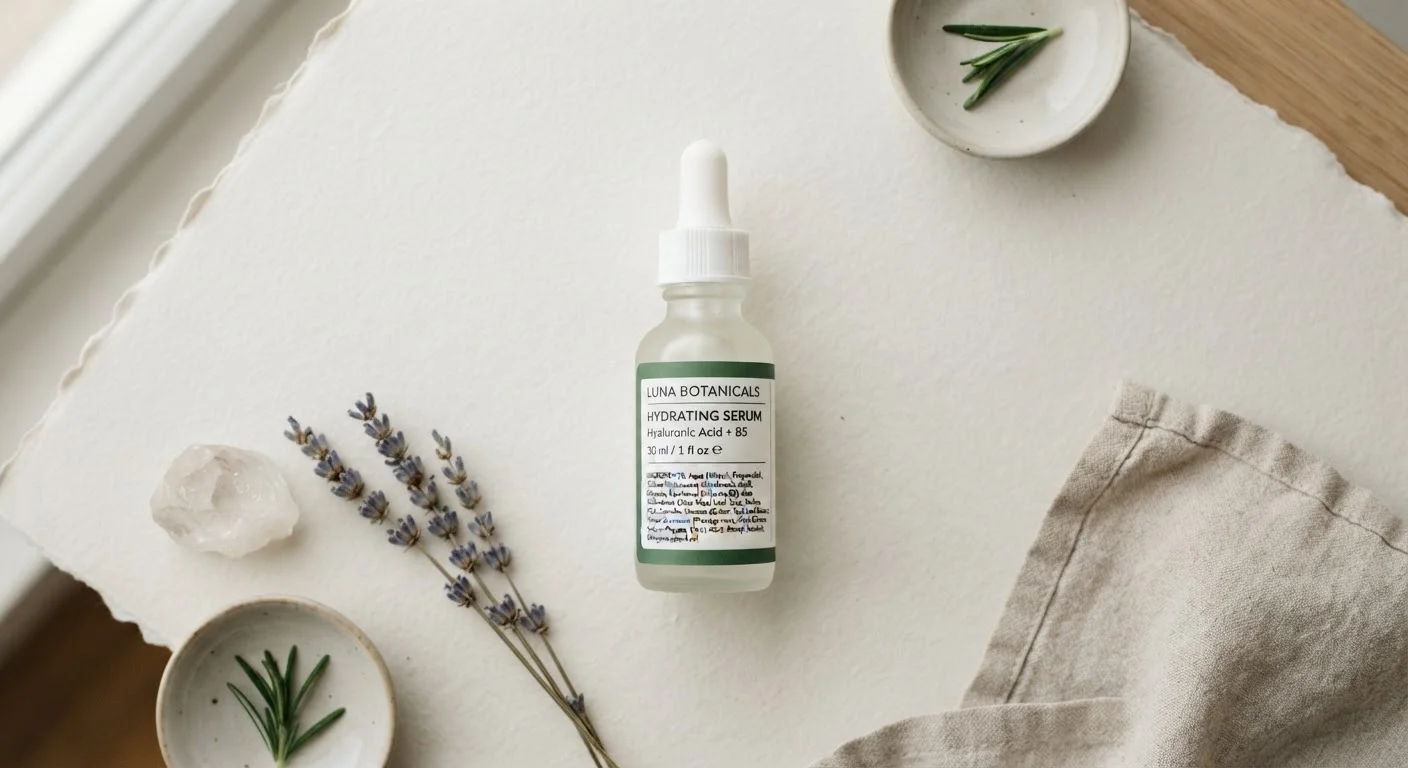
Why the Ingredient List Is Worth Your Time
Most of us flip a skincare product over, see a dense paragraph of unpronounceable words, and flip it right back. That reaction is completely understandable — but the list is actually one of the most honest things on the entire package. Front-of-label claims like "brightening," "firming," or "deeply hydrating" are largely unregulated marketing language. The ingredient list, by contrast, is regulated by the FDA in the U.S. and must follow specific rules about what's included and how it's ordered.
Learning to read it doesn't require a chemistry degree. It requires knowing a few structural rules and a handful of common ingredient names. Once those click into place, you'll be able to compare products much more meaningfully — and spot when a product is overselling what's actually inside. If you're also sorting out the basics of your routine, our breakdown of what each skincare step does is a solid companion read.
The Core Rules of How Ingredient Lists Work
Before diving into specific ingredients, understand the structure. U.S. skincare products use the INCI system — the International Nomenclature of Cosmetic Ingredients. This means every ingredient has a standardized Latin or chemical name that's used consistently across brands and borders. "Water" becomes Aqua. Vitamin C may appear as Ascorbic Acid or Sodium Ascorbyl Phosphate. The same core ingredient can appear under different INCI names depending on its form, which is why understanding common skincare terminology helps enormously.
The key structural rule: ingredients are listed in descending order by weight or concentration, from highest to lowest. The ingredient at the top makes up the largest portion of the formula; the one at the bottom is present in the smallest amount.
Use the 1% Rule as Your Compass
Once you spot the first preservative on an ingredient list — usually Phenoxyethanol or a similar compound — everything listed after it is likely present at 1% or below. This is a practical shortcut for quickly separating high-concentration workhorses from trace-level supporting ingredients. It won't be exact for every formula, but it's a reliable enough guide for everyday label reading.
There is one important exception: any ingredient present at 1% or less can be listed in any order after the higher-concentration ingredients. Brands sometimes use this flexibility strategically, which is why a "hero" ingredient listed near the end may be present only in trace amounts.
How to Actually Read the List: A Step-by-Step Approach
Read the first five ingredients carefully
These ingredients typically make up 80–95% of the formula by weight. If water (Aqua) is first, the product is water-based. If an oil or butter is first, it's oil-based. Confirm that any ingredient the product heavily markets — a peptide, an acid, a botanical extract — appears in this zone if you want it to be meaningfully concentrated.
Identify the functional ingredient categories
Work down the list and mentally group ingredients into their roles: humectants, emollients, occlusives, emulsifiers, and preservatives. This helps you understand what the formula is actually designed to do — moisturize, create a smooth texture, extend shelf life — versus what it's claimed to do on the front label.
Note where the 1% threshold likely falls
Preservatives like Phenoxyethanol are typically used at concentrations of 1% or below. When you spot a preservative on the list, everything below it — including many botanical extracts and active ingredients — is likely present at 1% or less. This is useful context for evaluating ingredient claims.
Scan for your personal flags
If you have known sensitivities or prefer to avoid certain ingredients — fragrance, specific alcohols, silicones, sulfates — search for them by their INCI names. Keep a short personal reference list of the exact terms to look for, since the same substance can appear under slightly different names depending on its form.
Check the Drug Facts panel for regulated actives
For sunscreens, acne treatments, or anti-dandruff products, the active ingredients with regulated functions are listed separately with their percentages in a Drug Facts box — not in the main INCI list. This is the most straightforward concentration information on any skincare label, so always check it when evaluating these product types.
Once you've worked through the list systematically, you'll have a clearer sense of whether a product's formula matches its claims. If your current routine doesn't seem to be delivering results, this routine audit checklist can help you identify where things might be going wrong.
Ingredients That Show Up Everywhere — and What They Mean
A few categories of ingredients appear in almost every skincare formula, regardless of the product type. Recognizing them on sight makes the list feel far less intimidating.
- Humectants (draw moisture into skin): Glycerin, Hyaluronic Acid, Sodium PCA
- Emollients (soften and smooth): Squalane, Cetyl Alcohol, Dimethicone
- Occlusives (seal moisture in): Petrolatum, Beeswax, Shea Butter
- Emulsifiers (bind water and oil): Cetearyl Alcohol, Polysorbate 20
- Preservatives (prevent microbial growth): Phenoxyethanol, Ethylhexylglycerin, Sodium Benzoate
- Fragrance: Listed as "Fragrance," "Parfum," or individual fragrant compounds — a topic worth understanding in depth via our balanced look at fragrance in skincare
Drug Facts Actives Are Listed Separately
For regulated products like sunscreens and acne treatments, active ingredients and their concentrations appear in a dedicated Drug Facts panel — not in the main ingredient list. If you're evaluating SPF level or acne-fighting strength, the Drug Facts box is the right place to look. The main INCI list covers inactive ingredients for these products.
Active ingredients — those with a specific, regulated function like SPF filters or acne treatments — are required by the FDA to be listed separately in a "Drug Facts" panel with their concentration percentage. If you're evaluating a sunscreen or acne product, check that panel first.
Putting It All Together for Smarter Decisions
Armed with these basics, you can approach any product more critically. When a serum claims to be "retinol-powered," check where retinol (listed as Retinol or Retinyl Palmitate) actually falls on the list. For a deeper look at how that ingredient works and who should use it with caution, see our retinol explainer. When a moisturizer markets itself as suitable for sensitive skin, scan for common irritants — synthetic fragrance, essential oils, alcohol denat — in the top half of the list.
Label literacy also helps when your skin changes. Knowing what's actually in your go-to products makes it easier to identify a culprit if something causes irritation, and easier to find a comparable replacement when a product is discontinued. Understanding your skin type is just as important as reading labels — our practical guide to knowing your skin type walks through how to assess it accurately at home.
The ingredient list won't tell you how a product feels on your skin or whether it'll work perfectly for your individual biology — but it gives you a reliable, regulated foundation for comparison that no marketing claim can match.
The content on this site is for informational purposes only and is not a substitute for professional advice. Always consult a qualified professional for guidance specific to your situation.