

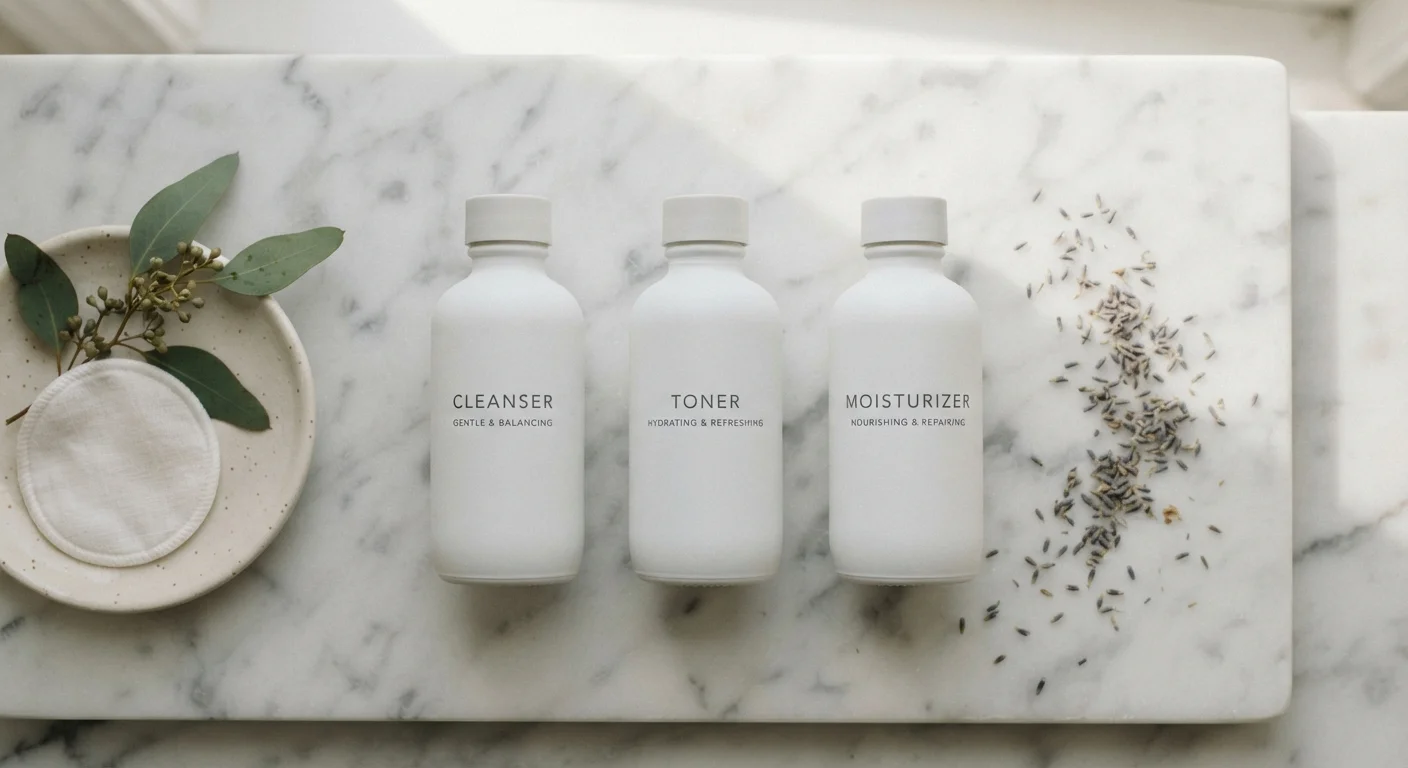
The Core Three: A Quick Reference
Walk down any beauty aisle and you'll find hundreds of skincare products, but the foundation of most routines comes down to three steps: cleanser, toner, and moisturizer. Each one plays a specific role in maintaining the skin's health and barrier function. Understanding what they actually do — not just what the marketing says — helps you decide which steps you genuinely need and which you can skip.
| Step 1 | Cleanser — removes surface buildup and preps skin for absorption |
| Step 2 | Toner — hydrates, exfoliates, or pH-balances depending on formula |
| Step 3 | Moisturizer — seals in hydration and supports the skin barrier |
| Truly optional step | Toner — many skin types do just fine without it |
| Skin's natural pH range | Approximately 4.5–5.5 (mildly acidic) (General dermatological reference) |
| Cleanser timing | Evening cleanse is essential; morning cleanse depends on skin type |
For a deeper look at how these steps interact with each other and with add-on products, see our guide to skincare layering order.
Cleanser: The Non-Negotiable Starting Point
A cleanser removes dirt, excess oil, sunscreen, makeup, and environmental pollutants that accumulate on the skin's surface throughout the day. Without it, subsequent products have to penetrate a layer of grime to reach skin cells — which reduces their effectiveness and can contribute to clogged pores.
Cleansers come in several formats: foaming, gel, cream, oil, and micellar water, each suited to different skin types and needs. Foaming and gel formulas tend to work well for oily or acne-prone skin, while cream and oil cleansers are gentler options for dry or sensitive skin. The goal of any cleanser is to remove buildup without stripping the skin's natural moisture barrier — which is why over-cleansing (using a formula that's too harsh, or washing too frequently) can leave skin tight, dry, and reactive.
Is it necessary? Yes, once daily at minimum. Most dermatologists and estheticians recommend cleansing in the evening to remove the day's buildup. A gentle rinse with water in the morning is sufficient for many skin types, though those with oily skin often prefer a light morning cleanse as well.
Toner: The Most Misunderstood Step
Toners have a complicated reputation, largely because older formulas were heavily alcohol-based and designed to strip oil — which caused more harm than good for most skin types. Modern toners are a different story. Today's formulas range widely in purpose: some deliver hydration (often called "hydrating toners" or "essences"), some gently exfoliate with acids like glycolic or lactic acid, and some aim to balance the skin's pH after cleansing.
The pH-balancing claim deserves some nuance. Skin sits at a mildly acidic pH (roughly 4.5 to 5.5), and a well-formulated cleanser shouldn't dramatically disrupt that balance. However, for people using tap water that's hard or alkaline, a pH-correcting toner can be a useful bridge before applying serums or treatments.
Skin barrier
The outermost layer of the skin (stratum corneum) that acts as a protective shield against moisture loss and environmental aggressors. A healthy barrier keeps skin hydrated and resilient.
Humectant
An ingredient that attracts water molecules and draws them into the skin. Common humectants include hyaluronic acid and glycerin, often found in toners, serums, and moisturizers.
Emollient
An ingredient that softens and smooths the skin by filling in gaps between skin cells. Fatty acids and plant oils are common emollients found in moisturizers.
Occlusive
An ingredient that forms a physical film on the skin's surface to reduce transepidermal water loss (TEWL). Examples include petrolatum and dimethicone, commonly found in heavier creams.
pH balance
A measure of how acidic or alkaline a substance is on a scale of 0–14. Healthy skin is mildly acidic (around pH 4.5–5.5), and some toners aim to help maintain that range after cleansing.
Micellar water
A gentle, no-rinse cleansing liquid that uses micelles — tiny oil molecules suspended in water — to lift dirt and makeup from the skin surface without harsh rubbing or rinsing.
Is it necessary? It depends on your routine and skin type. Toner is genuinely optional for many people. If you're already using a hydrating serum or an exfoliating treatment elsewhere in your routine, you may not need one. That said, a hydrating toner can be a low-effort way to add a layer of moisture, especially in dry climates or winter months.
Curious about how exfoliating toners fit into the bigger picture? Our article on physical vs. chemical exfoliation covers the differences in depth.
Moisturizer: Sealing and Supporting the Skin Barrier
A moisturizer's primary job is to support the skin's barrier — the outermost layer that prevents water loss and protects against environmental irritants. Most moisturizers work through a combination of three ingredient types: humectants (like hyaluronic acid and glycerin) that draw water into the skin, emollients (like fatty acids and plant oils) that smooth and soften, and occlusives (like petrolatum or dimethicone) that form a physical seal to reduce moisture evaporation.
Moisturizers are not one-size-fits-all. Lightweight gel moisturizers work well for oily or combination skin; richer creams better suit dry or mature skin. Applying moisturizer while skin is still slightly damp from toner or rinsing helps lock in extra hydration.
Is it necessary? For the vast majority of people, yes — including those with oily skin. Skipping moisturizer in hopes of reducing shine can backfire: the skin may overproduce oil to compensate for a disrupted barrier. The key is choosing the right texture for your skin type, not avoiding the step altogether.
Your morning and evening moisturizer needs may also differ. Our article on AM vs. PM skincare goals explains why.
Oily Skin Still Needs Moisturizer
A common misconception is that oily skin should skip moisturizer. In fact, dehydrated skin can trigger the skin to produce more oil as a compensatory response. Choosing a lightweight, non-comedogenic gel formula is generally a better strategy than skipping the step entirely. If you're unsure what's right for your skin, a consultation with a licensed esthetician or dermatologist can provide personalized guidance.
If your skin isn't responding well to a consistent routine, it may be worth stepping back. Our skincare routine audit checklist can help you spot common mismatches.
The content on this site is for informational purposes only and is not a substitute for professional advice. Always consult a qualified professional for guidance specific to your situation.