

Why Itinerary Type Matters More Than You Might Think
When most people imagine a cruise, they picture sun-drenched decks and tropical drinks — but the reality is that cruise itineraries vary as dramatically as the world's coastlines themselves. A week in the Caribbean and a week in Norway share a ship, but almost nothing else: the pace, the landscapes, the port experiences, and the onboard culture all shift depending on where you're sailing.
Choosing the right region isn't just about preference — it affects how you'll spend your days ashore, what time of year makes sense to travel, and how much pre-planning your ports will require. For a full picture of how to structure your trip once you've chosen a region, our cruise planning guide walks through the decision arc from destination selection to day one onboard.
Below, we break down the major cruise itinerary types — what each does well, when to go, and who each suits best.
Caribbean: The Classic Entry Point
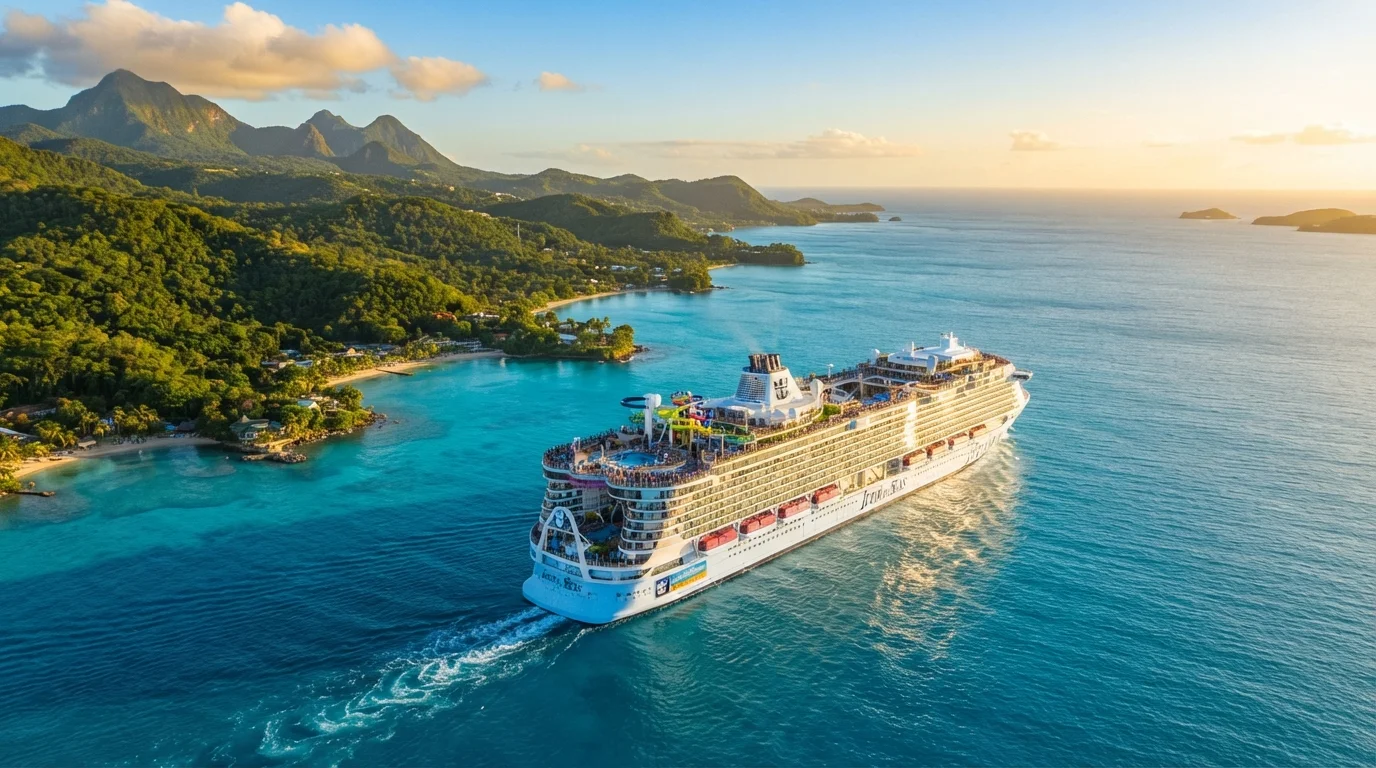
The Caribbean remains the most popular cruise region in the world, and for good reason. With warm weather year-round, a mix of beach-focused and culturally rich islands, and short flight connections from most U.S. cities, it's the itinerary type that works for the widest range of travelers — from families on their first cruise to retirees who've sailed dozens of times.
Eastern Caribbean routes typically include stops in the U.S. Virgin Islands, Puerto Rico, and St. Maarten. Western itineraries tend to feature Cozumel, Belize, and the Cayman Islands. Southern Caribbean sailings, usually longer voyages departing from San Juan or Barbados, reach Aruba, Trinidad, and Bonaire.
One key consideration: hurricane season runs June through November. While ships reroute to avoid storms and the Caribbean still sees plenty of sailings during those months, weather variability is real. Travelers with firm vacation dates during that window should review what travel coverage they carry — cruise-relevant travel insurance typically addresses missed ports and weather-related disruptions.
The Caribbean works for more traveler profiles than any other cruise region in the world.
Mediterranean: Culture-Dense and Port-Heavy
Mediterranean cruises attract travelers who want immersion in history, architecture, and cuisine rather than beach time. A single itinerary might touch Barcelona, Rome's port at Civitavecchia, Athens, Santorini, and Dubrovnik in seven days — an ambitious pace that rewards preparation and punishes indecision.
The key challenge with Mediterranean itineraries is time. Most port stops run six to ten hours, and the cities involved are enormous. Travelers who show up without a plan often spend precious hours figuring out transport. Knowing in advance whether you want to prioritize the Colosseum, a wine region, or an afternoon at a local market makes a real difference.
Sailing season runs roughly April through October, with peak summer months bringing significant crowds at major sites. Shoulder-season sailings — May, early June, September, and October — often offer a more comfortable balance of weather and manageable tourist volume. Eastern Mediterranean routes extend into Turkey, Croatia, and Greece, while western itineraries focus on Spain, France, and Italy.
Mediterranean ports reward travelers who arrive with a clear plan for their limited hours ashore.
Alaska: Wilderness and Wildlife on a Schedule
Alaska cruises operate in a narrow window — roughly May through September — and they offer a fundamentally different experience from warm-weather itineraries. Here, the scenery is the destination. Glacier Bay, the Inside Passage, and Hubbard Glacier are the draw, and passengers spend significant time on deck watching ice calve and scanning for humpback whales, brown bears, and bald eagles.
Most Alaska itineraries depart from Seattle or Vancouver and travel the Inside Passage, stopping in ports like Juneau, Ketchikan, Sitka, and Skagway. Roundtrip itineraries return to the departure port; one-way (northbound or southbound) voyages often require a repositioning flight.
Because shore excursions in Alaska — whale watching, floatplane tours, glacier hikes — tend to fill quickly and vary significantly in quality, advance booking is particularly valuable here. The trade-off between cruise-line and independent excursion options is especially worth thinking through before you go.
In Alaska, the most memorable moments often happen from the ship's deck, not at the port.
Northern Europe and the Norwegian Fjords
Northern European itineraries encompass a wide range of experiences — from the dramatic fjord landscapes of Norway to the Baltic capitals of Copenhagen, Stockholm, Helsinki, and St. Petersburg (access to the latter varies based on current geopolitical conditions and entry requirements, which travelers should verify through official government sources before booking). These voyages typically run May through August, when daylight is abundant and temperatures are mild.
Fjord itineraries attract travelers drawn to dramatic scenery — sheer cliff walls, cascading waterfalls, and small Norwegian villages accessible only by water. Baltic itineraries suit those interested in European history, architecture, and urban exploration across multiple countries.
These routes are generally longer than Caribbean sailings, often running ten to fourteen nights, and they require transatlantic flights for most U.S. travelers — a logistical and cost consideration worth factoring in early. Layering shore time across multiple countries also means some advance research into visa requirements and entry conditions for non-U.S. citizens traveling internationally.
Northern European itineraries cover extraordinary geographic and cultural range within a single voyage.
River Cruises: Slower, Closer, More Intimate
River cruises operate on an entirely different logic from ocean sailings. Ships are smaller — typically carrying 100 to 200 passengers — and travel inland waterways that bring them directly into the hearts of cities and villages. The Danube, Rhine, Nile, Mekong, and Mississippi are among the most-sailed rivers globally.
The experience is defined by proximity: waking up docked in the old town of Bruges or alongside a vineyard in the Douro Valley is qualitatively different from anchoring offshore and tendering in. Onboard life is quieter, with fewer entertainment amenities and a stronger focus on destination immersion. There are no sea days, and shore excursions are typically included in the fare.
The trade-off is cost — river cruises generally run higher per-night than comparable ocean itineraries — and capacity. Drought or flooding can affect river levels and occasionally disrupt itineraries. A full comparison of river and ocean cruising helps clarify which style better matches your travel preferences.
River cruises trade the scale of ocean sailing for intimate, port-immersive travel through the interior of continents.
Expedition Voyages: For the Genuinely Adventurous
Expedition cruising is the farthest departure from the conventional cruise model. Small ships — sometimes carrying fewer than 100 passengers — reach places that standard vessels cannot: Antarctica, the Galápagos Islands, Svalbard, the remote Kimberley coast of Australia, and the Canadian Arctic. The focus is almost entirely on the natural environment, with onboard naturalists and scientists leading landings and lectures.
These are physically demanding itineraries compared to mainstream cruising. Passengers board inflatable Zodiac boats in all weather, hike on uneven terrain, and accept that itineraries may shift based on ice conditions or wildlife activity. Comfort levels vary between operators, ranging from utilitarian to genuinely luxurious — but the defining quality is always access over amenity.
The realities of expedition cruising deserve careful reading before committing to a voyage of this kind. Medical fitness requirements, insurance implications, and gear needs are all meaningfully different from a conventional cruise — and significantly more consequential if overlooked.
Expedition cruising prioritizes unmatched access to remote places over the comforts of a conventional ship.
Finding Your Fit on the Water
No single itinerary type is universally better than another — the right choice is the one that matches how you like to travel. Some people want long sea days to decompress; others want to be ashore from the moment the gangway drops. Some itineraries reward spontaneous explorers; others genuinely benefit from structured shore excursions.
Understanding how to approach port days is especially valuable in regions like the Mediterranean, where independent navigation is straightforward, or Alaska, where wildlife-focused tours often require advance booking. And if accessibility is part of your planning, some itineraries are better suited to mobility considerations than others — cobblestone Mediterranean ports and rugged expedition landings present very different terrain.
For travelers drawn to truly unconventional routes, specialty travel experiences — including polar and expedition voyages — open up destinations that conventional ships never reach. Whatever you choose, understanding what each itinerary type genuinely delivers makes the decision far easier.
Match Your Itinerary to Your Travel Style
Before comparing specific routes, it helps to identify your core travel priority: relaxation, cultural depth, wildlife encounters, or adventure. Caribbean itineraries lean toward flexibility and beach access; Mediterranean routes reward planners; Alaska and expedition voyages suit those most engaged by the natural world. Knowing what energizes you on a trip makes the regional comparison much easier.
The content on this site is for informational purposes only and is not a substitute for professional advice. Always consult a qualified professional for guidance specific to your situation.