

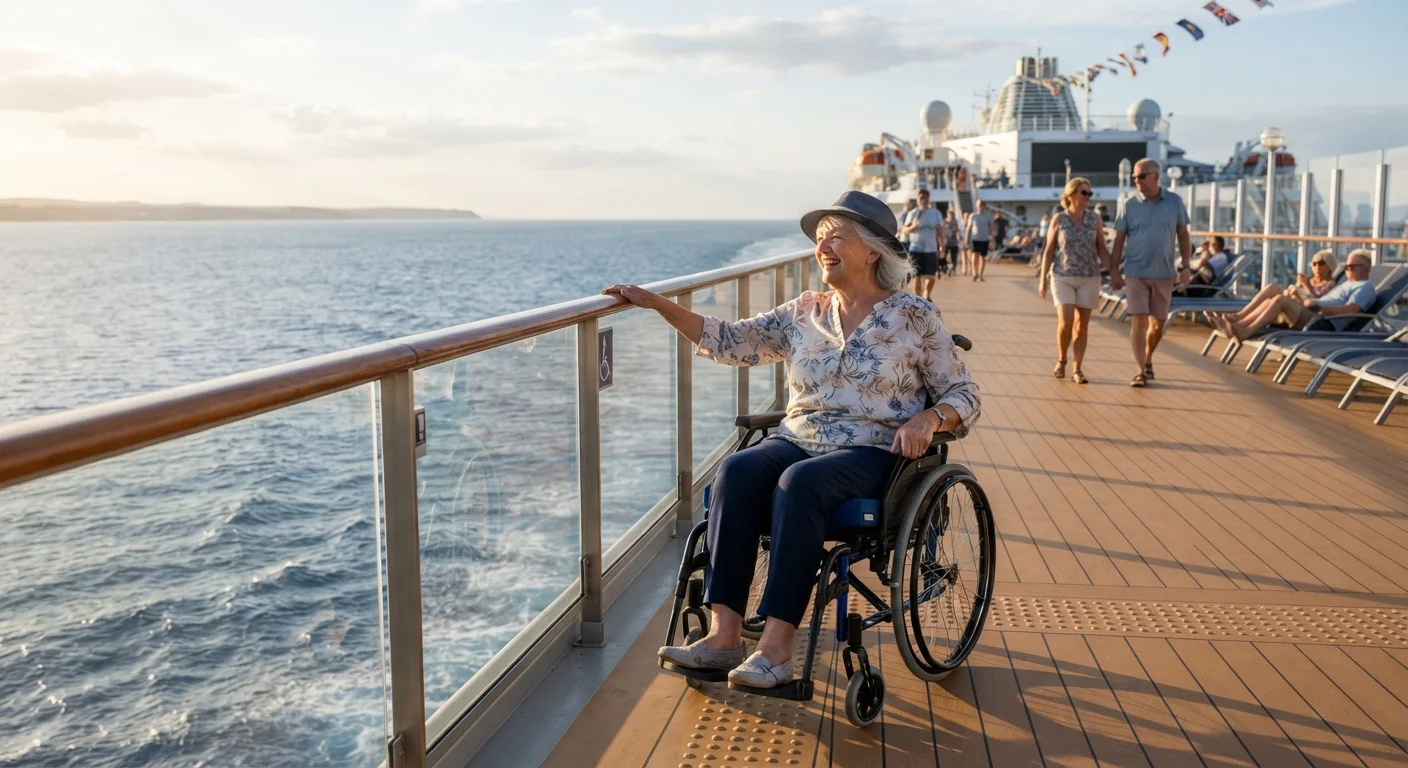
Why Cruise Travel Can Work Well for Many Mobility Needs
For travelers managing mobility challenges, cruise vacations offer a genuinely appealing structure: unpack once, and your hotel travels with you to multiple destinations. There's no repeated taxi queuing with equipment, no airport transfers between cities, and no daily packing. Meals, entertainment, and medical facilities are typically within close range — all on a single vessel.
That said, cruising is not a uniformly accessible experience. A newer mega-ship sailing the Caribbean may have roll-in showers, wide corridor clearances, and dedicated accessible pools — while an older vessel on the same route may have significant physical limitations. The same principle applies to ports: some welcome accessible shore excursions seamlessly, while others require a tender boat (a small launch from ship to shore), which is frequently not wheelchair-accessible at all.
If you're new to cruising, understanding how the vacation format works before layering in accessibility planning will help you make smarter choices from the start.
Before You Book: The Questions That Matter Most
The pre-booking stage is where accessible cruise planning is won or lost. Most major cruise lines have a dedicated accessibility or special needs desk — contacting them directly, rather than relying solely on a general booking agent, is one of the most important steps you can take.
Itinerary selection also shapes your experience significantly. Larger ports with cruise terminals built for high-volume traffic tend to have better infrastructure than smaller or historic ports where cobblestones and steep inclines are common. Different cruise regions offer very different experiences, and port-level accessibility varies just as much as onboard conditions. For context, expedition-style itineraries — which reach remote or rugged destinations — are generally the least accessible option; expedition cruising involves conditions that present real challenges even for fully ambulatory travelers.
~2%
Share of cabins that are accessible on most large ships
Accessible staterooms typically represent a small share of total inventory, which is why early booking is consistently recommended by disability travel advocates.
60 in.
Minimum turning radius recommended for power wheelchairs
The Americans with Disabilities Act uses a 60-inch turning diameter as a standard benchmark; confirming this measurement fits your cabin bathroom is a critical pre-booking step.
Onboard Life: What to Realistically Expect
Accessible cabins on modern ships are genuinely functional spaces — wider doorways, turning radius for wheelchairs, roll-in or walk-in showers, lowered closet rods, and grab bars throughout. Verify bathroom configuration specifically, since some "accessible" cabins have tub-shower combos rather than roll-in showers.
Public areas present more variability. Pools often have lift access, but availability of staff trained to operate them may differ by time of day. Buffets and dining venues are generally navigable, though peak hours can mean congested aisles. Understanding how cruise dining works onboard can help you plan meals at less crowded times and make the most of table-service options, which tend to be easier to navigate than crowded buffet areas.
Medical Facilities Vary by Ship
Most cruise ships have an onboard medical center, but staffing, equipment, and capabilities differ significantly between vessels and cruise lines. If you have a condition that may require specific medical support, ask the cruise line directly about onboard medical capacity before booking. For complex or ongoing health concerns, consulting your own healthcare provider before sailing is advisable.
“The most important thing any traveler with a disability can do is communicate — early, specifically, and in writing. Ships can do far more than most people realize, but only when they know what's needed before the gangway goes up.”
— Stephanie Duke, Disability travel advocate and accessible tourism consultant
Shore Days: Planning with Honest Expectations
Shore excursions deserve their own research process, separate from onboard planning. Many cruise lines offer designated accessible excursions with adapted vehicles and guides experienced with mobility equipment — but availability varies by port, and these tours book quickly. If the cruise line's accessible offerings are limited for a particular port, some travelers work with local disability-travel specialists who operate independently in popular cruise destinations.
Tender ports — where passengers board a small launch to reach shore — are among the most significant barriers for wheelchair users and those with limited mobility. Ships are required to attempt accommodation, but conditions like wave height and dock infrastructure can make tendering genuinely unsafe. Knowing which ports on your itinerary use tenders, and having a plan if you choose to stay aboard those days, removes a major source of stress. Staying onboard is a legitimate and often pleasant choice — ships are notably quieter and easier to navigate when most passengers are ashore.
For a broader look at how to plan your voyage from the ground up, the full cruise planning guide covers everything from destination selection to embarkation day logistics.
This article is for general informational purposes only. Accessibility features, port conditions, and ship configurations change frequently. Always verify current details directly with your cruise line and consult official sources for any safety- or entry-related requirements before traveling.
The content on this site is for informational purposes only and is not a substitute for professional advice. Always consult a qualified professional for guidance specific to your situation.