

Our Verdict
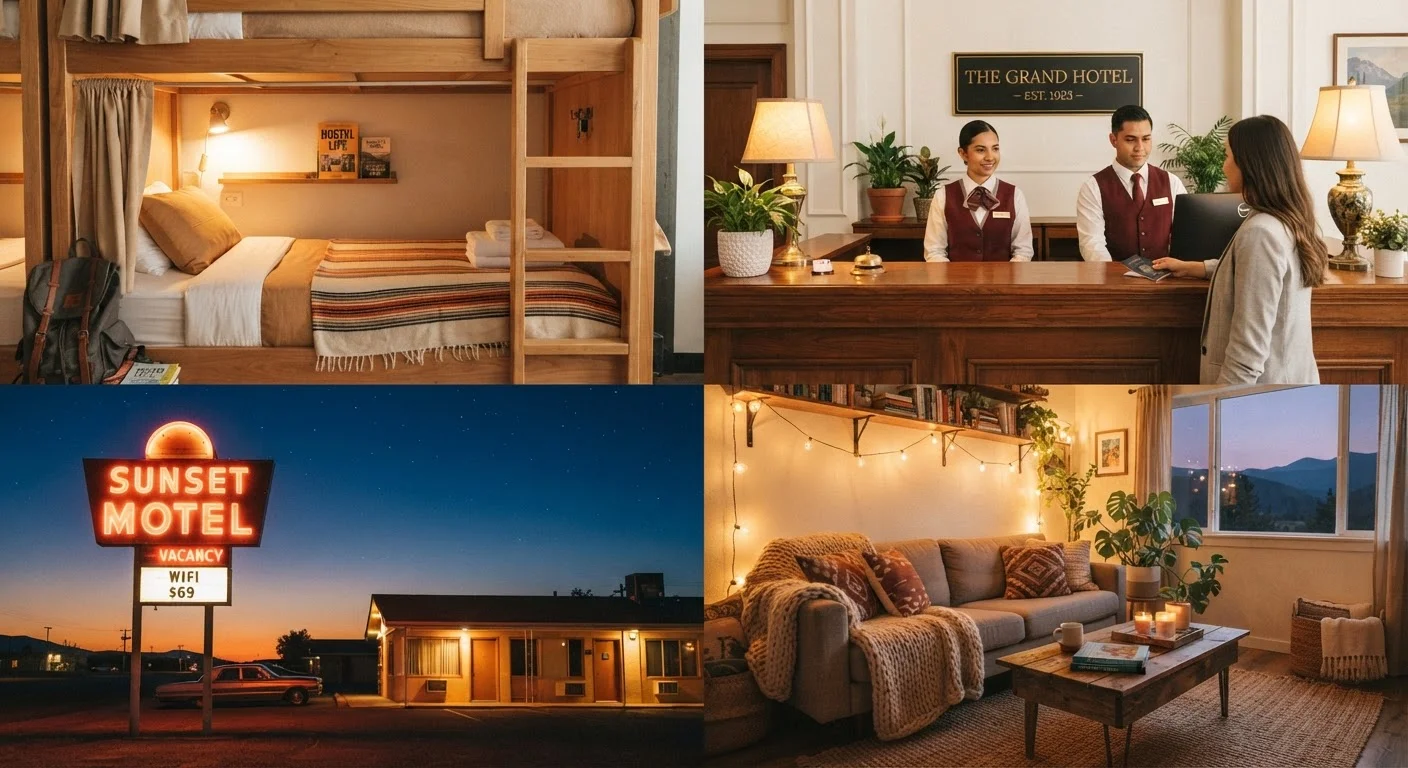
No single accommodation type wins across all scenarios — the right choice depends on who you're traveling with, how long you'll stay, and what kind of experience you're after. Hostels reward the social solo traveler; hotels deliver reliability and service; motels serve the practical road tripper; and vacation rentals shine when space and flexibility matter most.
| Best for | Recommended |
|---|---|
| Solo travelers and backpackers on a tight budget | Hostel |
| Business travelers and those wanting consistent amenities | Hotel |
| Road trippers making quick overnight stops | Motel |
| Families, groups, or travelers staying multiple nights | Vacation Rental |
Why Accommodation Type Matters More Than You Think
Where you sleep shapes far more than your nightly cost — it influences your daily routine, how much you interact with other travelers, what cooking or storage options you have, and even how rested you feel each morning. Choosing accommodation that doesn't match your trip style can quietly drain your budget or dampen the experience.
This guide breaks down four common accommodation types — hostels, hotels, motels, and vacation rentals — across the dimensions that actually matter: privacy, cost structure, amenities, and ideal use cases. For a broader look at how these choices fit into the full planning picture, see The Complete Guide to Choosing Accommodations for Any Type of Trip.
| Hostel | Hotel | Motel | Vacation Rental | |
|---|---|---|---|---|
| Privacy level | Low (shared dorms) | High (private room) | Moderate (private, exterior access) | High (entire space) |
| Typical cost per night | Very low to low | Low to high (varies by tier) | Low to moderate | Moderate to high (varies by size) |
| Best group size | Solo or pairs | Solo, pairs, or small groups | Solo or pairs | Groups, families, or couples |
| Kitchen access | Shared communal kitchen | Rarely (suite exception) | Rarely | Full private kitchen |
| Daily housekeeping | Varies by property | Standard at most properties | Basic at most properties | Typically not included |
| Ideal trip type | Backpacking, budget travel | Business, leisure, short stays | Road trips, overnight stops | Family stays, longer trips |
| Social atmosphere | High — communal by design | Low — private by default | Very low | Varies by setting |
Hostels: Community Over Comfort
Hostels were built on a simple idea: lower costs by sharing space. In a typical hostel, guests sleep in dormitory-style rooms with bunk beds, sharing bathrooms, common areas, and sometimes kitchens with fellow travelers. Private rooms are often available for a premium, but the social environment remains the defining feature.
The tradeoff is real — noise, limited storage, and reduced privacy are common complaints. But for solo travelers or backpackers prioritizing connection and flexibility over personal space, hostels frequently deliver experiences that hotels simply can't. Communal dinners, staff-run city tours, and conversation with people from dozens of countries can turn a hostel stay into a highlight of the trip.
Read Hostel Reviews with Specifics in Mind
When evaluating a hostel, look beyond the overall rating. Comments about noise levels, bathroom cleanliness, locker availability, and staff responsiveness tell you far more than a star average. A hostel with a slightly lower rating but enthusiastic reviews about atmosphere may serve you better than a sanitized, high-scoring property that feels transactional.
Cost-wise, hostel dormitory rates in the U.S. and abroad tend to sit well below standard hotel pricing, though rates vary widely by location and season. If you're curious how your travel personality aligns with accommodation type, matching your travel style to the right destination is a useful starting point.
Hotels: Consistency and Service at a Range of Price Points
Hotels are the default choice for a reason — they offer a dependable, clearly defined experience. You book a room, arrive at check-in, and generally know what to expect: a private space, daily housekeeping, front desk support, and a range of amenities depending on the property tier.
The hotel category spans enormous variation. Budget hotels offer clean, basic rooms without much beyond the essentials. Mid-range hotels add amenities like pools, on-site dining, or fitness centers. Upscale properties layer in concierge services, room service, and elevated design. Understanding what star ratings mean in practice is worth the effort — hotel star ratings explained breaks down what each tier typically delivers.
For travelers new to navigating hotel bookings, everything you need to know about booking your first hotel covers room types, cancellation policies, and check-in expectations in plain terms.
Motels: Built for the Road
The motel — short for "motor hotel" — emerged to serve drivers who needed a place to stop for the night without ceremony. Rooms typically open directly to a parking lot, check-in is fast, and the focus is on convenience over ambiance. Many motels are independently owned, though chains exist across the country at highway interchanges and near interstates.
Motels rarely offer the amenities of a full-service hotel, and privacy considerations (exterior room access, thinner walls) are worth noting. That said, for a road trip where you're covering distance and need a reliable overnight stop, a motel does exactly what it promises. Rates are often among the lowest of any private-room option.
Verify Motel Safety and Policies Before Booking
Motel quality varies more widely than branded hotel chains, and independent properties particularly can differ significantly from their photos. Check recent reviews for mentions of security, cleanliness, and noise before booking. Some roadside motels have limited or no front desk hours overnight — confirm check-in procedures if you're arriving late.
Vacation Rentals: Space, Flexibility, and a Home Base
Vacation rentals — entire homes, apartments, condos, or cabins rented directly from owners or through platforms — have grown considerably as a category. The core appeal is space: a full kitchen, separate bedrooms, a living room, and often outdoor areas that a hotel room simply cannot match.
For families, groups of friends, or travelers planning multi-night stays in a single location, vacation rentals frequently offer better value per person and a more comfortable daily rhythm. Cooking some meals in rather than eating out every night is a meaningful cost offset for extended trips. For a look at how extended stays specifically work in a different accommodation context, extended-stay hotels have their own trade-offs worth understanding.
The downsides are real too: cleaning fees and minimum-night requirements can erode the apparent value for short stays, and the experience varies more than a hotel chain — what you see in photos may differ from what you find. Always read reviews carefully and check cancellation terms. For guidance on where to book, booking direct vs. third-party sites applies to vacation rentals as well as hotels.
60%+
U.S. leisure travelers who have used a short-term rental
Multiple travel industry surveys over recent years have found that short-term rental use among American leisure travelers has grown substantially, with a majority having tried the format at least once.
2–4x
More space in average vacation rental vs. hotel room
Industry analyses generally find that full vacation rentals offer significantly more square footage per stay than comparable-priced hotel rooms, particularly relevant for groups.
The content on this site is for informational purposes only and is not a substitute for professional advice. Always consult a qualified professional for guidance specific to your situation.