

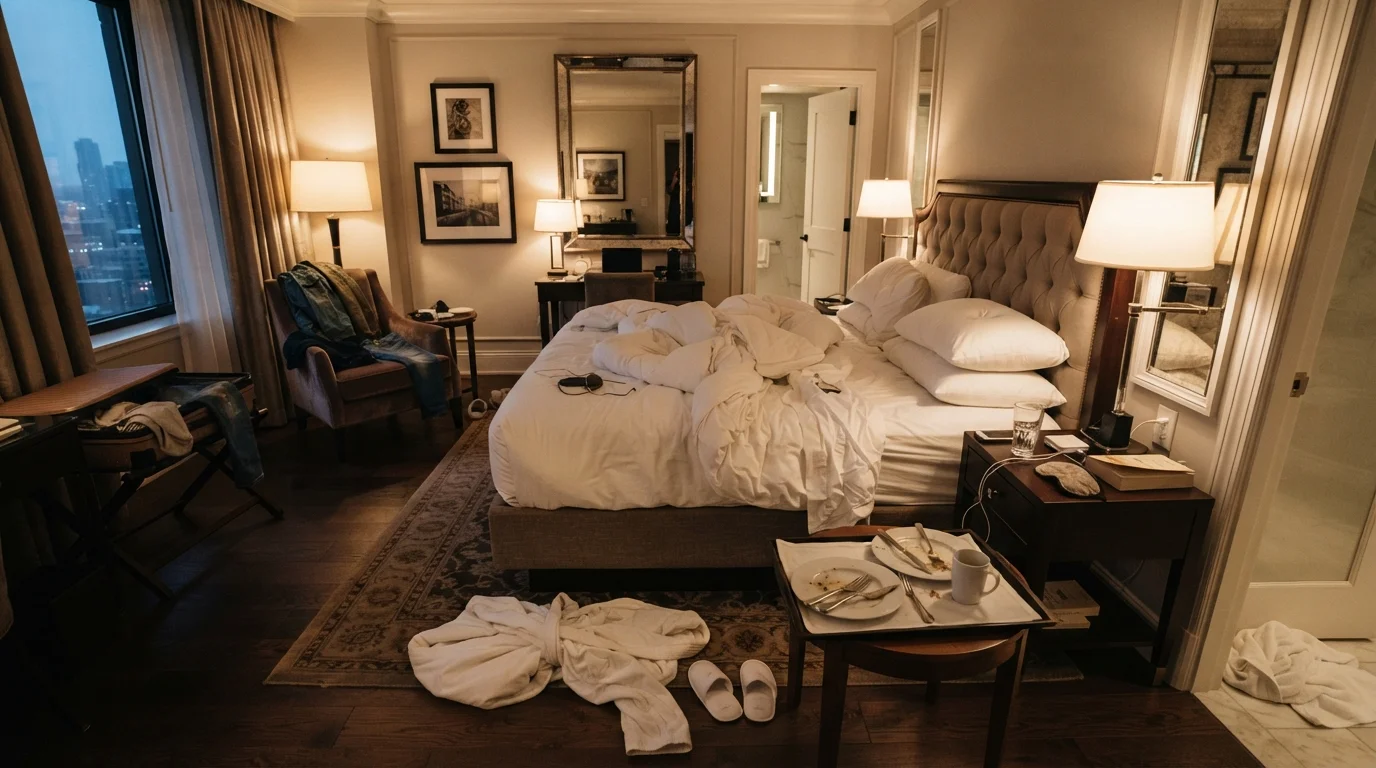
The Gap Between the Photo and the Room
There's a particular kind of letdown that hits when you open a hotel room door and realize the space looks nothing like the photos that convinced you to book. The lighting is harsher, the room smaller, the view blocked by a parking structure. You're not imagining it — this gap is real, and it's worth understanding why it exists before your next trip.
Hotel marketing photography is a craft in its own right. Wide-angle lenses make rooms appear more spacious. Soft, warm lighting is set for a single shoot, not for the fluorescent hum of a busy afternoon. Furnishings may be rotated from other rooms. The result is imagery that represents an ideal, not a guarantee. This same dynamic plays out at popular destinations too — as explored in our piece on why destination photos rarely match reality.
Understanding where the marketing ends and the actual stay begins is the first step toward booking with clearer eyes.
Relying solely on the hotel's own photography to judge room size and condition.
Why it happens: Booking platforms display polished hero images front and center, and travelers understandably form impressions from the most prominent visuals available.
Ignoring the room's physical location within the hotel before booking.
Why it happens: Listings rarely specify whether a room faces a loading dock, an elevator bank, or a busy street — and most travelers don't think to ask.
Treating star ratings as a reliable summary of the full guest experience.
Why it happens: Star ratings are aggregated averages that smooth over wildly different experiences — a 4.2 can reflect fifty flawless stays and twenty genuinely poor ones.
Assuming that "amenities included" means those amenities are fully operational and accessible.
Why it happens: Listings don't always disclose seasonal closures, capacity limits, or renovation schedules for pools, gyms, restaurants, and spas.
Overlooking neighborhood context when evaluating a hotel's location.
Why it happens: A map pin showing a central location can obscure whether the surrounding area is walkable, noisy at night, or convenient for the actual activities you have planned.
What Reviews Miss — and How to Read Them Better
Online reviews are valuable, but they come with built-in blind spots. A hotel can carry a strong average rating while still delivering a frustrating experience for guests with specific needs — light sleepers, travelers sensitive to odors, or anyone who assumed "city view" meant something scenic rather than a wall of office windows.
~53%
Travelers who report a hotel stay not matching expectations
Survey data from travel industry research consistently finds that roughly half of hotel guests report at least one significant gap between what was advertised and what they experienced on arrival.
1 in 3
Guests who cite noise as their top complaint
Noise — from street traffic, neighboring guests, or mechanical systems — is among the most frequently cited sources of hotel dissatisfaction in consumer travel surveys.
The most useful reviews are granular ones. Look for comments about specific room locations, noise from neighboring floors or street traffic, and whether amenity descriptions matched reality. A five-star rating for a property's breakfast tells you nothing about its soundproofing. For a more structured approach to making sense of what you read, our guide on reading hotel reviews without being misled walks through the patterns worth looking for.
Filtering reviews by traveler type — solo, couple, family, business — can also surface concerns that wouldn't otherwise reach you.
Recency Matters in Reviews
A hotel that earned glowing reviews two years ago may have changed ownership, management, or maintenance standards since then. Always filter for recent reviews — ideally within the last three to six months — before drawing conclusions. A property can improve or decline significantly in a short period, and older ratings may no longer reflect current conditions.
Making the Booking Process Work for You
Most hotel disappointments are preventable, not inevitable. The window between browsing and confirming a reservation is when you have the most leverage — and it's the window most travelers close too quickly.
Calling the property directly (rather than relying solely on third-party platforms) often yields room-specific information you won't find in a listing: which floors face the quieter courtyard, whether the pool is under maintenance, how far the "beach access" room actually is from the water. Our editorial team's companion piece on questions worth asking before confirming a reservation covers exactly what to ask and when.
Once you've arrived, small adjustments can still make a meaningful difference. Frequent travelers develop habits — requesting high floors, noting checkout lanes, timing amenity use — that quietly improve their stay without extra cost. You'll find many of those habits detailed in our piece on getting more out of a hotel stay without spending more.
The content on this site is for informational purposes only and is not a substitute for professional advice. Always consult a qualified professional for guidance specific to your situation.