

Understanding RV Types and Classes
The term RV (recreational vehicle) covers an enormous range of vehicles, from pop-up tent trailers to 45-foot diesel motorcoaches. Broadly, RVs fall into two families: motorized units (the engine is built in) and towable units (pulled by a separate tow vehicle).
Motorized RVs
- Class A: The largest motorhomes, built on a commercial bus or truck chassis. Most spacious, but least maneuverable.
- Class B (Camper Van): Van-based units that can be driven and parked like a regular vehicle. Ideal for couples or solo travelers who prioritize mobility.
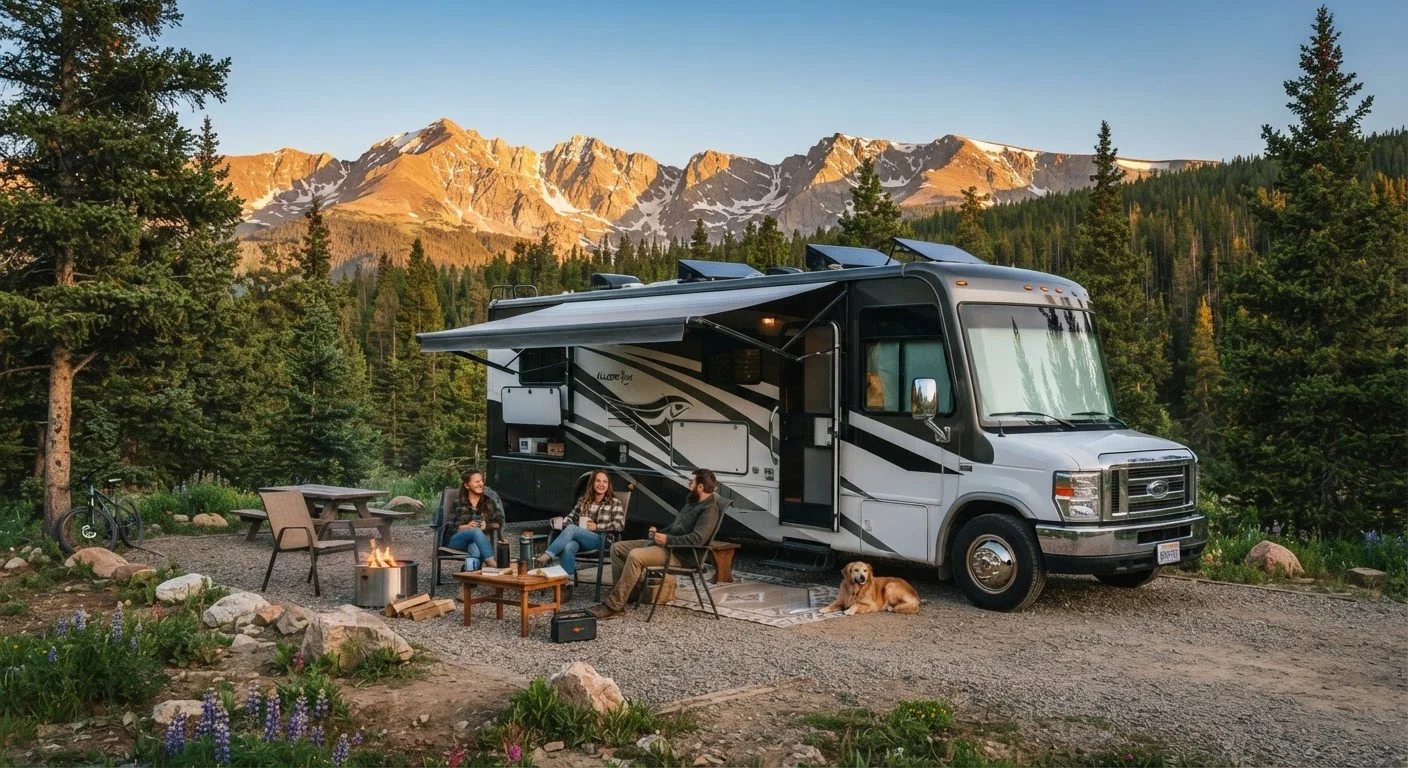
- Class C: Built on a truck or van cutaway chassis with an over-cab sleeping area. A middle ground between Class A size and Class B agility.
Towable RVs
- Travel Trailers: The most common towable, hitched to a standard ball hitch. Sizes vary widely.
- Fifth-Wheel Trailers: Connect via a specialized hitch in a pickup truck bed, offering more stability and often a bi-level floor plan.
- Toy Haulers: Feature a rear garage for motorcycles, ATVs, or other gear—popular with outdoor adventure enthusiasts.
- Pop-Up / Tent Trailers: Lightweight, collapsible units ideal for entry-level campers on a budget.
For a detailed side-by-side comparison of motorhomes and towable rigs, see our guide to motorhome vs. towable RVs.
11.2M
U.S. households that own an RV
According to the RV Industry Association's ownership survey, RV ownership has grown substantially over the past decade.
72%
RV owners who camp more since purchasing
A survey by the Recreational Vehicle Industry Association found the majority of owners increased their overall camping frequency after buying an RV.
5–7 years
Recommended RV tire replacement interval
Many RV manufacturers and tire industry guidelines suggest replacing RV tires within this window regardless of visible tread wear.
Buying vs. Renting: How to Start Your RV Journey
One of the most common mistakes new RV enthusiasts make is purchasing a rig before experiencing what RV travel actually feels like day-to-day. Renting first is widely regarded by experienced RVers as the smartest entry point.
Rental platforms connect travelers with privately owned RVs for short-term use, allowing you to test different vehicle classes, floor plans, and systems before committing to a purchase. A week-long rental in a Class C, followed by a weekend in a travel trailer, will reveal your real preferences far better than any brochure.
When you are ready to buy, consider:
- New vs. used: New RVs carry warranties and the latest features, but depreciate rapidly in the first few years. A well-maintained used unit can offer significantly more value.
- Floor plan fit: Think about sleeping arrangements, bathroom access, kitchen functionality, and storage—specific to how you actually travel.
- Tow capability: If buying a towable, confirm your tow vehicle's rated capacity before choosing a trailer weight. Exceeding the rated capacity is both dangerous and illegal.
When evaluating a used RV, hire an independent RV inspector—not one recommended by the seller—before signing anything. A professional inspection typically costs $150–$400 and can reveal hidden water damage or mechanical issues that aren't visible during a casual walkthrough.
Water intrusion and deferred maintenance are the most common costly surprises in used RV purchases, and they are frequently invisible to untrained eyes.
Negotiate the out-the-door price on an RV the same way you would a car—the MSRP is a starting point, not a ceiling. Dealer markup on accessories and extended warranties is often substantial.
RV dealers operate with flexible margins, and buyers who treat the transaction as negotiable consistently report better outcomes than those who accept the listed price.
Browsing options related to vehicle shopping strategies can also help you approach any large vehicle purchase with more confidence.
Costs of RV Ownership
The sticker price is only the beginning. Realistic RV budgeting must account for a range of ongoing expenses:
| Cost Category | Typical Annual Range (General Estimate) |
|---|---|
| Insurance | $500–$2,500+ |
| Campground / Site Fees | $1,500–$10,000+ |
| Fuel | Varies widely by mileage and rig size |
| Maintenance & Repairs | $500–$3,000+ |
| Registration & Licensing | $100–$800+ (state-dependent) |
| Storage (if not at home) | $600–$3,000+ |
RV insurance is not optional—most states require at minimum liability coverage for motorized units, and lenders require comprehensive coverage on financed units. Coverage specifics, exclusions, and premiums vary substantially by provider, so review actual policy documents carefully and consult a licensed insurance agent to understand what protection is right for your situation.
Don't Underestimate Depreciation
New RVs can lose 20–30% of their value in the first one to three years of ownership, a rate that rivals or exceeds new car depreciation. If you finance an RV and sell or experience a total loss early in the loan term, you may owe more than the unit is worth. Factor depreciation into your financial planning before purchasing, and consider gap coverage if financing.
Planning and Executing an RV Trip
Successful RV travel is mostly a planning exercise. The logistics that a hotel stay handles automatically—parking, hookups, waste disposal—fall entirely on you.
Campground Reservations
National Park campgrounds often open reservations six months in advance and fill within minutes for peak dates. State parks, Army Corps of Engineer sites, and private campgrounds (such as those in national networks) each have their own booking windows. Planning at least two to three months ahead for summer travel is prudent.
Route Considerations
- Check bridge clearances and weight limits on your planned route, especially for larger rigs.
- Identify dump stations and potable water fill points along your route—apps dedicated to RV travel aggregate this data reliably.
- Mountain grades and high-altitude driving demand extra attention from motorhome drivers; consult your owner's manual for engine braking guidance.
Hookup Basics
Most campgrounds offer some combination of electric (30-amp or 50-amp), water, and sewer hookups, collectively called full hookups. Dry camping (boondocking) without any hookups is also popular and free on many public lands—but requires careful management of water, battery, and waste tank capacity.
Download an RV-Specific Navigation App
Standard GPS apps route vehicles based on typical automobile dimensions and weight limits. RV-specific navigation apps allow you to input your rig's height, length, and weight so routes avoid low bridges, weight-restricted roads, and sharp turns that could trap a large vehicle. Several well-regarded apps are available; most offer a free tier with optional premium features.
Maintenance Essentials Every RV Owner Should Know
Deferred maintenance is the leading cause of expensive RV repairs. Owners who stay ahead of a few critical systems avoid the majority of serious problems.
Roof and Seals
Water intrusion through failed roof seams, vent seals, or slide-out seals is the single most destructive issue an RV can suffer. Inspect all seals at least twice a year and reseal with manufacturer-approved products when cracking or separation is visible. If you are unsure about the integrity of your roof, have it inspected by a qualified RV technician.
Tires
RV tires age out before they wear out. Many manufacturers recommend replacing tires every five to seven years regardless of tread depth, because UV degradation weakens the sidewall structure invisibly. Always carry a functioning spare and check inflation before every trip.
Water System
Winterizing the water system before freezing temperatures arrive—using compressed air or RV-grade antifreeze—prevents burst pipes and damaged pump seals. De-winterizing in spring requires flushing the system thoroughly before use.
Batteries and Electrical
House batteries (separate from the chassis battery) power interior systems when not plugged in. Keep them properly charged and avoid deep discharging lead-acid batteries below 50% to extend their service life. If upgrading to lithium batteries, consult your converter/charger specifications first, as not all systems are compatible.
For a broader context on RV and camper types within the vehicle landscape, explore our motor vehicles by type hub.
Full-Time RV Living: Is It Right for You?
A growing segment of RV owners have made their rig a primary residence—working remotely, schooling children on the road, or embracing a nomadic retirement. The lifestyle can be deeply rewarding, but it comes with genuine challenges that social media rarely depicts.
Practical realities to weigh:
- Domicile and mail: Full-timers must establish a legal domicile state for purposes of vehicle registration, voting, and mail. Several states are popular for their favorable regulations.
- Healthcare access: Access to consistent healthcare providers becomes more complex when you're constantly relocating. Telehealth services have helped, but are not a complete solution for all needs.
- Space management: Living in 200–400 square feet with another person or a pet requires intentional organization and a willingness to own less.
- Connectivity: Remote workers depend on reliable internet. Cellular boosters, satellite internet services, and campground Wi-Fi each have trade-offs in cost, speed, and availability.
Our dedicated article on full-time RV living realities takes an honest, balanced look at what the day-to-day experience actually involves.
“The RV is really the last great American freedom machine. It lets you set your own itinerary, sleep where you park, and see the country at whatever pace suits you.”
— Gary Bunzer, RV technical educator and longtime contributor to RV industry publications
This article is for general informational purposes only and does not constitute financial, insurance, legal, or safety advice. Always consult qualified professionals for decisions specific to your situation.
The content on this site is for informational purposes only and is not a substitute for professional advice. Always consult a qualified professional for guidance specific to your situation.