

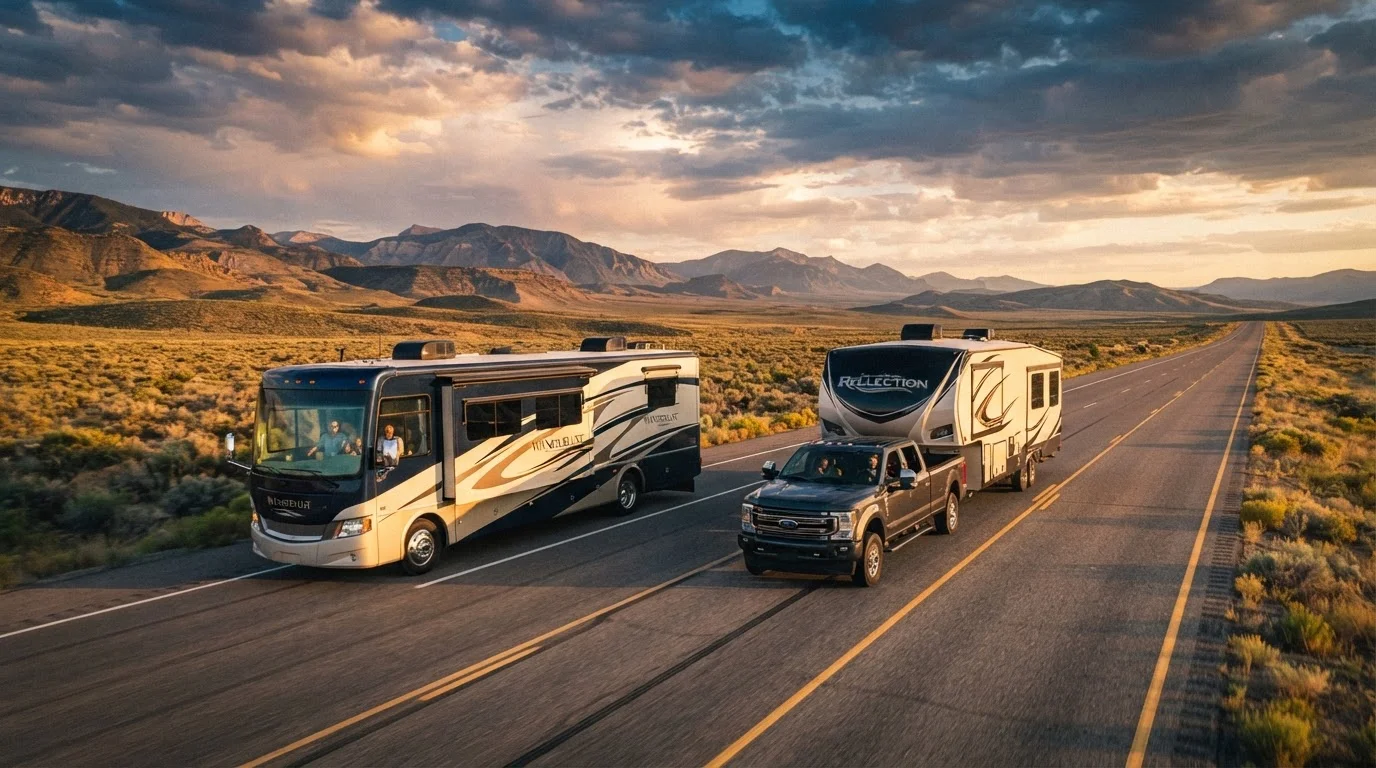
Our Verdict
Motorhomes offer streamlined convenience that appeals to frequent travelers and those who prefer an all-in-one experience, while towable RVs deliver better value per square foot and campsite flexibility for those already owning or willing to buy a capable tow vehicle. Both categories encompass a wide range of sizes and price points, so the decision ultimately hinges on how you travel, not just what you can afford.
| Best for | Recommended |
|---|---|
| Travelers who prioritize effortless setup and in-transit comfort | Motorhome |
| Those seeking lower upfront cost and campsite flexibility | Towable RV |
| Full-timers or long-haul road trippers covering many miles | Motorhome |
| Weekend campers who already own a qualifying truck or SUV | Towable RV |
How Each Setup Works
The fundamental difference between motorhomes and towable RVs is integration. A motorhome puts the engine, drivetrain, and living space into one self-contained vehicle — you turn the key and drive away. A towable RV (which includes travel trailers, fifth-wheels, and pop-up campers) is a separate structure that your personal vehicle pulls to the campsite.
That distinction ripples into almost every practical consideration: licensing, insurance, campsite maneuvering, day-trip capability, and long-term costs. For a deeper look at how motorhome classes differ among themselves, see what Class A, B, and C labels actually mean.
| Motorhome | Towable RV | |
|---|---|---|
| Typical entry price | Higher (mid-five figures and up) | Lower (under $20K for basic trailers) |
| Separate tow vehicle needed | No | Yes — must meet tow rating |
| Campsite setup time | Generally faster | More steps; hitch removal required |
| Day-trip flexibility | Limited without a dinghy vehicle | High — tow vehicle is free once unhitched |
| Driving complexity | Single large vehicle to operate | Managing trailer sway and backing |
| Depreciation risk | Higher (engine + coach both age) | Coach separate from tow vehicle value |
| Living space per dollar | Lower | Generally higher |
| Storage when not in use | Requires full-length space | Unhitched; more flexible placement |
Cost Considerations: Purchase, Ownership, and Depreciation
Entry-level travel trailers can be purchased for well under $20,000, while even modest Class C motorhomes typically start considerably higher. At the upper end, Class A diesel pushers can run into six figures. That gap doesn't disappear over time — motorhomes carry two depreciating systems: the coach and the chassis. When the engine or transmission requires major work on an aging unit, owners face repair bills that may not be justified by remaining coach value.
Towable owners face a different math problem: the tow vehicle. If you don't already own a truck or SUV with sufficient towing capacity, purchasing one adds substantially to total investment. Fuel economy also takes a significant hit while towing, often dropping to single-digit miles per gallon for heavier rigs.
Calculate True Total Cost Before Deciding
Factor in the tow vehicle, insurance, fuel economy differences, campground fees, and storage costs — not just the sticker price of the RV itself. For towables, also confirm your existing vehicle's actual tow rating (found in the owner's manual or door jamb sticker) before committing to a trailer's gross vehicle weight rating (GVWR). Exceeding tow capacity is both dangerous and potentially voids your vehicle warranty.
Insurance structures differ as well. Motorhomes are typically insured as motor vehicles with specialized RV coverage, while towable trailers are often covered as property under an auto policy rider — though rates and coverage vary widely. Consult a licensed insurance agent to understand what policy structure fits your rig and travel patterns.
Campsite Practicality and Day-Trip Flexibility
One of the most cited advantages of towable RVs is what happens once you're parked. Unhitch the trailer, and your truck or SUV is immediately available for grocery runs, hiking trailheads, or exploring nearby towns. Motorhome travelers who want that freedom typically tow a small dinghy vehicle (a car flat-towed or on a trailer) — which adds cost, weight, and length.
On the setup side, motorhomes win convincingly. Pulling into a site, leveling, and connecting utilities is generally faster in a motorhome than managing hitch work, sway bars, and brake controllers that towable rigs often require. Slide-outs on both types expand living space, but motorhome operators handle everything from the driver's seat before stepping out.
11.2M
RV-owning households in the U.S.
According to RVIA industry data, towable RVs account for the large majority of those units sold each year.
~72%
Share of RV shipments that are towables
RVIA annual shipment reports consistently show towable RVs outsell motorized units by a wide margin, reflecting price and versatility advantages.
Campsite access can also differ. Some campgrounds post length restrictions that rule out the longest fifth-wheels or Class A coaches. Fifth-wheels in particular require overhead clearance for the elevated front section. Research specific campgrounds before assuming any rig will fit — this matters especially in older state parks or urban campgrounds with tight loop roads.
Driving Experience and Skill Requirements
Driving a large motorhome — particularly a Class A that can exceed 40 feet — demands genuine skill and attentiveness. The vehicle handles nothing like a passenger car: wide turns, longer stopping distances, and limited rear visibility are all realities. Most states don't require a special license for RVs under a certain weight threshold, but that doesn't mean the learning curve is trivial.
Towing has its own challenges. Trailer sway is a real phenomenon, especially in crosswinds or when passing large trucks. Weight distribution hitches and electronic sway-control systems help, but improper loading or an underpowered tow vehicle can create dangerous situations. Backing a trailer into a tight campsite requires practice that many new RVers underestimate.
If you're new to either setup, our guide for first-time RV travelers covers driving fundamentals, campground etiquette, and what to prepare before you leave home.
Which Setup Fits Your Travel Life?
The right rig is inseparable from how you actually travel. Full-timers logging thousands of miles annually often favor motorhomes for their ergonomic driving position, onboard amenities accessible mid-route, and single-unit simplicity. For the realities of full-time living, the full-time RV life beyond the highlight reel offers a grounded perspective.
Weekend campers who already own a half-ton or three-quarter-ton pickup may find a travel trailer or fifth-wheel delivers more living space per dollar and gives them a vehicle that serves double duty all week. Seasonal campers who store the rig most of the year often find a towable easier to store — unhitched and parked in a yard or storage lot without monthly spot fees some RV parks charge for vehicles left unattended.
For a comprehensive overview of the entire ownership journey, the complete guide to owning and traveling in an RV covers everything from choosing your first unit to managing maintenance on the road.
The content on this site is for informational purposes only and is not a substitute for professional advice. Always consult a qualified professional for guidance specific to your situation.