

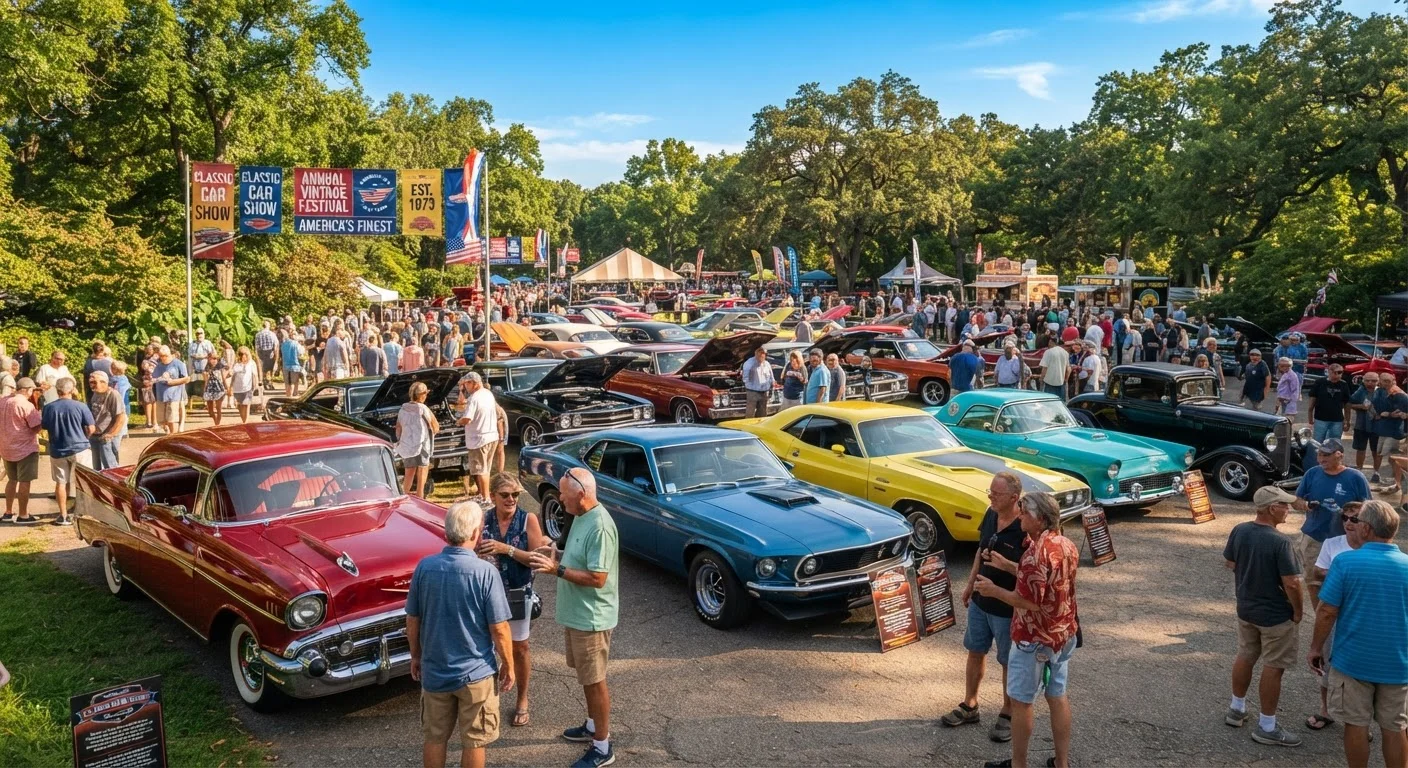
The Hobby Extends Well Beyond the Garage
Owning a classic vehicle is rewarding on its own terms, but many enthusiasts say the real depth of the hobby opens up once they connect with a broader community. Whether your interest runs toward meticulously restored prewar coupes or survivor-condition muscle cars from the 1960s and '70s, there are organized groups, recurring events, and curated knowledge bases built around virtually every era and marque.
If you're still working out what officially qualifies your vehicle as a classic, antique, or vintage car, our guide on how those definitions work is a useful starting point. Once that's sorted, the social and educational side of the hobby awaits. Below are the key entry points worth knowing.
Marque-Specific Clubs
Single-make clubs — organizations dedicated to one manufacturer, model line, or even a specific production year — are among the most valuable resources in the hobby. They typically maintain technical libraries, host judging standards, operate parts registries, and connect members with specialists who know a particular vehicle inside and out.
Examples span everything from national organizations covering American muscle to regional groups focused on European imports or postwar domestics. Many publish printed newsletters alongside digital forums, preserving institutional knowledge that simply doesn't exist elsewhere. Membership dues are generally modest relative to the access provided.
Single-make clubs hold technical knowledge and parts networks that no general resource can match.
Local Car Clubs and Regional Chapters
Broad-interest local clubs bring together owners of varied makes and models under a shared enthusiasm for vintage vehicles. These groups typically organize monthly meetups, coordinate participation in regional shows, and maintain informal referral networks for mechanics, fabricators, and parts suppliers.
For newer enthusiasts, a local chapter is often the most practical first step. Members tend to know which shops in the area are trustworthy with older vehicles, which auctions are worth attending, and which regional events are worth planning around. That practical, geographically relevant knowledge is hard to replicate through online research alone.
Local clubs provide geographically relevant referrals for mechanics and suppliers that online searches rarely surface.
Cruise-Ins and Informal Gatherings
Not every event involves judging or formal registration. Cruise-ins — typically held in parking lots outside restaurants, shopping centers, or community spaces — are low-pressure gatherings where owners display their vehicles informally and conversations happen naturally. They require no appointment, no entry fee in most cases, and no minimum condition standard.
These events are particularly welcoming to first-time participants and project-car owners. They're also a reliable way to gauge local enthusiasm levels, identify which eras and body styles draw the most interest in your area, and simply enjoy the vehicles in a social setting without competitive stakes.
Cruise-ins are the most accessible entry point — no judging, no fees, just cars and conversation.
Concours and Judged Shows
At the more structured end of the spectrum, judged shows evaluate vehicles against defined standards — often factory-correct restoration quality, originality of components, and presentation. Concours d'elegance events, which trace their format to European traditions, represent the most formal tier, where scoring can extend to engine bay cleanliness and correct date codes on hoses and clamps.
Participating in a judged show requires research into the specific class rules and judging criteria used by that event. Understanding what judges look for — including documentation like build sheets — is part of the preparation. Our article on reading a VIN and build sheet explains what factory documentation reveals and why it matters in these contexts.
Judged concours events evaluate factory correctness in detail — preparation and documentation are essential.
Online Forums and Registry Databases
The internet has dramatically expanded access to specialized knowledge. Model-specific forums host thousands of threads covering restoration techniques, parts identification, known mechanical issues, and production history for vehicles that may have been built in small numbers decades ago. Registry databases — often maintained by marque clubs — document known surviving examples and can help establish a vehicle's provenance.
Quality varies across platforms, so cross-referencing multiple sources and deferring to long-standing community members with verifiable expertise is advisable. Factory service manuals, assembly instruction sheets, and supplier catalogs have also been digitized and shared widely, making original documentation more accessible than it was even a generation ago.
Model-specific forums and registry databases preserve institutional knowledge unavailable through mainstream research tools.
Automotive Museums and Historical Societies
Museums focused on automotive history offer more than passive viewing. Many maintain research libraries, host lectures and special exhibitions, and partner with clubs for members-only access events. Curator staff and volunteer docents often have deep knowledge of specific eras or manufacturers and can direct enthusiasts to primary sources.
Historical societies associated with specific automakers or production facilities sometimes hold original factory records, photographs, and engineering documents that aren't publicly catalogued elsewhere. For owners of rarer vehicles — or those interested in the broader arc of American automotive design covered in our decade-by-decade overview — these institutions can fill significant gaps in provenance research.
Automotive historical societies may hold original factory records unavailable through any other public channel.
Making the Most of Your Involvement
Getting involved doesn't require a fully restored, show-ready vehicle. Most clubs and events actively welcome drivers at every stage — from barn-find projects to daily-driven classics. If you're weighing how you want to use your car, our comparison of daily drivers versus show cars outlines how that choice shapes your maintenance approach and participation options.
Start With One Event Before Joining
Attending a local cruise-in or regional show as a visitor before committing to club membership is a low-risk way to assess the community's culture and focus. Most events are open to the public, and talking with current members in person gives you a clearer picture of what active participation actually looks like than any website will.
The community's collective knowledge is one of its most underappreciated assets. Long-time members often have direct experience with restoration decisions, sourcing strategies, and the nuances of originality — including complex topics like matching numbers that trip up newer owners. Tapping into that experience early can save significant time and expense.
The content on this site is for informational purposes only and is not a substitute for professional advice. Always consult a qualified professional for guidance specific to your situation.