

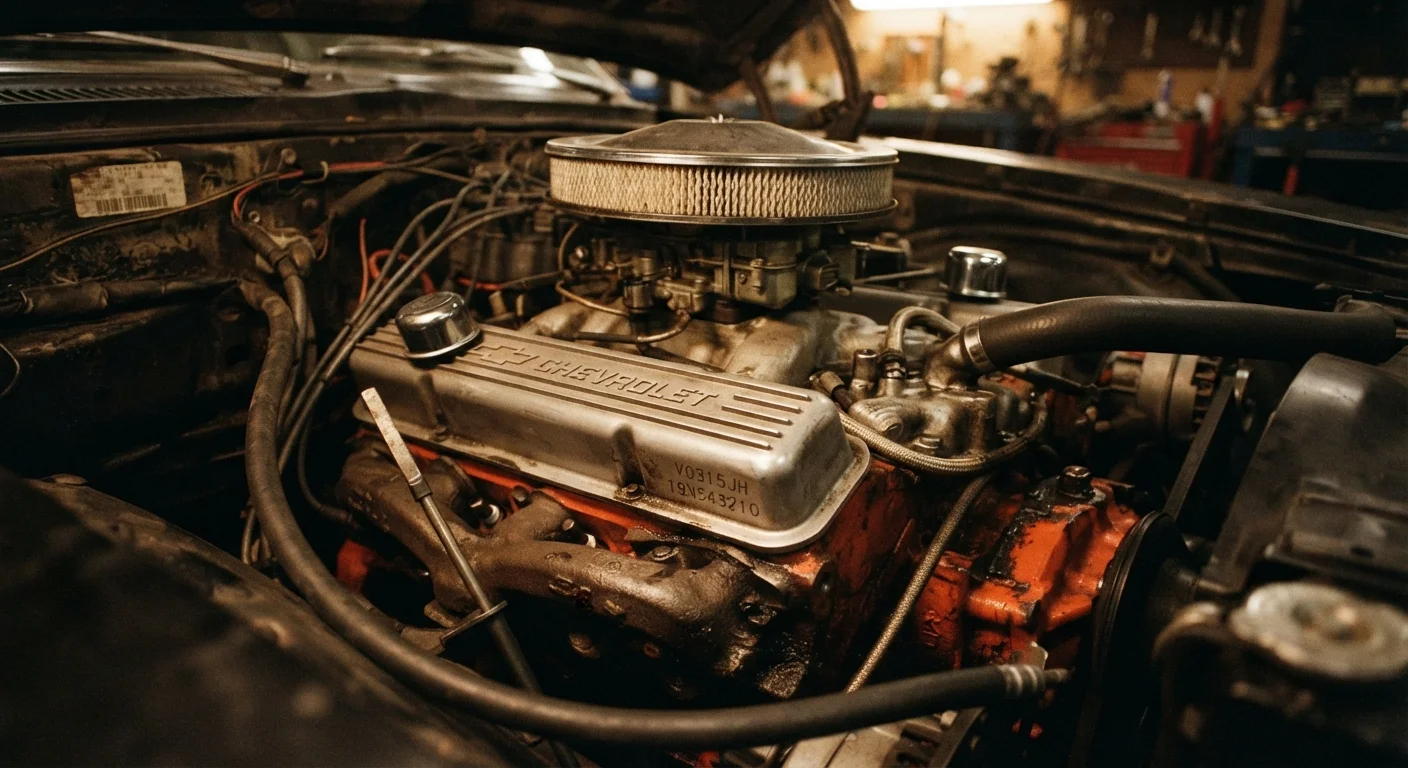
What 'Matching Numbers' Actually Means
Few phrases in the classic car hobby carry more weight — or cause more confusion — than matching numbers. At its core, the term refers to a specific alignment between the Vehicle Identification Number (VIN) stamped on a car's body and the partial VIN or build-date stampings found on its major components, most critically the engine block and, in many cases, the transmission.
Automakers used these partial stampings on the assembly line so that components built for a specific car stayed with that car through the production process. When those stampings still correspond to factory records decades later, it's considered evidence that the engine has never been swapped out — that you're looking at the original drivetrain the car left the factory with.
To understand the full picture behind those numbers, it helps to know how to read a classic car's VIN and build sheet, which can reveal original options, the assembly plant, and production dates that put the stampings in context.
Myth
A 'matching numbers' car means every single component is original and untouched from the factory.
Fact
The term specifically refers to drivetrain stampings — primarily the engine block — aligning with the body VIN, not every nut and bolt on the vehicle.
This is the most pervasive misunderstanding in the hobby. No classic car that has been driven over decades has every original component. Tires, belts, hoses, batteries, and countless wear items are routinely replaced. 'Matching numbers' is a narrowly defined concept centered on the engine's partial VIN stamp corresponding to factory records — not a guarantee that the car is otherwise untouched. Some collectors also include the transmission, rear axle, and carburetor in their evaluation, but practices vary by marque and era.
Myth
If the engine has ever been rebuilt, the car is no longer considered numbers-matching.
Fact
Rebuilding an engine — replacing internal components like pistons, bearings, or camshafts — does not change the external block stampings and does not affect matching-numbers status.
Numbers-matching status is determined by the stampings on the outside of the engine block, not by the condition of its internals. An engine that has been correctly rebuilt with period-appropriate or stock-specification parts while retaining its original block is still considered numbers-matching. What destroys matching-numbers status is removing the original block entirely and replacing it with a different unit — regardless of how correct the replacement appears.
Myth
A numbers-matching car is always worth significantly more than a non-matching one.
Fact
The premium for matching numbers varies enormously by marque, model, rarity, and documentation quality — and in some cases, it is negligible.
For high-demand muscle car variants produced in small numbers, a matching drivetrain can add tens of thousands of dollars to a sale price. For more common models, or for cars where factory records are incomplete, the practical premium may be modest. Market conditions, overall condition, documentation, and regional demand all influence how buyers price originality. A car claimed to be numbers-matching without documentation to support it carries far less value than one with verifiable factory records and an appraisal from a recognized marque authority.
Myth
VIN stamps can be easily verified by any buyer — fakes are obvious.
Fact
Fraudulent or altered stampings exist in the marketplace, and detecting them often requires professional appraisal and marque-specific expertise.
The high premiums commanded by rare, numbers-matching examples create a financial incentive for misrepresentation. Altered stampings, engine swaps using blocks with re-stamped numbers, and 'clone' cars built to resemble rare variants are known to exist. Visual inspection by a non-specialist is not sufficient to detect sophisticated fraud. Buyers considering significant investments should engage a professional appraiser with specific marque knowledge, consult factory build sheet documentation, and where available, cross-reference with marque registries that track production data.
Myth
A car without its matching engine has no collector value.
Fact
Non-matching cars can still be highly desirable, particularly when they are well-documented, correctly restored, and in excellent mechanical condition.
Engine swaps happened for many legitimate reasons over the decades — accidents, worn-out original engines, theft, and prior owners' modifications are all common. A car with a correct-specification replacement engine, properly restored and documented, has a strong market among buyers who intend to drive and enjoy it rather than pursue show points. For certain categories of collector vehicles, drivability and authenticity of appearance matter as much to many buyers as drivetrain provenance.
Why the Market Places Such a Premium on Originality
The collector market treats matching-numbers examples as more desirable for a straightforward reason: provenance. A verifiable, unaltered drivetrain is tangible evidence of a car's history. For rare, high-performance variants — think big-block muscle cars produced in small numbers during the late 1960s — that authenticity is extremely difficult to replicate and essentially impossible to fabricate convincingly when proper documentation exists.
20–50%
Typical price premium for matching-numbers muscle cars
Industry appraisers and auction results consistently suggest rare, documented matching-numbers examples sell for a substantial premium over otherwise comparable non-matching cars, though the range varies widely by model.
~40%
Classic cars estimated to have non-original engines
Hobbyist surveys and marque club data suggest a significant portion of collector cars on the market have had at least one engine replacement over their decades of ownership.
That said, originality is not a universal trump card. A numbers-matching car that has been poorly maintained or carelessly stored may be worth less than a well-documented, professionally restored example with a correct replacement engine. The philosophy behind a concours restoration versus a restomod illustrates why different buyers prioritize different things — and why the market reflects those preferences in pricing.
For buyers focused on driving enjoyment rather than show points, a non-matching car can represent genuine value. Understanding your own intended use is essential before paying a premium for numbers you may never fully exploit. This is one of the core trade-offs explored in the daily driver vs. show car comparison.
Clone Cars Are Not Matching-Numbers Cars
A 'clone' is a base-model car rebuilt to resemble a rare, high-value variant — fitted with the correct badges, paint, and mechanical components, but without the original factory documentation or correct engine stampings. Clones are legal and sometimes disclosed honestly, but they are worth a fraction of a genuine numbers-matching example. Always verify the VIN against factory production records through a marque registry before purchasing a vehicle represented as a rare variant.
Making Sense of Originality Before You Buy
Whether you're entering the hobby for the first time or evaluating a specific acquisition, the matching-numbers question deserves careful, skeptical attention. Request documentation — factory build sheets, window sticker reproductions, broadcast sheets, and any prior appraisals or judging records from marque clubs. Physical stampings can be verified by experienced appraisers and marque-specific registries, and for rare variants, that verification step is worth the cost.
The broader question of what defines a classic in the first place — and why authenticity matters differently across eras and categories — is worth understanding before you focus on individual criteria like stampings. Our overview of what makes a car 'classic' covers the definitions, rules, and gray areas that shape how collectors and institutions think about these vehicles.
For a well-rounded grounding in the hobby — including terminology, storage, events, and realistic expectations — the classic car collector's starting point is a useful companion resource. And once you're ready to engage with the community, marque clubs and shows are where a great deal of real-world knowledge about originality and valuation is exchanged.
Verify Before You Pay a Premium
Never pay a matching-numbers premium based on a seller's verbal claim alone. Request factory documentation — build sheets, broadcast sheets, or dealer records — and have stampings independently verified by a qualified appraiser or recognized marque registry. Fraudulent or misrepresented classics do exist in the market, and the financial stakes on rare variants can be substantial.
The content on this site is for informational purposes only and is not a substitute for professional advice. Always consult a qualified professional for guidance specific to your situation.