

Start here
What Counts as a Classic Car?
Build context
A Brief History of Collector Eras
Get practical
Core Ownership Realities
Handle logistics
Storage, Insurance, and Registration
Connect with others
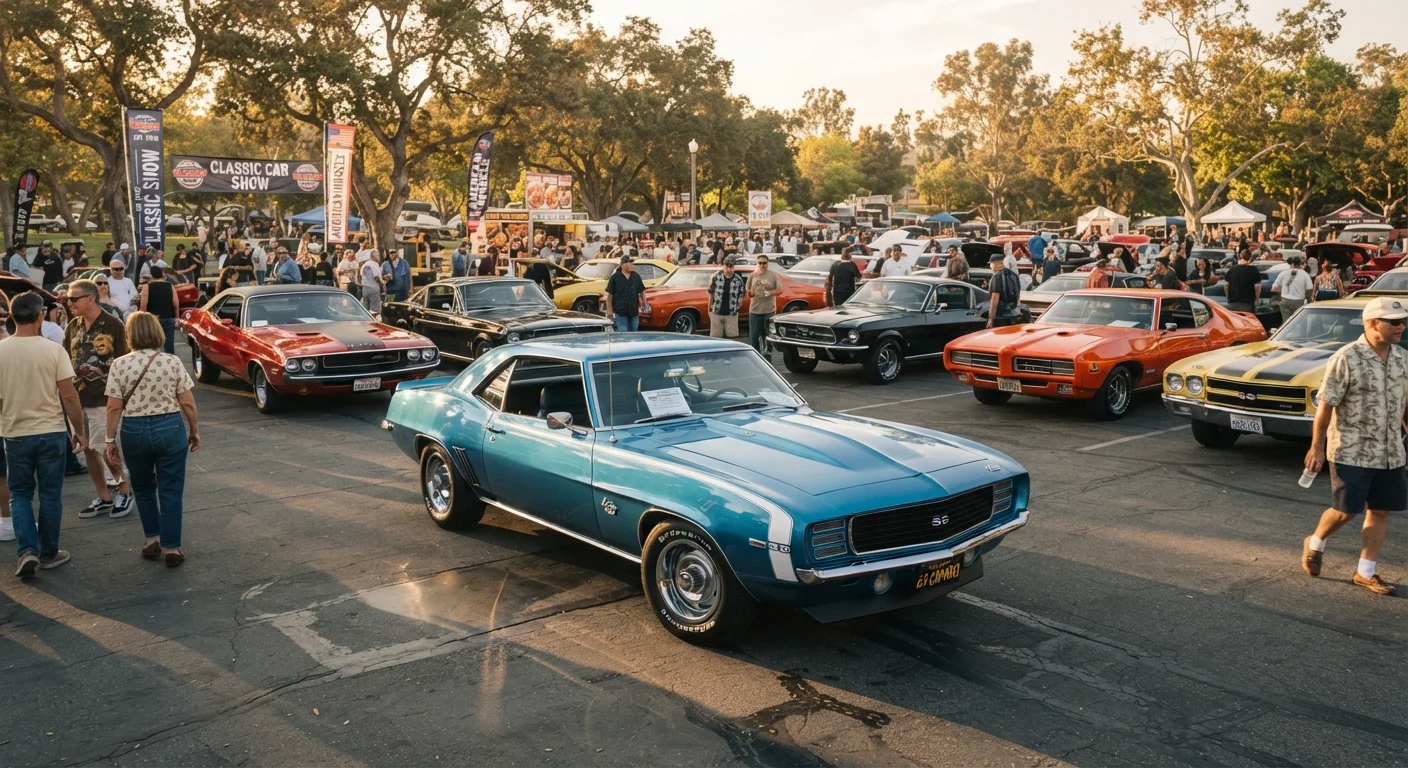
Culture, Community, and Events
What Counts as a Classic Car?
The word "classic" gets applied loosely in everyday conversation, but it carries specific meaning in legal, insurance, and collector contexts. Understanding how classic, antique, and vintage are officially categorized matters because your state's DMV, your insurer, and the organizations you may eventually join can each use different criteria.
As a practical starting point: many insurers and enthusiast bodies treat 25 years as a general minimum age for collector-vehicle status, though some states set their antique or historic vehicle thresholds differently. Condition, originality, and rarity can also factor into how a vehicle is classified for show judging or insurance valuation.
Agreed Value
An insurance term meaning the insurer and owner agree upfront on the vehicle's worth. In a total loss, this is the payout amount — unlike standard policies that pay depreciated market value.
Concours d'Élégance
A type of formal judged car show where vehicles are evaluated on originality, restoration quality, and presentation. Often associated with high-value pre-war and post-war classics.
Resto-Mod
A classic vehicle that retains its original body and styling but has been updated with modern mechanical or safety components for improved reliability or drivability.
Marque Club
An enthusiast organization dedicated to a specific vehicle make or model. These clubs typically offer technical resources, parts networks, event calendars, and community support.
Numbers Matching
A term used to describe a vehicle whose major components — such as the engine and transmission — carry the original factory serial numbers, indicating they have not been replaced.
Historic / Antique Plates
Special license plates issued by many state DMVs for older vehicles that meet age thresholds. They often come with lower registration fees but may restrict how and when the vehicle can be driven.
A Brief History of Collector Eras
Classic car culture recognizes several broad eras, each with its own character and collector community:
- Brass Era (roughly pre-1915): Hand-built, mechanically simple vehicles from the earliest days of motoring. Extremely rare and typically found only in museum collections or at the most prestigious auctions.
- Pre-War Classics (1915–1942): The golden age of coachbuilt luxury and American roadsters. Parts supply is challenging, and ownership often requires specialist knowledge.
- Post-War and Chrome Era (1946–1964): Exuberant styling, growing horsepower, and the birth of the American car culture mythology. One of the most actively traded collector segments.
- Muscle Car Era (1964–1974): High-displacement V8s in mid-size bodies. Remains one of the most popular segments among North American collectors.
- Malaise Era and Early Modern (1975–1995): Once overlooked, cars from this period are now attracting a new generation of enthusiasts drawn to 1980s and early 1990s vehicles from their youth.
Each era brings different parts availability, restoration complexity, and community support — all important factors when choosing where to start.
Core Ownership Realities
Entering the classic car hobby with realistic expectations is the single most important step a new collector can take. Costs, time demands, and mechanical complexity vary enormously by vehicle, era, and condition at purchase.
Start with Research, Not a Purchase
New collectors often get the most value from spending their first several months attending shows, joining forums, and talking to current owners before committing to a vehicle. The more you understand the specific make and model you want — its common failure points, parts ecosystem, and realistic restoration costs — the better positioned you'll be when it's time to buy.
Before buying, thoroughly research parts availability for the specific make and model you are considering. Some vehicles have robust aftermarket support; others require sourcing from specialist suppliers or fellow marque-club members. A pre-purchase inspection checklist covering body, mechanicals, documentation, and title history is an essential tool before any commitment.
Consider also how you intend to use the vehicle. Daily driving versus show-car preservation involves fundamentally different maintenance philosophies, insurance choices, and trade-offs. For a comprehensive look at the full ownership lifecycle — from sourcing through storage and events — everything classic car ownership actually involves is worth reading end to end.
Storage, Insurance, and Registration
Classic vehicles have logistical requirements that differ substantially from a modern daily driver. Proper storage — ideally a climate-controlled garage away from humidity and direct sunlight — helps preserve paint, rubber seals, and the fuel system during periods when the car is not being driven.
Standard Auto Insurance May Not Be Enough
A standard personal auto policy is typically designed for daily-driver vehicles and may significantly undervalue a well-restored or appreciating classic in the event of a claim. Do not assume your existing policy provides adequate coverage for a collector vehicle. Always review terms with a licensed insurance professional before driving or displaying your classic.
Insurance for collector vehicles typically operates on an agreed value basis rather than the depreciated actual cash value used for standard policies. This means you and the insurer agree on the vehicle's worth at the time of policy issuance, which is how you'd be compensated after a total loss. Most classic policies also carry annual mileage limitations. Read any policy document carefully and consult a licensed insurance agent to understand what is and isn't covered.
Registration requirements vary by state. Many states offer special license plates — often called historic, antique, or collector plates — with reduced fees and sometimes restricted usage rules. Check with your state's DMV for current requirements before completing a purchase, as title and registration steps for older vehicles can differ from modern transactions. Readers newer to the basics of vehicle ownership may also find it useful to review general vehicle ownership fundamentals.
Culture, Community, and Events
One of the most rewarding aspects of the classic car hobby is its social dimension. Car shows — ranging from informal weekend gatherings at local diners to large judged concours events — provide opportunities to learn, display your vehicle, and connect with fellow enthusiasts. Marque clubs, regional shows, and knowledge-sharing networks are among the most reliable resources a new collector can access.
Marque-specific clubs (organizations centered on a single make or model) often maintain technical libraries, parts-sourcing networks, and directories of specialist mechanics. Online forums and social media groups organized around specific vehicles have also become significant sources of peer knowledge. Attending a few events as an observer — before owning anything — is an excellent, low-pressure way to gauge the culture and identify which segment of the hobby feels like the right fit.
This article is for general informational and educational purposes only. Vehicle values, parts availability, insurance terms, and registration requirements vary widely. Consult qualified professionals — including licensed mechanics, insurance agents, and your state DMV — before making any purchase or ownership decision.
Frequently Asked Questions
There is no single universal standard. Many insurance companies and enthusiast organizations use 25 years as a general threshold, while some U.S. states define "antique" vehicles at 25 years and "classic" differently. For a deeper breakdown of the categories, see <a href="/autos/classic-vehicles/what-makes-a-car-classic-the-definitions-rules-and-gray-areas">how classic, antique, and vintage are officially defined</a>.
Technically yes, but daily use creates very different maintenance and insurance demands than occasional show use. Parts wear faster, exposure to weather increases, and many classic insurance policies restrict annual mileage. The trade-offs are explored in detail in articles covering daily driver versus show car ownership philosophies.
Marque-specific clubs and regional car shows are among the most reliable ways to get referrals for experienced technicians. Some independent shops specialize in older vehicles, and national organizations for specific makes often maintain member directories of trusted mechanics.
A restoration aims to return a vehicle to its original factory condition as closely as possible. A resto-mod (restoration plus modification) retains the classic body and appearance while upgrading mechanical components — such as brakes, suspension, or fuel injection — for improved reliability and drivability.
Yes. Standard auto insurance policies often don't account for an agreed-upon value, mileage restrictions, or storage requirements typical of collector vehicles. Specialized classic car insurance policies are widely available and generally advisable; terms vary by provider, so review policy documents carefully.
Start by reading about the full ownership lifecycle, exploring marque-specific clubs, and attending local shows as an observer. A pre-purchase inspection by a qualified, independent mechanic familiar with older vehicles is strongly recommended before committing to any purchase.
The content on this site is for informational purposes only and is not a substitute for professional advice. Always consult a qualified professional for guidance specific to your situation.