

Our Verdict
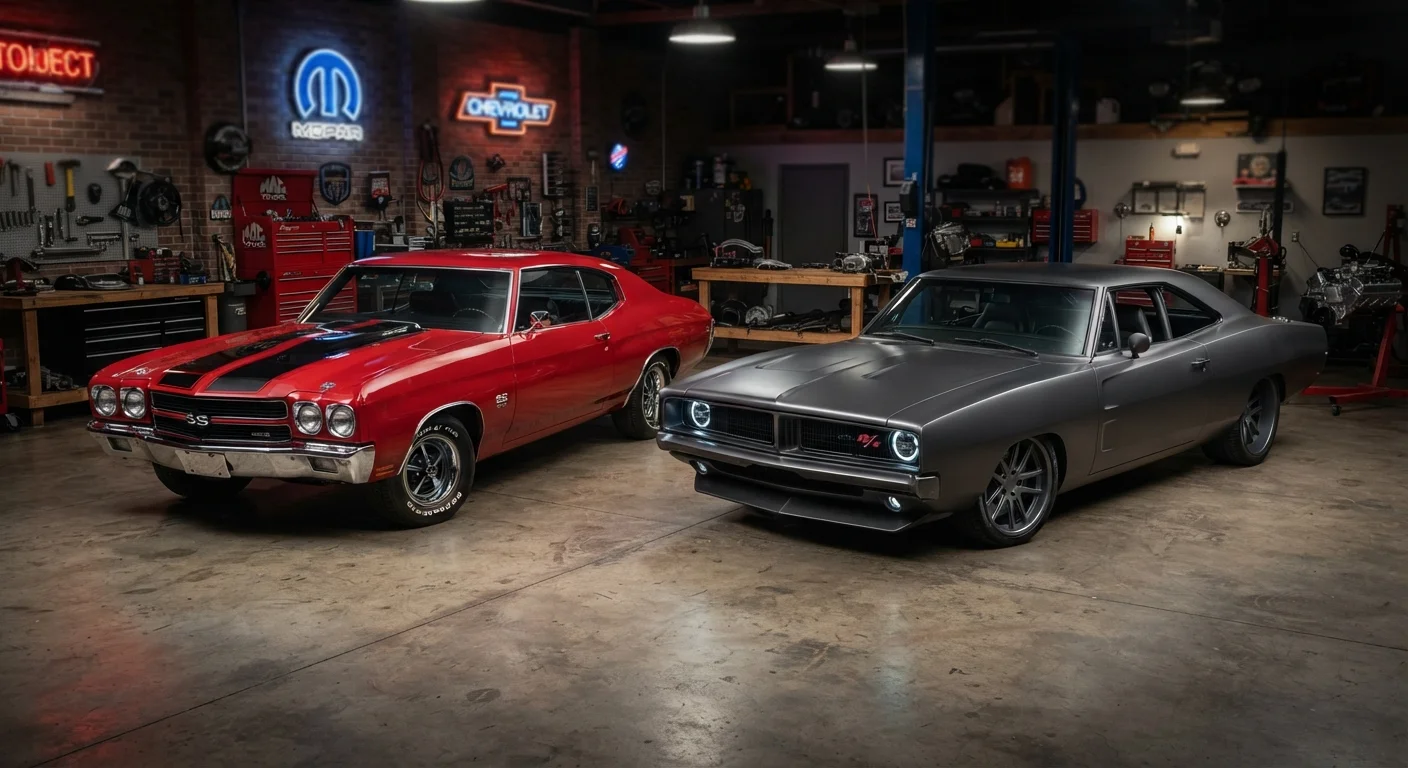
Concours restoration and restomod are not competing philosophies so much as answers to different questions. If your goal is historical preservation, show recognition, or maximum period authenticity, concours is the standard to meet. If you want to actually drive the car — and enjoy modern reliability and safety — a restomod delivers that without abandoning the classic's visual identity.
| Best for | Recommended |
|---|---|
| Collectors focused on historical authenticity and show judging | Concours Restoration |
| Enthusiasts who want to drive their classic regularly | Restomod |
| Owners prioritizing long-term value preservation | Concours Restoration |
| Those seeking modern safety and performance in a vintage body | Restomod |
Defining the Two Approaches
When a classic car collector decides to bring a vehicle back from neglect or deterioration, the first fundamental question isn't which parts to source — it's which philosophy to adopt. The two dominant approaches in the hobby are concours restoration and the restomod, and they represent genuinely different ideas about what a restored classic should be.
A concours restoration (from the French concours d'élégance, meaning a competition of elegance) seeks to return a vehicle to the exact specification it left the factory — or, in some cases, to a specific documented configuration from its history. Every component, finish, fastener, date code, and material must be period-correct. The goal is authenticity that can withstand expert judging scrutiny.
A restomod — short for restoration modification — preserves the classic's exterior character and emotional appeal while replacing or upgrading the mechanical systems underneath. That might mean a modern fuel-injected engine, disc brakes, rack-and-pinion steering, air conditioning, or updated electrical architecture — all hidden beneath bodywork that reads as unmistakably vintage.
Understanding where you fall on this spectrum is essential before committing budget or shop time. For a broader orientation to the hobby, see our collector's starting point guide.
What Concours Restoration Actually Requires
Concours work is among the most demanding and expensive forms of automotive restoration. Judges at events sanctioned by marque clubs or national organizations evaluate vehicles on point-based systems, penalizing anything that deviates from documented factory specification — including incorrect hose clamp styles, wrong-dated components, and improper undercoating texture.
Sourcing is the central challenge. Correct date-coded parts (components stamped with manufacture dates that fall within a plausible range before the car's assembly date) can be scarce and expensive. Restorers frequently rely on factory assembly manuals, dealer order records, Protect-O-Plate data, and marque registries to confirm what a particular car would have carried from the factory.
Paint, bodywork, and trim must match original materials and processes as closely as possible. Some restorers go so far as to replicate factory overspray patterns, weld-through primers, and assembly-line imperfections that prove a car was not repainted after leaving the plant.
Matching Numbers and Concours Authenticity
Concours judging places substantial weight on original stampings, date codes, and documented provenance. Purchasing a car represented as 'numbers matching' without independent verification is a significant financial risk — replacement stampings and falsified documentation exist in the market. Have any serious concours candidate inspected by a recognized marque expert or registry before purchase.
The concept of matching numbers — meaning major components share original factory stampings — is central to concours judging and market valuation, though it is frequently misunderstood. Learn what matching numbers actually means before purchasing or committing to a concours build.
What a Restomod Involves
A restomod build starts from a different premise: the car's visual identity is worth preserving, but its 1960s or 1970s engineering does not need to be. Original drum brakes, carbureted engines, recirculating-ball steering, and bias-ply tires were adequate for their era but fall well short of modern safety and performance standards.
Common restomod upgrades include:
- Braking: Four-wheel disc brake conversions with modern calipers and master cylinders
- Engine: Fuel-injected crate engines or rebuilt period-style motors with modern internals
- Suspension: Independent rear suspension, coilover shocks, or subframe connector systems
- Electrical: Modern wiring harnesses, fuse boxes, and sometimes digital instrumentation
- Climate: Integrated air conditioning and heating systems designed to fit behind original dashboards
The skill in a restomod lies in integration — making modern systems disappear visually so the car still reads as authentic at a glance. The best restomod builders are as meticulous as any concours restorer; they simply apply that precision to different goals.
Match Your Build to Your Use Case
Before choosing an approach, honestly assess how often and where you plan to drive the finished car. A concours-restored vehicle kept in a climate-controlled garage and trailered to shows has very different requirements than one you plan to take on weekend mountain runs. Restomod builds are generally better suited to regular road use, while concours restorations are optimized for judged events and historical preservation.
Restomod vehicles generally make far more practical daily drivers or weekend cars than concours-restored vehicles, which are often too valuable and fragile for regular road use.
Comparing the Two Side by Side
The table below summarizes the key differences across the criteria most owners weigh when choosing between these approaches.
| Concours Restoration | Restomod | |
|---|---|---|
| Primary goal | Period-correct factory authenticity | Modern performance in vintage body |
| Typical cost range | High — driven by correct parts scarcity | Moderate to high — depends on scope |
| Drivability | Limited — preserved for shows | High — designed for regular use |
| Safety features | Period-original (limited) | Modern brakes, suspension available |
| Show eligibility | Concours and marque judging events | Specialty restomod classes only |
| Resale value trajectory | Tied to authenticity documentation | Tied to build quality and taste |
| Parts sourcing complexity | Very high — date-coded OEM parts required | Moderate — modern parts widely available |
Neither path is inherently more valid. The decision should be driven by how you intend to use the vehicle — and by an honest assessment of your budget and timeline. A full overview of classic car ownership can help you set realistic expectations before committing to either path.
Cost, Timeline, and Realistic Expectations
Both approaches demand significant resources. A thorough concours restoration of a desirable American muscle car or European sports car can run well into six figures when correct parts, professional bodywork, and show-quality paint are factored in. Timeline estimates of two to five years are not unusual for complex builds.
Restomods vary more widely in cost because the scope of modifications is owner-defined. A modest restomod — disc brakes, fresh engine rebuild, modern wiring — might be accomplished for a fraction of what a full concours effort costs. A high-end restomod with custom fabrication, independent suspension, and a modern LS-series engine swap can rival or exceed concours budgets.
In both cases, one of the most common mistakes is underestimating scope. A car that appears to need cosmetic work frequently reveals structural rust, incorrect replacement parts from prior repairs, or missing components once disassembly begins. Experienced builders typically counsel prospective owners to budget a 20–30% contingency above initial estimates.
It's also worth clarifying how your vehicle is classified before beginning, since insurance, registration, and show eligibility can all turn on how a car is categorized. Understanding the differences between antique, vintage, classic, and historic designations can prevent surprises later.
This article is for general informational purposes only. Costs, regulations, and restoration requirements vary significantly by vehicle, region, and project scope. Consult qualified restoration professionals and relevant marque clubs for guidance specific to your vehicle.
The content on this site is for informational purposes only and is not a substitute for professional advice. Always consult a qualified professional for guidance specific to your situation.