

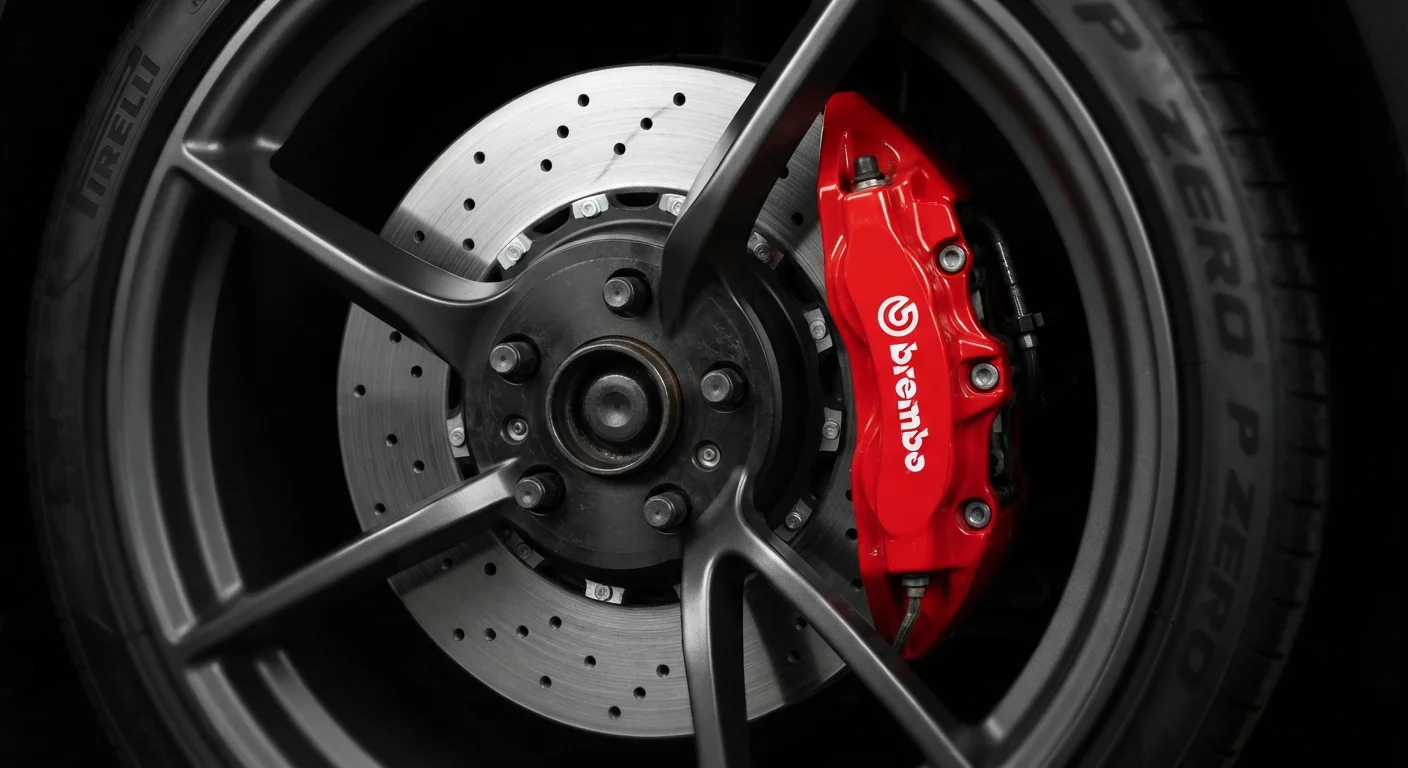
What Each Component Actually Does
Understanding your brake system starts with knowing what each part contributes — and why none of them works effectively without the other two functioning properly.
Brake pads are the friction material that does the actual work of slowing the wheel. Each pad has a steel backing plate bonded to a block of friction compound. As the pad presses against the rotor, that material gradually wears away — which is why pads are the most frequently replaced brake component.
Rotors (also called brake discs) are the flat, circular metal discs that spin with the wheel. They provide the surface the pads clamp against. Rotors are engineered to absorb and dissipate significant heat. Over time, rotors wear thinner and can develop surface scoring, warping from heat cycles, or cracking — all of which reduce braking effectiveness.
Calipers are the hydraulic clamps that hold the brake pads and squeeze them against the rotor when you press the pedal. Most passenger vehicles use floating calipers, which slide on guide pins to apply even pressure across the pad surface. A caliper that seizes on its guide pins — often due to corrosion — won't release properly after braking, creating constant contact between pad and rotor.
Listen for Early Warning Signs
Most brake pads include a small metal wear indicator that produces a squealing sound when pads reach minimum thickness. This is an intentional design feature — not a random noise. If you hear squealing during normal braking, schedule an inspection promptly. Waiting until you hear grinding means the pad material is already gone.
How the Three Components Interact Under Braking
When you press the brake pedal, hydraulic fluid from the master cylinder travels to each caliper. The pressure forces the caliper's piston outward, pushing the inner brake pad against the rotor. In a floating caliper design, this same pressure causes the caliper body to slide inward, pulling the outer pad against the rotor's opposite face simultaneously. Both pads squeeze the rotor from each side, generating friction that slows wheel rotation.
The heat generated during this process is substantial — rotors on a vehicle making a hard stop from highway speed can reach several hundred degrees Fahrenheit. Rotors are designed with vanes or slots to dissipate this heat. Pads are formulated to handle it. When components are mismatched — for instance, an aggressive pad compound on a rotor that's already at minimum thickness — heat management suffers and braking distances can increase.
25,000–70,000 mi
Typical brake pad lifespan range
Lifespan varies significantly based on pad material, vehicle weight, and driving environment — city stop-and-go driving shortens pad life considerably.
~400°F+
Rotor surface temperature during hard stops
Brake rotors can reach extreme temperatures during emergency braking from highway speeds, making heat dissipation design a critical rotor engineering factor.
≈1 in 5
Vehicles with brake deficiencies in inspections
Industry roadside inspection programs have historically found brake-related deficiencies on a significant share of commercial and passenger vehicles checked.
This interdependence is why mechanics often evaluate the entire brake assembly rather than inspecting parts individually. A fresh set of pads installed on a heavily scored rotor will wear unevenly and underperform from the start.
Why Replacing One Part Without Inspecting the Others Creates Problems
Many drivers replace brake pads when they hear squealing — the wear indicator built into most pads — but skip a thorough rotor and caliper inspection. This approach often leads to premature wear of the new pads or a return visit for rotor replacement that could have been addressed at the same time.
Consider a common scenario: pads worn to bare metal have been scoring a rotor for several hundred miles. The rotor now has deep grooves that exceed allowable surface variation. New pads installed on that rotor won't seat evenly; only the high points of the grooved surface contact the pad. Braking feel becomes inconsistent, and the new pads wear rapidly at those contact points.
Similarly, a caliper with a corroded guide pin that sticks in the applied position keeps the inboard pad pressed against the rotor at all times. Even brand-new pads will wear to nothing on one side within a fraction of their expected lifespan. The outboard pad may look nearly new — misleading anyone who checks pad thickness without also checking caliper function.
For guidance on how to describe brake symptoms accurately to a shop, see how to communicate effectively with your mechanic. And if you're new to vehicle ownership overall, the Vehicle Ownership for First-Timers guide covers service schedules and how to interpret mechanic recommendations.
Rear Drum Brakes Still Exist
Some vehicles — particularly entry-level or older models — use drum brakes at the rear instead of disc brakes. Drum brakes use brake shoes that press outward against the inside of a drum rather than pads clamping a rotor. The underlying hydraulic principles are similar, but the components and service procedures differ. If you're unsure what setup your vehicle uses, your owner's manual or a mechanic can confirm it.
Brake Service: What a Thorough Inspection Should Cover
A complete brake inspection goes beyond measuring pad thickness. A qualified mechanic should check rotor thickness against the manufacturer's minimum specification (stamped on the rotor itself), assess the rotor surface for scoring and heat cracks, compress and observe each caliper piston for smooth movement, inspect caliper guide pins for corrosion and proper lubrication, and verify brake fluid condition and level.
Brake fluid — a hydraulic fluid that transfers pedal pressure to the calipers — absorbs moisture over time, which lowers its boiling point and can cause a spongy pedal feel under hard braking. Some manufacturers recommend replacing it on a mileage or time interval; your owner's manual is the authoritative source for your vehicle's schedule.
Brake service is also a natural time to note tire condition. While tire and brake services address different systems, tire rotation and alignment are often scheduled around similar mileage intervals, and mechanics frequently flag tire concerns during brake inspections.
This article is for general informational purposes only. Brake system maintenance involves safety-critical components. Always consult a qualified, licensed mechanic for inspection, diagnosis, and repair of your vehicle's braking system. Do not attempt brake repairs without proper tools, training, and safety precautions.
Frequently Asked Questions
Not always. If the rotors are within the manufacturer's minimum thickness specification and show no significant scoring, cracking, or warping, they can often be reused. A mechanic should measure rotor thickness and inspect the surface before deciding.
Grinding usually means the brake pad's friction material has worn down completely, and the metal backing plate is contacting the rotor directly. This damages the rotor surface quickly and requires prompt attention from a mechanic.
Brake pad lifespan varies widely — roughly 25,000 to 70,000 miles — depending on driving style, vehicle weight, pad material, and how frequently you brake. City driving with frequent stops shortens pad life compared to steady highway driving.
A sticking caliper fails to fully release the brake pad from the rotor after you lift your foot off the pedal. This causes constant friction, which overheats the rotor, accelerates pad wear on one side, and can pull the vehicle to one side during braking.
No — not without first understanding the cause. The brake warning light can indicate low brake fluid, worn pads, or a system fault. Driving without diagnosing the cause puts you at serious risk. Have the vehicle inspected by a mechanic as soon as possible.
The content on this site is for informational purposes only and is not a substitute for professional advice. Always consult a qualified professional for guidance specific to your situation.