

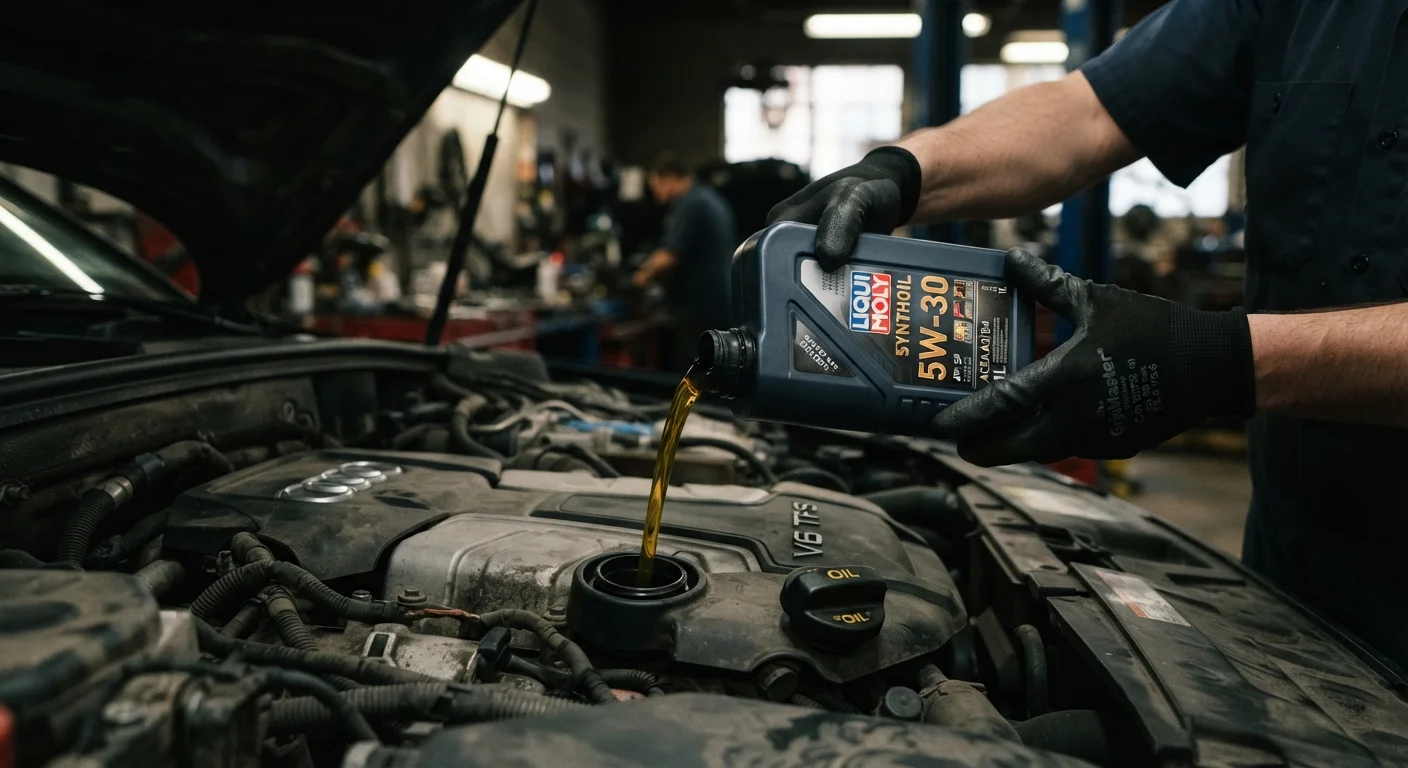
Option A
Synthetic Motor Oil
The engineered, high-performance lubricant.
Best for: Best for modern engines, turbocharged vehicles, extreme temperature climates, and drivers who prefer longer intervals between oil changes.
Option B
Conventional Motor Oil
The time-tested, petroleum-based standard.
Best for: Best for older, simpler engines with low mileage that operate under normal driving conditions and are serviced on regular, shorter intervals.
How Each Oil Is Made
The most fundamental difference between synthetic and conventional motor oil is origin. Conventional oil is refined directly from crude petroleum. During refining, sulfur compounds, wax, and other impurities are removed, but the base oil still contains a mix of hydrocarbon molecules of varying sizes and shapes — a structural inconsistency that limits performance under stress.
Synthetic oil, by contrast, is built from scratch. Chemists break down petroleum or other feedstocks into base molecules, then reassemble them into uniform molecular chains engineered for specific lubrication properties. This process produces a cleaner, more consistent lubricant that flows more predictably across a range of temperatures and resists chemical breakdown longer.
There is also a middle category — synthetic blends — which combine a conventional base oil with some synthetic additives. These offer modest performance improvements at a price point between the two.
Performance Differences That Actually Matter
For most drivers, the practical differences come down to three areas: temperature tolerance, engine cleanliness, and change intervals.
Temperature tolerance: Synthetic oil maintains stable viscosity — its resistance to flow — in both extreme cold and high heat more reliably than conventional oil. In cold climates, a thinner-flowing oil at startup means faster lubrication to engine components before full operating temperature is reached. In hot conditions or under heavy load, synthetic resists thinning, keeping a protective film between moving metal parts.
Engine cleanliness: Because synthetic oil oxidizes more slowly and contains fewer impurities to begin with, it tends to leave less sludge inside the engine over time. Sludge buildup can restrict oil flow and reduce engine lifespan.
Change intervals: Many vehicles using full synthetic can go 7,500 to 10,000 miles or more between oil changes, compared to the traditional 3,000–5,000-mile guidance associated with conventional oil. However, this varies by vehicle make, driving conditions, and manufacturer recommendation — your owner's manual takes precedence.
| Criterion | Synthetic Motor Oil | Conventional Motor Oil |
|---|---|---|
| Base Material | Engineered molecular chains | Refined crude petroleum |
| Temperature Performance | Stable across wide range | Can thin in heat, thicken in cold |
| Typical Change Interval | 7,500–10,000+ miles (varies) | 3,000–5,000 miles |
| Sludge Resistance | Higher resistance | More prone over time |
| Cost Per Quart | Higher upfront cost | Lower upfront cost |
| Best Engine Match | Modern, turbocharged, high-performance | Older, simpler, low-stress engines |
For a broader view of how powertrain type affects maintenance needs, see our comparison of gas, hybrid, and electric vehicles.
What Your Owner's Manual Is Actually Telling You
The owner's manual specifies both an oil type (conventional, synthetic blend, or full synthetic) and a viscosity grade such as 5W-30 or 0W-20. Both specifications matter equally.
Viscosity grades use a two-number system: the first number (with a W for winter) indicates cold-temperature flow; the second indicates viscosity at operating temperature. Using the wrong grade — even a premium synthetic — can create inadequate lubrication or excess pressure in oil passages.
Always Check Manufacturer Specifications First
Not all engines respond the same way to oil type changes. Some high-mileage engines with worn seals may experience minor leaks if switched abruptly to full synthetic, since synthetic oil flows more readily. Before switching oil types on a vehicle with significant miles, consult a qualified mechanic who can evaluate your specific engine's condition and history.
Many automakers now factory-fill new vehicles with full synthetic oil and design their recommended change intervals around it. Downgrading to conventional in these engines may shorten service life and could affect warranty coverage. When in doubt, follow the manufacturer's specification rather than cost-cutting on oil.
If you're navigating a repair decision beyond just fluids, our OEM vs. aftermarket parts guide covers how part sourcing affects quality and warranty considerations.
And for a broader look at which maintenance rules still apply versus outdated ones, see our breakdown of common car maintenance myths.
The content on this site is for informational purposes only and is not a substitute for professional advice. Always consult a qualified professional for guidance specific to your situation.