

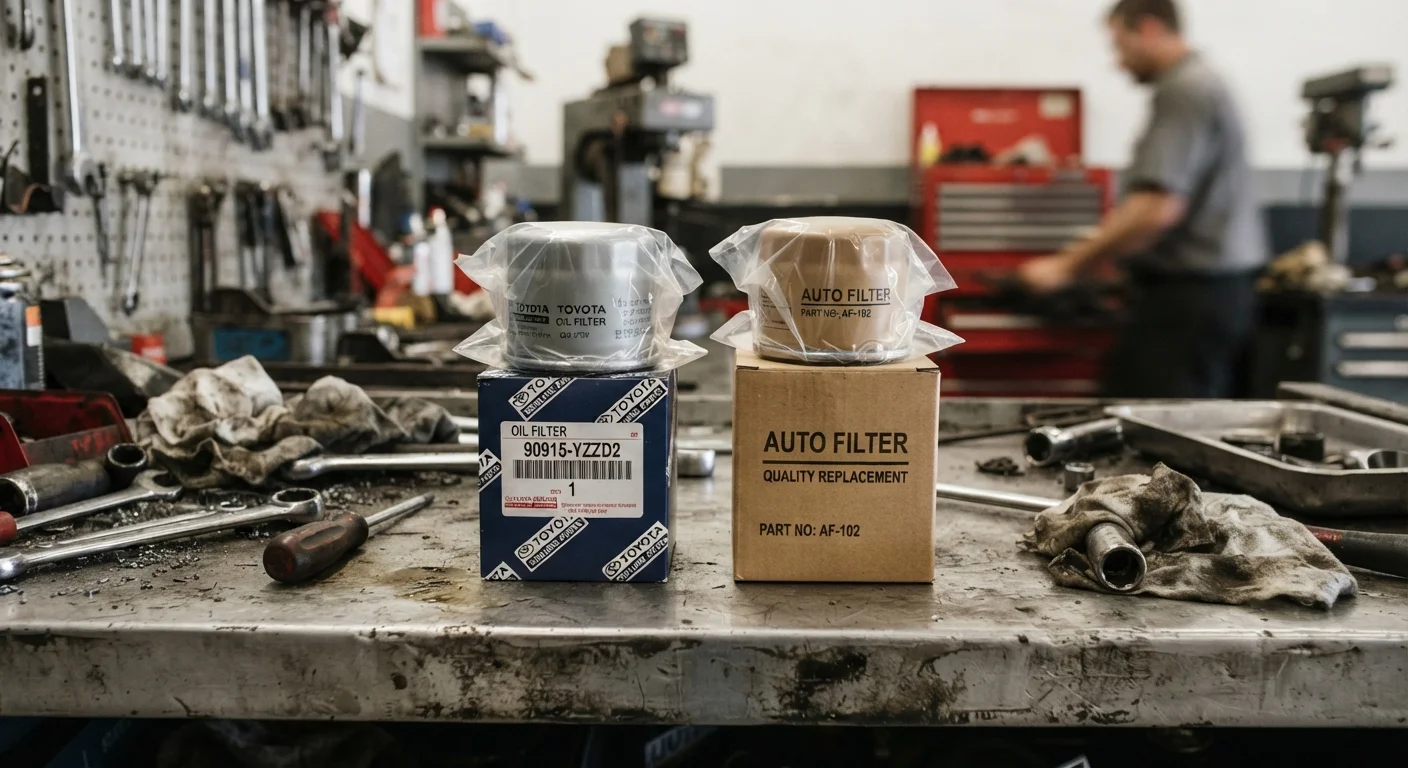
Option A
OEM Parts
The factory-spec, guaranteed-fit option.
Best for: Drivers who prioritize exact fit, manufacturer warranty protection, and long-term reliability on newer or high-value vehicles.
Option B
Aftermarket Parts
The flexible, often lower-cost alternative.
Best for: Owners of older vehicles, budget-conscious repairs, or situations where OEM parts are discontinued or hard to source.
What OEM and Aftermarket Actually Mean
OEM stands for Original Equipment Manufacturer. An OEM part is made by — or to the exact specifications of — the company that built your vehicle. When you buy an OEM part through a dealership, you're typically getting the same component that was installed on the assembly line, or one built by the same supplier under contract.
Aftermarket parts are manufactured by independent companies not affiliated with the vehicle's original maker. The aftermarket industry is enormous — it encompasses everything from budget replacement parts to high-performance upgrades. Quality, tolerances, and materials vary significantly from one manufacturer to another.
It's worth noting that many OEM parts are themselves produced by third-party suppliers. The distinction isn't always about who physically makes the part — it's about whether the part meets the vehicle manufacturer's documented specifications. For a deeper look at how parts and services intersect on a complex job, see our guide on what you're paying for when a mechanic rebuilds your suspension.
Fit, Quality, and Performance: Where the Differences Show Up
OEM parts are engineered to fit one vehicle or a defined family of vehicles. That precision matters most for components where tolerance is tight — sensors, timing components, transmission parts, and body panels. An OEM part should install without modification and perform exactly as the vehicle was designed to operate.
Aftermarket parts are built to fit a range of vehicles, which means fitment can occasionally require minor adjustment. More importantly, quality across the aftermarket spectrum is inconsistent. A reputable aftermarket manufacturer may subject its parts to testing that rivals or exceeds OEM standards, while a lower-tier option may use inferior materials or looser tolerances.
| Criterion | OEM Parts | Aftermarket Parts |
|---|---|---|
| Fit guarantee | Exact fit by design | Varies; usually fits with minor adjustment |
| Quality consistency | Uniform, spec-controlled | Wide range — high to low |
| Typical cost | Higher (20–60% premium) | Generally lower |
| Availability for older vehicles | Limited once discontinued | Often available long-term |
| Warranty impact | No risk to OEM warranty | Generally protected by federal law |
| Performance upgrade options | Factory spec only | Wide variety, including performance tiers |
For high-stakes mechanical repairs — such as transmission components — the source of replacement parts can significantly affect long-term reliability. Our article on transmission repair vs. replacement covers how to think through those kinds of decisions carefully.
Cost and Warranty: The Numbers Behind the Choice
OEM parts typically carry a price premium — often 20% to 60% higher than comparable aftermarket options, depending on the component and vehicle brand. For routine maintenance items like filters and brake pads, the difference can be modest. For body panels, electronic modules, or brand-specific components, the gap can be substantial.
~$400B
U.S. aftermarket parts industry annual size
The U.S. automotive aftermarket is one of the largest in the world, reflecting the volume of vehicles on the road needing maintenance and repair.
20–60%
Typical OEM price premium over aftermarket
Price gaps vary considerably by part type and vehicle brand, with luxury and specialty vehicles generally showing the widest spreads.
On the warranty side, a federal law known as the Magnuson-Moss Warranty Act generally prohibits manufacturers from voiding a vehicle's warranty solely because an aftermarket part was used — unless they can demonstrate that the aftermarket part caused the failure in question. However, some nuances apply, particularly for emissions-related components and newer vehicles with complex integrated systems.
Emissions and Certified Parts: A Special Case
For emissions-related components — such as catalytic converters and oxygen sensors — federal and state regulations may require parts that meet specific certification standards. In California and states following similar rules, only CARB-compliant aftermarket catalytic converters are legal replacements. Always verify local requirements before selecting aftermarket emissions components.
The cost of the part is only one variable. Labor rates at dealerships versus independent shops can shift the total repair cost significantly, regardless of which part is used. When evaluating total repair cost, consider both the part price and where the work will be done. For broader context on ownership costs, our overview of new car vs. used car trade-offs is a useful reference.
Making the Right Call for Your Situation
No single answer applies to every repair. A reasonable framework: the newer and more valuable the vehicle, the stronger the case for OEM parts — especially on safety, emissions, or warranty-sensitive systems. The older the vehicle and the more routine the repair, the more sense it makes to weigh quality aftermarket alternatives seriously.
When evaluating aftermarket options, look for parts from manufacturers with established reputations and verifiable testing standards. Your mechanic's recommendation matters here — experienced technicians often have a clear sense of which aftermarket brands consistently perform well for specific applications.
Finally, if you're also thinking about how parts choices interact with your auto insurance coverage — particularly after a collision repair — it's worth understanding how insurers treat OEM versus aftermarket parts in claims. For a foundation on that topic, see auto insurance coverage basics.
This article is for general informational purposes only and does not constitute mechanical or legal advice. Consult a qualified mechanic or licensed professional for guidance specific to your vehicle and situation.
The content on this site is for informational purposes only and is not a substitute for professional advice. Always consult a qualified professional for guidance specific to your situation.