

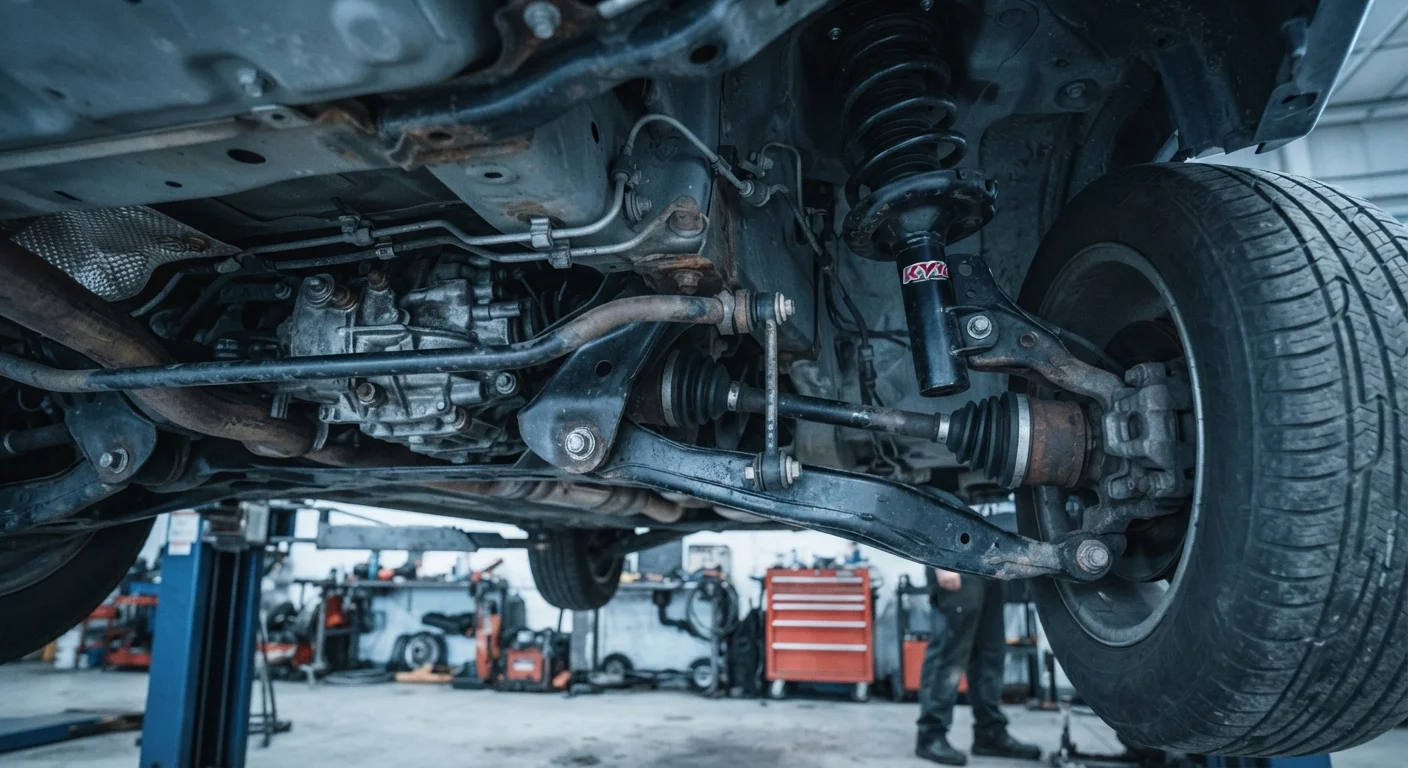
Why Suspension Literacy Matters Before You Approve a Repair
When a mechanic hands you an estimate listing struts, control arm bushings, ball joints, and sway bar end links, it can feel like a foreign language — and an expensive one. Suspension repairs rank among the more costly services a vehicle owner faces, so understanding what each component does and why it wears out gives you the context to have a productive conversation rather than simply signing off.
This guide breaks down the most common suspension parts that appear on repair estimates, what each one actually does, and the symptoms that typically prompt their replacement. It is not a substitute for a qualified mechanic's inspection — but it will help you ask better questions. For a broader introduction to vehicle systems, see our guide to vehicle ownership for first-timers.
| System type | Passive suspension (most consumer vehicles) |
| Common front designs | MacPherson strut, double-wishbone, multilink |
| Alignment required after repair? | Yes — any repair affecting steering geometry requires realignment |
| Parts often replaced in pairs | Struts, shocks, tie rod ends, sway bar links |
| Safety-critical component | Ball joints — failure can cause sudden loss of steering control |
| Common symptom of worn suspension | Excessive bouncing, clunking over bumps, uneven tire wear, pulling while braking |
The Core Components and What They Do
Suspension systems vary by vehicle design — MacPherson strut setups are common on front-wheel-drive cars, while double-wishbone and multilink arrangements appear on trucks, SUVs, and performance vehicles. Despite those differences, most estimates involve a consistent set of parts.
Struts and Shock Absorbers
A strut is a structural component that combines a shock absorber with a mounting point for the wheel assembly. It dampens the motion of the spring so your vehicle doesn't continue bouncing after hitting a bump. A shock absorber (or simply "shock") performs the same dampening function on vehicles where it is a separate unit from the structural support. Worn shocks or struts produce a bouncy, wallowing ride and can extend stopping distances by allowing the tire to lose contact with the road during braking.
Coil Springs
Springs bear the vehicle's weight and absorb initial road impacts. They are often replaced alongside struts because the two are serviced as an assembly. A broken or sagging spring causes the vehicle to sit unevenly or bottom out over dips.
Control Arms and Bushings
A control arm connects the wheel hub to the vehicle frame and guides wheel movement through the suspension's range of motion. Each control arm pivots on rubber or polyurethane bushings at the frame end and connects to the steering knuckle via a ball joint at the wheel end. Worn bushings cause clunking over bumps and imprecise steering feel. Mechanics sometimes replace just the bushing; other times the entire arm is replaced if the arm itself is bent or corroded.
Ball Joints
Ball joints are pivot points — essentially a ball-and-socket — that allow the wheel and suspension to move together while the wheel also turns for steering. A worn ball joint produces clunking, vibration, or a pulling sensation. A severely worn ball joint can separate without warning, which is a serious safety concern; this is one part where a mechanic's recommendation should not be deferred lightly.
Sway Bar Links and Bushings
The sway bar (also called an anti-roll bar) reduces body lean in corners by linking the left and right sides of the suspension. Short metal rods called end links connect the sway bar to the suspension, and the bar itself is held to the frame by bushings. These are relatively inexpensive parts but are frequently replaced in a suspension refresh because worn links rattle noticeably over bumps.
Tie Rod Ends
Tie rods transmit steering input from the rack and pinion (or steering box) to the front wheels. The outer tie rod end is a ball joint that wears over time and causes loose steering or uneven tire wear. Tie rod ends are replaced in pairs when worn, and a wheel alignment is always required afterward.
Strut
A structural suspension component that integrates a shock absorber with the wheel mounting assembly. Found on MacPherson strut systems common in front-wheel-drive vehicles.
Control Arm
A hinged link that connects the wheel hub assembly to the vehicle's frame, guiding the wheel through its vertical travel. It pivots on bushings and attaches to the knuckle via a ball joint.
Ball Joint
A ball-and-socket pivot point connecting the control arm to the steering knuckle. It allows simultaneous up-and-down suspension movement and side-to-side steering rotation.
Bushing
A cylindrical cushion, typically rubber or polyurethane, inserted at pivot points to absorb vibration and allow controlled movement. Bushings wear out and harden over time.
Sway Bar End Link
A short connecting rod that attaches the sway bar (anti-roll bar) to the suspension. Worn end links are a common source of suspension rattling and clunking.
Tie Rod End
The ball joint at the outer end of the tie rod that connects the steering rack to the wheel knuckle. Wear causes steering looseness and irregular tire wear, and replacement always requires a wheel alignment.
Reading Your Estimate and Asking Smart Questions
Suspension estimates often bundle multiple parts together. This can be entirely legitimate — replacing a strut while leaving worn mounts or springs in place risks a comeback visit — but it also means costs can climb quickly. Before authorizing work, ask your mechanic which items are safety-critical now and which could be monitored. Our article on reading a repair estimate walks through how to interpret each line item, including parts markup and labor hours.
Also ask whether the shop is using OEM (original equipment manufacturer) or aftermarket parts. Both have legitimate applications in suspension repair, and the trade-offs between OEM and aftermarket parts affect quality, fit, and warranty coverage. Finally, nearly every front suspension repair that touches steering geometry requires a four-wheel alignment afterward — see our companion piece on alignment, balancing, and rotation to understand what that service actually corrects.
Suspension Work and Your Budget
A full suspension rebuild can represent a significant unexpected expense. Before authorizing any major repair, it is reasonable to ask the mechanic to separate safety-critical items from parts that can be monitored at the next service interval. For general strategies on managing unexpected vehicle costs, the Budgeting Basics hub offers practical guidance on tracking and planning for irregular expenses.
This article provides general automotive information for educational purposes. Always consult a qualified, licensed mechanic for diagnosis, safety assessments, and repair decisions specific to your vehicle.
The content on this site is for informational purposes only and is not a substitute for professional advice. Always consult a qualified professional for guidance specific to your situation.