

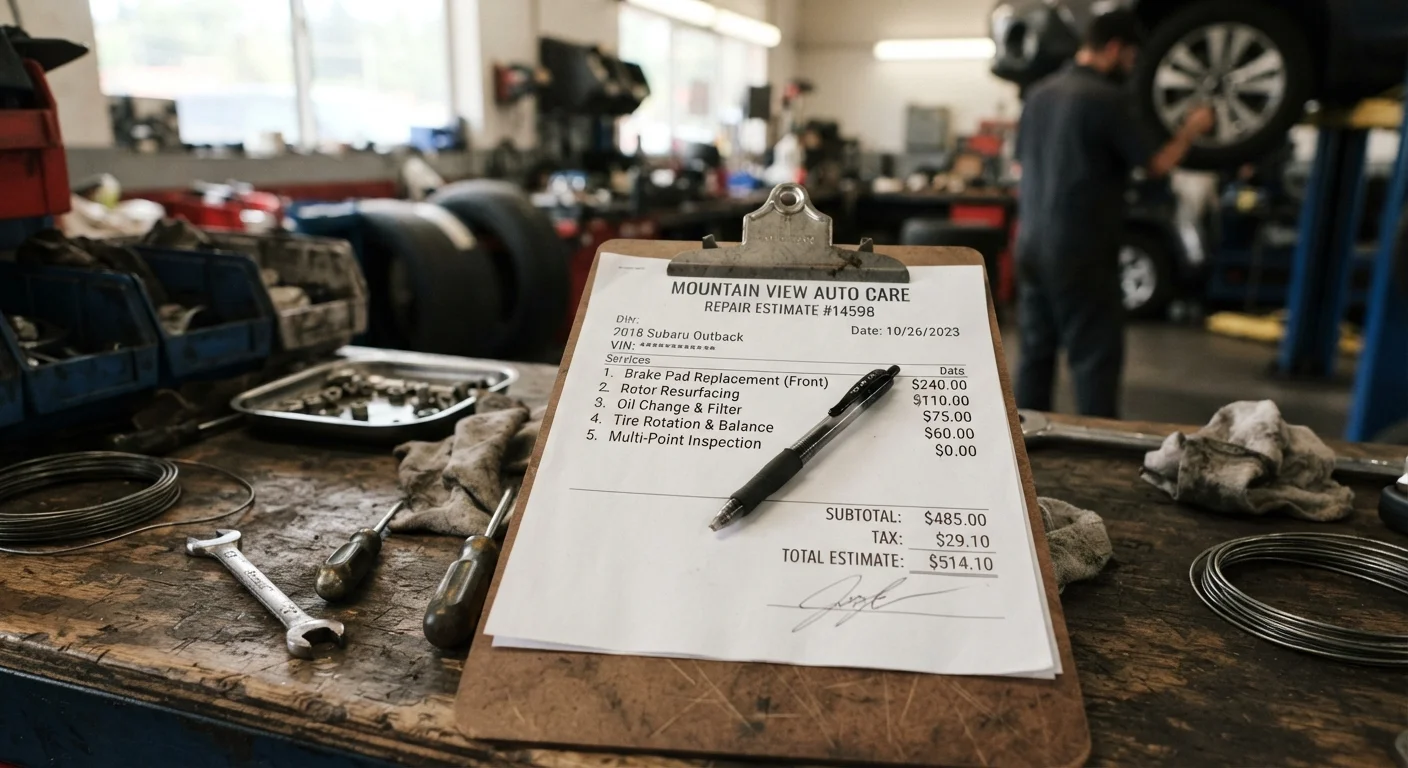
Why Shop Estimates Can Feel Like a Foreign Language
A repair estimate hands you real financial responsibility — you sign it, you authorize the work, and you owe the invoice. Yet most estimates arrive packed with shorthand codes, unfamiliar part names, and labor entries that seem arbitrary. Knowing what each section actually represents helps you ask smarter questions and avoid approving work you didn't need. For a broader look at how repair costs fit into long-term vehicle ownership, see our guide to total vehicle ownership costs.
| Labor billing unit | Flat-rate hours (industry time guide) (Mitchell, Alldata, and similar guides) |
| Typical diagnostic fee range | $75–$165 (varies by region and shop) (General industry range; confirm with your shop) |
| OEM vs. aftermarket cost difference | Aftermarket parts often 20–50% less than OEM (General market observation; actual variance differs by part) |
| Parts markup range | 20–50% above wholesale is common (Industry standard practice; varies by shop) |
| Written estimate requirement | Required by law in most U.S. states (Check your state's consumer protection statutes) |
The Core Line Items Explained
Labor
Labor is billed in labor hours — a flat-rate unit set by industry time guides (such as Mitchell or Alldata), not by a stopwatch. A technician might complete a job listed as 2.5 labor hours in 90 minutes; the billed amount stays the same. Labor rates vary by shop type and region, so ask the shop's current rate per hour upfront.
Parts
Parts are almost always marked up from the shop's wholesale cost. OEM (original equipment manufacturer) parts come from the vehicle's manufacturer supply chain; aftermarket parts are made by third parties and are often less expensive. Ask whether the estimate uses OEM or aftermarket and, if aftermarket, what warranty applies. For a deep dive into what individual parts actually do, this suspension repair breakdown is a useful reference.
Diagnostic Fee
A diagnostic fee covers the technician's time to identify the problem — plugging in a scan tool, interpreting fault codes, and performing further tests. Some shops fold this fee into the repair total if you proceed; others charge it regardless. Always confirm the policy before authorizing a diagnostic.
Shop Supplies / Miscellaneous Fees
These cover consumables — rags, cleaning solvent, fasteners, and similar items — and often appear as a flat charge or a percentage of the labor total. They are legitimate but negotiable; do not assume they are fixed.
Flat-rate labor hour
A standardized unit of billing time for a specific repair task, set by industry time guides rather than actual elapsed time. It protects customers from paying for a slow technician but can also mean a fast technician earns more per hour.
OEM part
Original Equipment Manufacturer part — produced by or for the vehicle's brand and meeting factory specifications. Generally carries a higher price than aftermarket alternatives.
Aftermarket part
A replacement component made by a third-party manufacturer rather than the original vehicle brand. Quality and warranty terms vary widely by supplier.
Diagnostic fee
A charge for the technician's time spent identifying the root cause of a problem. May or may not be credited toward the repair cost — always confirm the shop's policy upfront.
Shop supplies fee
A line item covering consumable materials used during a repair, such as cleaning agents, rags, and small fasteners. Often billed as a flat charge or percentage of labor.
Authorization
The customer's written or verbal approval for the shop to proceed with listed repairs. Once given, the customer becomes financially responsible for the authorized work.
Required vs. Recommended Work: A Critical Distinction
Estimates frequently mix two categories that carry very different urgency levels.
- Required repairs address conditions that affect safety or drivability right now — worn brake pads at minimum thickness, a cooling system leak, a failing wheel bearing.
- Recommended services are maintenance items the shop noticed during inspection that are not yet causing a problem — a cabin air filter at the end of its service life, slightly low coolant, a battery showing reduced capacity on a load test.
Neither category should be dismissed outright, but only you can decide timing based on your budget and risk tolerance. Separating the two categories on paper gives you a clear conversation to have with the shop. Communicating effectively with your mechanic covers how to ask exactly those questions without conflict.
Get Any Changes in Writing
If the shop discovers additional problems after you've signed the original estimate, they are generally required by law in most states to contact you for approval before proceeding. Ask about the shop's authorization policy upfront, and insist on a revised written estimate for any scope changes. Verbal agreements are difficult to dispute after the fact.
Tracking these costs over time is also part of sound financial planning. Resources on budgeting basics can help you build a dedicated vehicle maintenance fund.
Questions to Ask Before You Sign
A written estimate is a starting point, not a final decree. Before authorizing any work, consider asking:
- Is this part OEM or aftermarket, and what warranty comes with it?
- Is the diagnostic fee applied to the repair total if I proceed?
- Which items on this estimate affect my ability to safely drive the vehicle today?
- Will you call me if additional problems are found before doing more work?
Reputable shops expect these questions and answer them without pressure. If a shop discourages you from asking, treat that as important information about how the relationship will go. Managing unexpected repair bills also ties directly into saving strategies and debt management — an emergency repair fund is one of the most practical buffers any vehicle owner can maintain.
This article provides general information about auto repair estimates and is not a substitute for advice from a qualified automotive technician regarding your specific vehicle's condition.
The content on this site is for informational purposes only and is not a substitute for professional advice. Always consult a qualified professional for guidance specific to your situation.