

Our Verdict
There is no universal right answer when a transmission fails — the decision depends on what's actually wrong, what the vehicle is worth, and how long you plan to keep it. A targeted repair makes sense for isolated, well-diagnosed failures on a sound vehicle. A full rebuild or remanufactured replacement is typically the stronger choice when internal wear is widespread. If repair costs approach or exceed the vehicle's market value, replacing the vehicle is often the more financially rational path.
This framework is most useful for owners of vehicles with moderate remaining value who want to make a cost-informed decision rather than react emotionally to a large repair estimate.
What 'Transmission Trouble' Actually Means
Not every transmission problem requires a full teardown. Symptoms like delayed engagement, slipping between gears, rough shifting, or a warning light can point to issues ranging from low fluid and a faulty solenoid to severely worn clutch packs or a damaged torque converter. The word "transmission" on a repair order covers an enormous range of complexity and cost.
Before any decision is possible, a proper diagnosis is essential. A qualified transmission specialist — not just a general shop — should read diagnostic codes, perform a fluid inspection, and in many cases conduct a line pressure test. Without a clear diagnosis, any estimate is a guess. Ask the shop to provide a written explanation of what failed and why before you authorize anything beyond the diagnostic fee.
For a broader primer on how to communicate with a shop and understand what you're approving, see our guide to working effectively with your mechanic.
The Three Paths: Repair, Rebuild, or Replace
Targeted repair addresses a specific failed component — a solenoid pack, a shift sensor, a torque converter clutch — without opening the entire transmission. This is the lowest-cost option when the failure is genuinely isolated and the rest of the unit is in good condition. The risk is that an aging transmission often has related wear that a targeted fix won't catch.
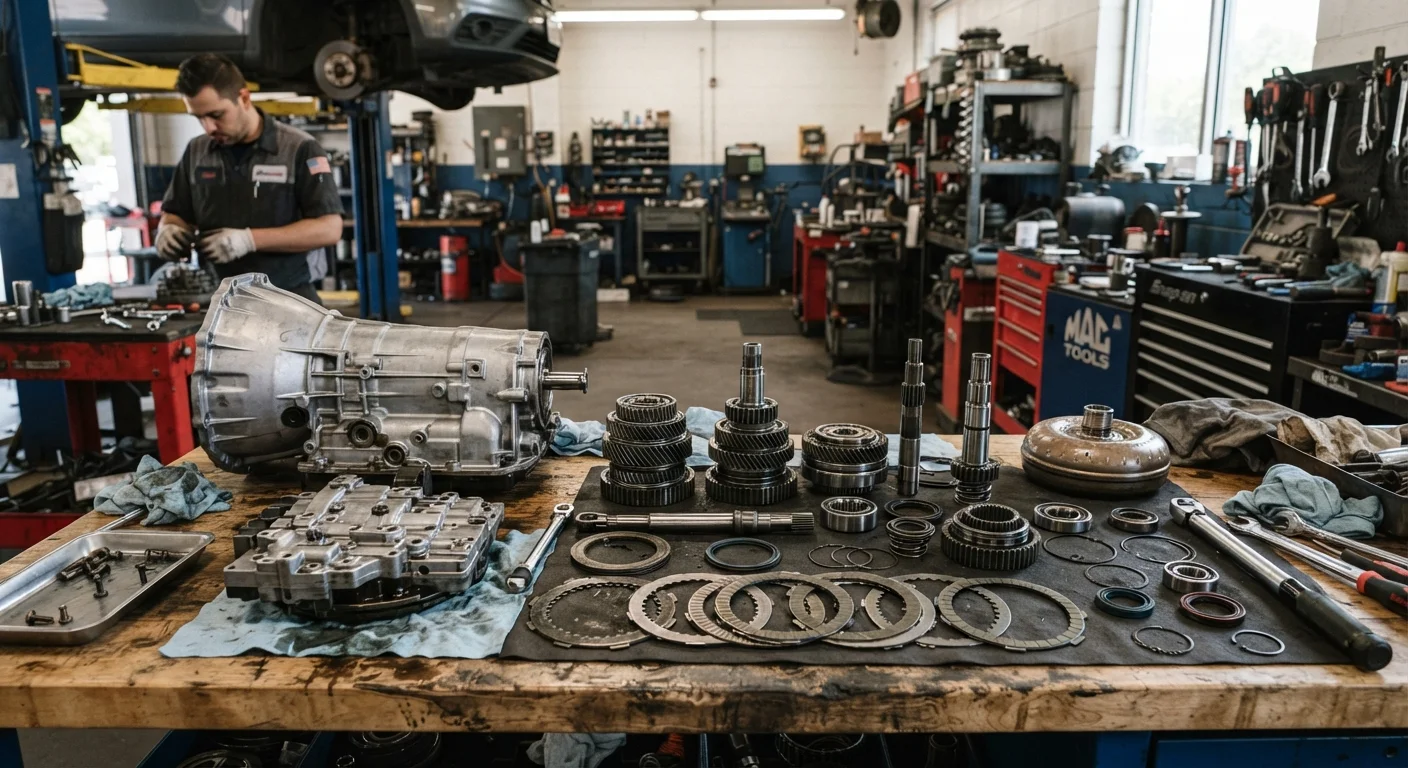
Rebuild (or overhaul) means the transmission is removed, fully disassembled, inspected, and reassembled with new wear items — seals, clutches, bands, and any damaged hard parts. A quality rebuild performed by an experienced specialist can restore reliable function. Quality varies significantly by shop, so ask about what's replaced as a matter of course versus only on request. Understanding what parts you're actually paying for — similar to evaluating a suspension rebuild — is equally important here.
Replacement means installing a different transmission — either a used unit pulled from a salvage vehicle, or a remanufactured unit that has been rebuilt to factory specifications in a controlled facility. Remanufactured transmissions typically carry a national warranty and may offer more consistency than a shop rebuild, though they cost more upfront. Used units carry the most uncertainty, since their history is unknown.
$1,800–$3,500
Typical range for a transmission rebuild
Industry estimates suggest a professional rebuild on a typical passenger vehicle falls in this range, though complex vehicles, luxury models, and dual-clutch transmissions can cost significantly more.
$2,500–$4,500
Cost range for a remanufactured unit installed
Remanufactured transmissions generally cost more than a shop rebuild but include standardized parts quality and a national warranty; pricing varies by vehicle make, model, and transmission type.
Pros and Cons of Repairing vs. Rebuilding vs. Replacing
Each approach carries genuine trade-offs that depend on your specific vehicle and situation.
Targeted repair is the lowest upfront cost option
When a failure is genuinely isolated — a solenoid, a sensor, a single seal — a targeted fix costs significantly less than a full rebuild. This makes sense when the diagnosis is confident and the rest of the unit is sound.
Rebuild restores overall transmission health
A thorough rebuild replaces all major wear items, not just the failed part. This addresses cumulative wear that would otherwise cause future failures, potentially extending the transmission's service life considerably.
Remanufactured units offer standardized quality
Factory-remanufactured transmissions are rebuilt to OEM specifications in controlled environments and typically come with a national warranty, offering more consistency than a shop-level rebuild in terms of parts quality and documentation.
Keeping a paid-off vehicle avoids new financing
Investing in a well-diagnosed repair on a vehicle you own outright can still be more economical than taking on monthly payments for a replacement, particularly if the rest of the vehicle is in good shape.
Used replacement unit can minimize upfront cost
A salvage-yard transmission is generally the cheapest replacement option and can be appropriate for older, lower-value vehicles where minimizing spend is the priority.
Targeted repairs may miss underlying wear
Fixing only the presenting failure on a high-mileage transmission leaves other worn components in place. It's common for a second failure to appear within months, making the initial repair money poorly spent.
Rebuild quality varies widely by shop
Unlike remanufactured units, a shop rebuild depends heavily on the technician's experience and what parts the shop uses as standard. A poor rebuild can fail relatively quickly, with limited recourse depending on the warranty terms.
High cost relative to vehicle value is a real risk
Transmission work — especially a full rebuild or remanufactured replacement — can run into thousands of dollars. On older or high-mileage vehicles, this expenditure may not be recoverable in the vehicle's remaining useful life or resale value.
Used units carry unknown reliability history
A salvage transmission may have been pulled from a vehicle that failed for reasons related to the transmission itself. Without documented history, the remaining service life is genuinely uncertain.
Labor costs are substantial regardless of path
Transmission removal and reinstallation is labor-intensive on most modern vehicles, often running 8–15 hours of shop time. This labor cost applies whether you're rebuilding in place or swapping in a replacement unit.
The Financial Framework: When the Math Matters Most
A useful starting point is comparing the total repair cost against the vehicle's current market value. If a transmission rebuild or replacement costs more than roughly 50–70% of what the vehicle would sell for in good condition, the economics become difficult to justify — especially if other major systems are also aging. This is general guidance, not a hard rule, and your specific circumstances (loan status, transportation alternatives, how well the rest of the vehicle has been maintained) all matter.
Also factor in what comes with the work. A remanufactured unit from a reputable supplier may include a 12,000-mile or 12-month warranty; some extend to 3 years. A used unit may carry no warranty at all. Shop rebuilds vary — some offer 12 months, others less. Get warranty terms in writing and ask specifically what it covers and who honors it.
Warranty Terms Vary Significantly
Not all transmission warranties are equal. A remanufactured unit warranty may be honored at any affiliated shop nationwide, while a shop rebuild warranty is typically limited to the original shop. Before authorizing work, ask specifically: what is covered, for how long, in miles and time, and where can warranty work be performed? Get this in writing as part of your repair authorization.
If you're weighing whether repair makes more sense than replacing the vehicle entirely, our vehicle research process guide can help you think through what a replacement vehicle search would look like. Also consider that OEM vs. aftermarket part choices apply to transmission components as well — the source and specification of internal parts affects the rebuild's durability.
The content on this site is for informational purposes only and is not a substitute for professional advice. Always consult a qualified professional for guidance specific to your situation.