

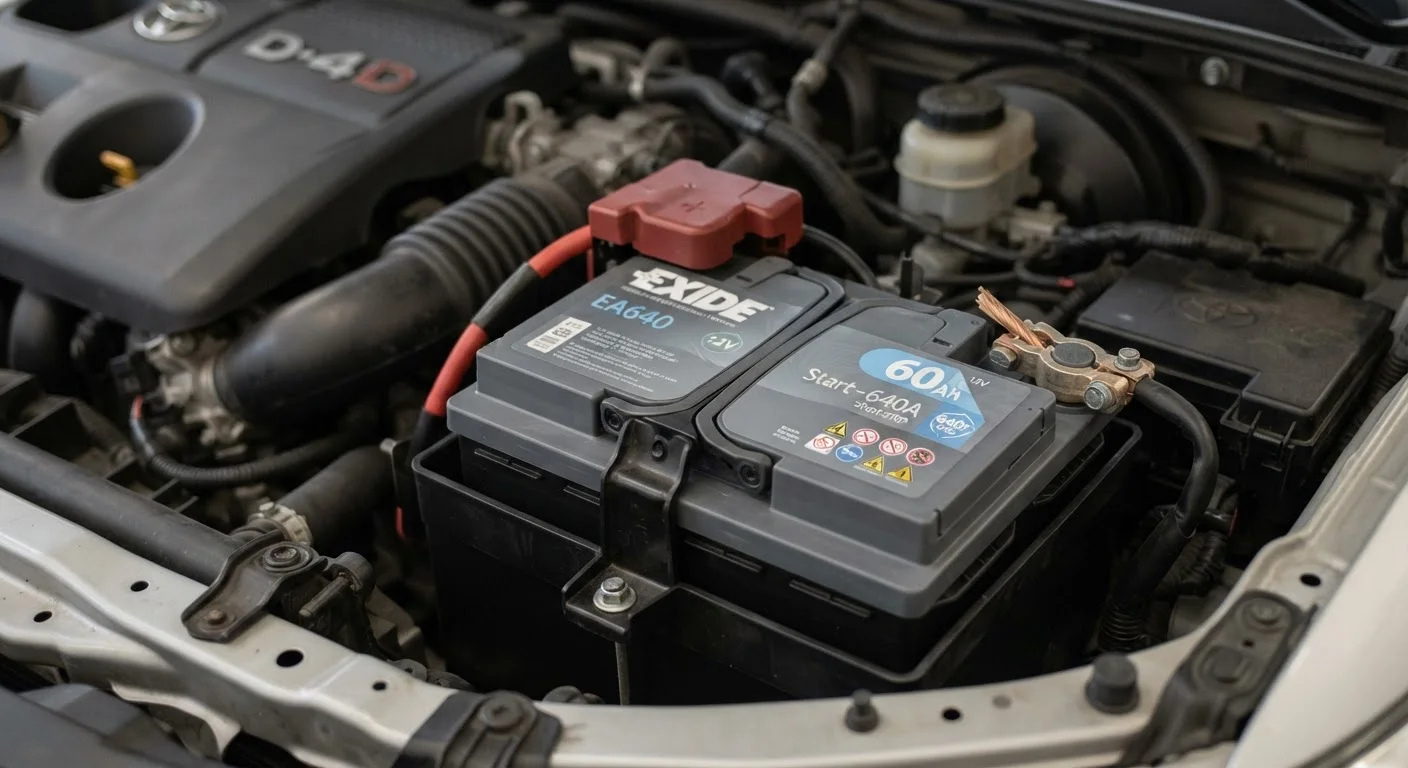
What a Car Battery Actually Does
A car battery is a rechargeable lead-acid unit that performs two distinct but equally important jobs. First, it delivers a concentrated burst of energy — called cranking amperes — to start the engine. Second, it stabilizes the voltage across the vehicle's electrical system when demand spikes, such as when the air conditioning, headlights, and infotainment system all run simultaneously.
Once the engine is running, the alternator takes over as the primary power source and simultaneously recharges the battery. This means your battery is constantly cycling between discharge and recharge throughout its life. Understanding this cycle is key to understanding why batteries eventually wear out: each charge-discharge cycle gradually degrades the lead plates inside the battery, reducing how much charge it can hold and deliver.
For a broader picture of the components working alongside your battery, see our guide on vehicle ownership for first-timers.
3–5 years
Typical conventional battery lifespan
Industry data consistently places average lead-acid battery life between three and five years under normal driving conditions in moderate climates.
~33%
Capacity loss in extreme cold
Battery Council International notes that a fully charged lead-acid battery can lose roughly a third of its effective capacity at 0°F compared to performance at 80°F.
How Long Car Batteries Typically Last
Under typical driving conditions in a moderate climate, a conventional 12-volt lead-acid battery can be expected to last roughly three to five years. Some batteries exceed this range, while others in harsher environments fall short of it. Absorbed glass mat (AGM) batteries — now standard on many newer vehicles and stop-start systems — tend to last somewhat longer and tolerate deeper discharge cycles better than traditional flooded lead-acid designs.
The three-year mark is generally considered the point at which proactive testing becomes worthwhile, even if the battery shows no obvious symptoms. A battery operating in its fourth or fifth year is statistically more likely to fail without much warning.
After your battery turns three years old, ask for a load test during your next oil change — not just a voltage check. A load test reveals how the battery performs under real starting conditions, which is the only meaningful measure of remaining health.
Static voltage readings can be misleading; a battery can read a healthy 12.6 volts at rest but fail under the amperage demand of engine starting. Load testing catches this gap before you're stranded.
If you drive primarily short distances — under 15 minutes each way — consider using a battery maintainer (sometimes called a trickle charger) periodically, especially during winter months.
Short trips don't give the alternator enough run time to fully recharge the battery after each start, leading to chronic partial discharge that meaningfully shortens battery life over time.
What Shortens Battery Life
Several factors accelerate battery degradation beyond normal wear:
- Temperature extremes: Heat is actually harder on batteries than cold. High under-hood temperatures accelerate the chemical reactions inside the battery, causing faster plate corrosion. Cold weather, while less damaging long-term, dramatically reduces the battery's ability to deliver cranking power on demand — which is why failures are most noticeable on frigid mornings.
- Short trips and infrequent driving: Every start draws down the battery. If the engine runs for only a few minutes, the alternator may not fully restore what was used. Vehicles that sit unused for extended periods are especially vulnerable to deep discharge, which can permanently reduce capacity.
- Parasitic drain: A small current draw from a faulty module, an interior light left on, or an improperly installed aftermarket accessory can slowly drain a battery overnight or over a weekend.
- Overcharging: A failing alternator that overcharges the battery can boil off electrolyte fluid and cause accelerated internal damage.
Checking the battery is a smart step before any long drive. Our road trip preparation checklist covers this and other pre-trip essentials.
Don't Let a Vehicle Sit Discharged
A lead-acid battery left in a deeply discharged state for an extended period can suffer permanent sulfation — a buildup of lead sulfate crystals on the plates that permanently reduces capacity. If a vehicle will be stored for more than two weeks, connecting a battery maintainer is a worthwhile precaution. A battery that has sulfated severely cannot be fully recovered by charging alone.
Warning Signs Your Battery Is Failing
Batteries rarely fail with zero warning. Recognizing early indicators can prevent being stranded:
- Slow or labored cranking: If the engine turns over noticeably more slowly than usual on startup, the battery is struggling to deliver adequate cranking amperes.
- Battery or charging system warning light: Modern vehicles monitor battery voltage continuously. A dashboard warning light is a direct signal to have the system tested promptly.
- Electrical oddities: Dim headlights, erratic power windows, or a clock that resets frequently can indicate voltage instability from a weakening battery.
- Swollen or bloated case: Physical swelling is a sign of internal damage, often from overcharging or excessive heat exposure. A battery in this condition should be replaced immediately.
- Corroded terminals: White or bluish-green buildup on the battery posts can interfere with electrical contact and is often an early warning of a battery nearing the end of its life.
These symptoms can sometimes be confused with alternator problems. A proper load test at a shop can distinguish between the two.
A Swollen Battery Requires Immediate Attention
A physically bloated or bulging battery case is not just a sign of reduced performance — it indicates internal damage that can pose a safety risk. Do not attempt to charge or jump-start a swollen battery. Have the vehicle inspected by a qualified mechanic as soon as possible and avoid handling the battery without appropriate protective gear, as a damaged battery can leak corrosive electrolyte.
What to Expect During Battery Testing and Replacement
Battery testing typically involves two measurements: a static voltage check (a fully charged battery should read approximately 12.6 volts at rest) and a load test, which measures how well the battery performs under simulated starting conditions. Many auto parts retailers and shops offer this testing at no charge. Testing is far more revealing than voltage alone, since a battery can read normal voltage but fail under load.
Replacement is generally straightforward — the old battery is disconnected, the hold-down bracket is removed, and the new unit is installed in reverse order. However, there is one important modern consideration: many vehicles equipped with sophisticated electronics, including those with automatic transmission adaptive learning, power window memory, or advanced driver-assistance systems, may require a relearn or calibration procedure after the battery is disconnected. A qualified mechanic can advise whether your vehicle requires this step.
When it comes to evaluating a repair-versus-replace decision for major components, the same clear-headed framework applies here as it does for larger repairs — see our guide on major repair decisions for context on how to weigh costs and reliability.
It's also worth noting that battery maintenance is one of several service items that often gets overlooked alongside timing belts and cabin air filters. Our guide to overlooked maintenance intervals covers the full picture.
This article is for general informational purposes only. Battery replacement and electrical system diagnosis involve safety considerations; if you are unsure about any step, consult a qualified mechanic.
The content on this site is for informational purposes only and is not a substitute for professional advice. Always consult a qualified professional for guidance specific to your situation.