

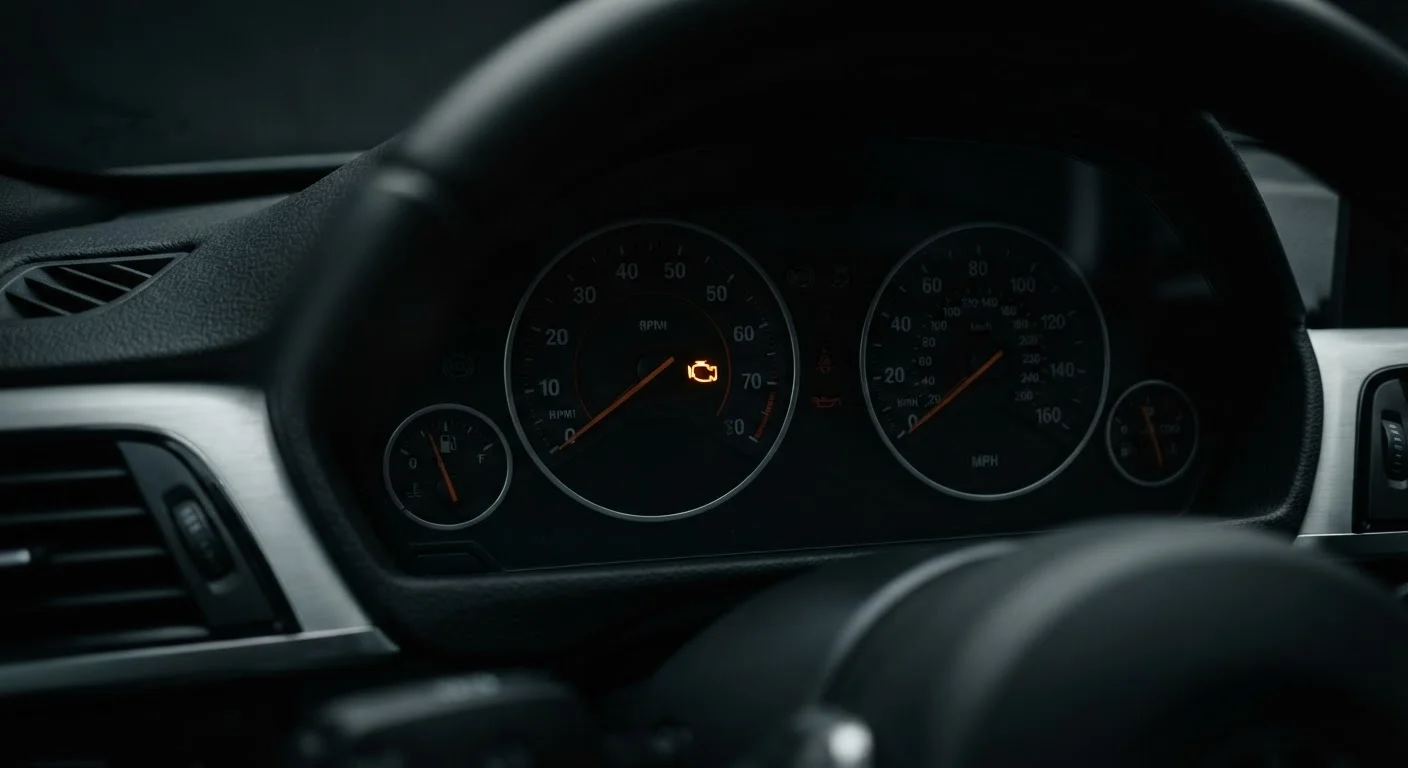
Steady vs. Flashing: The First Thing to Notice
Before worrying about what specific code is stored, look at how the light is behaving. A steady, continuous glow means the system has logged a fault that needs attention, but conditions aren't currently critical. You can typically continue driving to schedule a diagnostic appointment within the next few days.
A flashing or blinking check engine light is a different matter entirely. It almost always indicates an active engine misfire severe enough to damage the catalytic converter — a component that can cost well over $1,000 to replace. If the light is flashing, reduce speed, avoid heavy acceleration, and have the vehicle inspected as soon as possible. Continuing to drive aggressively with a flashing CEL can turn a manageable repair into a major one.
A Quick Flashing vs. Steady Test
If you're unsure whether the light is flashing or steady, pull into a safe parking area and watch it for 30 seconds with the engine idling. A rhythmic blink — even a slow one — means you should treat it as urgent. When in doubt, reduce load on the engine and get it scanned promptly.
What's Actually Being Monitored
The OBD-II system continuously monitors dozens of sensors and subsystems. Common triggers include:
- Oxygen sensors — measure exhaust gases to optimize fuel delivery; a failing sensor affects fuel economy and emissions.
- Mass airflow sensor — measures incoming air so the engine can calculate fuel injection; failure causes rough idling or poor acceleration.
- Catalytic converter efficiency — the system monitors whether the converter is doing its job reducing emissions.
- Evaporative emission (EVAP) system — detects fuel vapor leaks, including something as simple as a loose or cracked gas cap.
- Engine misfires — triggered when one or more cylinders aren't firing correctly, which is what causes a flashing light.
- Transmission faults — on many vehicles, transmission codes also trigger the CEL rather than a separate light.
400+
Possible OBD-II diagnostic trouble codes
The Society of Automotive Engineers (SAE) defines hundreds of standardized P-codes covering powertrain faults alone, with additional manufacturer-specific codes on top.
~$150–$400
Typical range for common CEL repairs
Industry repair data suggests oxygen sensor and gas cap replacements are among the most frequent CEL triggers and fall at the lower end of repair costs, while catalytic converter replacement is among the most expensive.
Understanding the monitored systems helps when talking to your mechanic — describing any accompanying symptoms (rough idle, reduced power, smell of fuel) alongside the code significantly speeds up diagnosis.
Reading the Code Yourself
You don't need to visit a shop just to find out which code is stored. An OBD-II scan tool plugs into a port typically located under the dashboard on the driver's side. Many auto parts retailers also offer free code reading as a walk-in service.
The code itself follows a standard format: a letter (P for powertrain, B for body, C for chassis, U for network) followed by four digits. For example, P0420 indicates catalyst system efficiency below threshold on Bank 1. Knowing the code before speaking with a mechanic helps you research context and ask informed questions — though it shouldn't substitute for a professional diagnosis, since a single code can have multiple root causes.
If you're evaluating a used vehicle and the seller mentions a recent check engine light, a vehicle history report and a pre-purchase inspection can reveal whether recurring faults have been masked or improperly repaired.
When to Drive On — and When to Stop Immediately
Not every CEL requires an emergency stop. The following signals suggest you should pull over and stop driving as soon as it's safe:
- The check engine light is flashing (not steady)
- The CEL appears alongside a high-temperature warning or oil pressure warning
- You notice a significant loss of power, engine knocking, or smoke
If the light is steady and no other warnings are present, and the vehicle is driving normally, it's generally acceptable to reduce unnecessary driving and schedule a diagnostic appointment within a few days. Don't simply clear the code and hope it goes away — the underlying fault will typically cause the light to return, sometimes masking a worsening condition.
Other Warning Lights Are Not the Same
The check engine light covers engine and emissions faults but does not cover every vehicle system. Oil pressure, coolant temperature, battery, and brake warning lights are separate indicators with their own urgency levels. A vehicle displaying multiple warning lights simultaneously warrants immediate attention and should not be driven until evaluated by a qualified mechanic.
A useful pre-buying habit: during a test drive, note whether the CEL is illuminated and ask whether any codes have been recently cleared — a cleared light on an otherwise unrepaired vehicle is a red flag.
Frequently Asked Questions
If the light is steady and the car is driving normally, short-distance driving to reach a mechanic is generally acceptable. If the light is flashing, or if other warning lights appear alongside it, stop driving as soon as it's safe and have the vehicle inspected immediately.
Yes. A loose, missing, or damaged gas cap is one of the most common check engine light triggers. It causes a leak in the evaporative emission control system, which the OBD-II system detects. Tightening or replacing the cap and driving a few cycles often resolves it.
Use an OBD-II scan tool plugged into the diagnostic port under your dashboard, or visit an auto parts retailer that offers free code reading. The resulting code gives a starting point, but a mechanic's full diagnosis is needed to confirm the root cause.
Sometimes — if the triggering condition resolves itself, the OBD-II system may clear the code after several successful drive cycles. However, many faults are persistent, and clearing the code without repairing the cause means the light will return.
It should be treated with urgency. A flashing CEL almost always indicates an active engine misfire, which can rapidly damage the catalytic converter. Reduce speed, avoid hard acceleration, and have the vehicle inspected as soon as possible.
Not always. A diagnostic trouble code identifies the system or circuit that reported a fault, but the same code can have several possible root causes. A qualified mechanic uses the code as a starting point and performs additional testing to pinpoint the actual problem.
The content on this site is for informational purposes only and is not a substitute for professional advice. Always consult a qualified professional for guidance specific to your situation.