

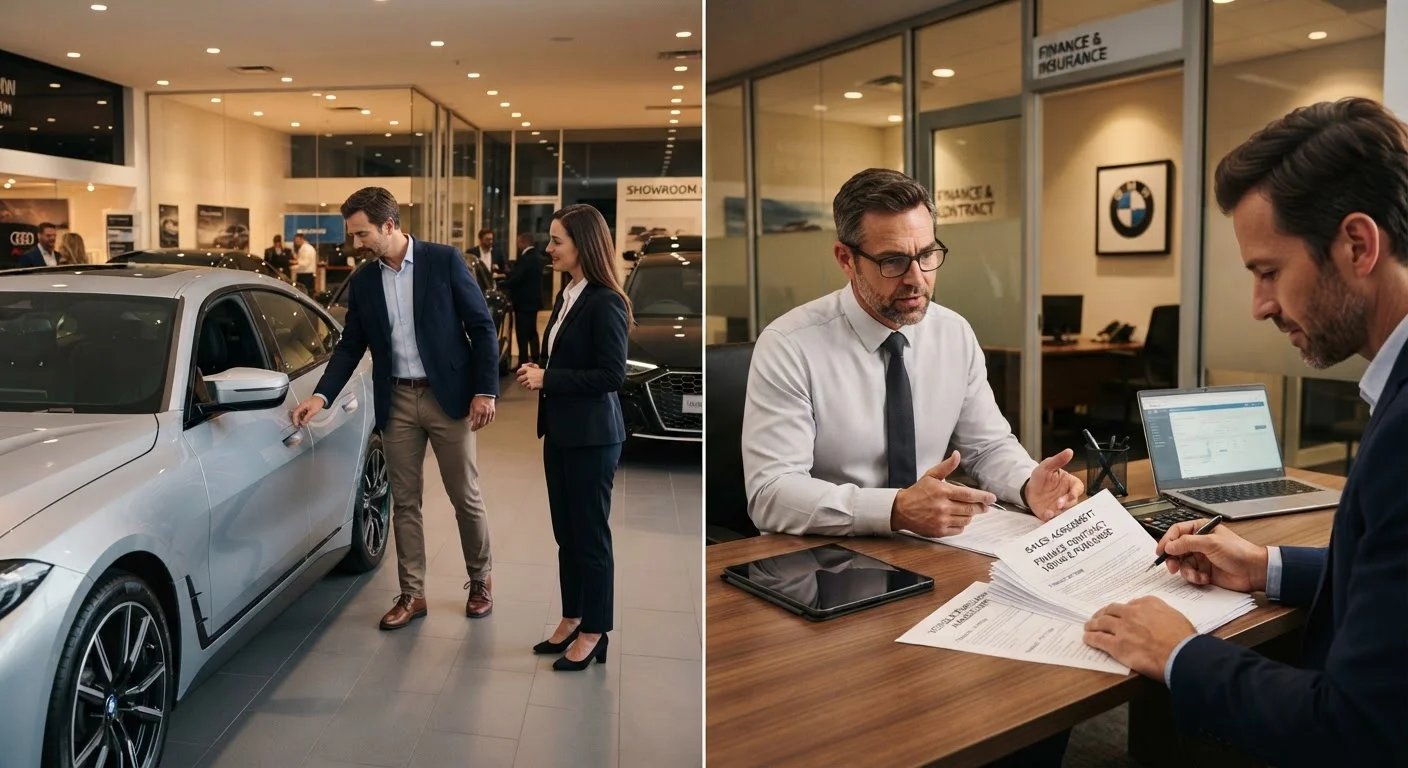
Option A
Leasing a Vehicle
The flexible, lower-commitment option.
Best for: Drivers who want lower monthly payments, enjoy driving newer vehicles regularly, and don't accumulate high annual mileage.
Option B
Buying a Vehicle
The long-term ownership and equity-building path.
Best for: Drivers who want full ownership, plan to keep the vehicle for many years, or drive high annual mileage.
What You're Actually Paying For
The core distinction between leasing and buying isn't about the car — it's about what your payments represent. When you buy, every dollar goes toward owning the vehicle outright. When you lease, your payments cover the vehicle's depreciation during your contract term, plus financing charges and fees. You're paying for use, not ownership.
In a purchase financed through an auto loan, the lender holds a lien until you've paid the balance. Once that loan is retired, the title is yours free and clear. With a lease, the finance company retains ownership throughout. At the end of the term — typically 24 to 48 months — you return the vehicle or, in many contracts, have the option to buy it at a predetermined residual value.
This difference shapes everything else: what you can do with the vehicle, what happens if your circumstances change, and how your spending looks over a longer horizon. For a broader look at what vehicle costs accumulate beyond any single payment structure, see total cost of vehicle ownership.
| Criterion | Leasing | Buying |
|---|---|---|
| Ownership | Finance company owns vehicle | Buyer owns vehicle (lien until paid) |
| Monthly payment (same vehicle) | Typically lower | Typically higher |
| Mileage restrictions | Yes — overage fees apply | None |
| Equity built | None | Yes, as loan is paid down |
| Vehicle modifications | Generally prohibited | Permitted |
| End-of-term outcome | Return or buy at residual | Own outright |
| Early exit | Early termination fees | Sell or trade (equity dependent) |
| Wear-and-tear liability | Charged at turn-in | No contractual liability |
Monthly Payments, Mileage, and the Fine Print
Lease payments are almost always lower than loan payments on the same vehicle because you're financing only a portion of its value — the depreciation from new to end-of-lease residual. That gap can be significant, sometimes hundreds of dollars per month on higher-priced vehicles. However, that apparent saving comes attached to conditions.
Nearly every lease agreement includes an annual mileage allowance — commonly 10,000 to 15,000 miles. Miles driven beyond that cap incur per-mile fees, typically ranging from $0.15 to $0.30 per mile depending on the contract. Drivers with long commutes or frequent road trips can quickly erode or exceed any payment advantage. Lease contracts also hold you responsible for excess wear and tear — defined by the lessor — which can mean charges for scratches, tire wear, or interior damage at turn-in.
Buying carries no mileage restrictions. You can drive cross-country every summer, accept a longer commute, or haul a trailer without financial penalty tied to the odometer. You're also responsible for all maintenance costs, but you set the timeline and choose your providers.
~30%
Average new-vehicle depreciation in year one
Industry estimates consistently show new vehicles lose roughly 20–30% of value in the first year, which forms the primary basis of lease payment calculations.
11.5 years
Average age of vehicles on U.S. roads
According to S&P Global Mobility data, the average American vehicle in operation is over 11 years old, reflecting how long buyers tend to hold purchased vehicles.
$0.15–$0.30
Typical per-mile overage fee in lease contracts
Mileage overage charges vary by lender and vehicle segment; higher-end vehicles commonly carry charges toward the top of this range.
Equity, Flexibility, and Long-Term Costs
One of the most consequential differences is what remains after your payment period ends. A buyer who completes a five-year loan owns a vehicle — perhaps with 60,000 miles — that still holds real market value. They can sell it, trade it, or continue driving it payment-free. That payment-free period is often cited by financial planners as one of the strongest arguments for buying: years of driving with no monthly vehicle payment.
A lessee who completes a three-year lease owns nothing at that point unless they exercise a purchase option. If market conditions are favorable and the residual price is competitive, that purchase option can be worthwhile. If not, they move into another lease or purchase, restarting the payment cycle.
Early exit is another key distinction. Selling or trading a purchased vehicle mid-loan is straightforward, though negative equity (owing more than the vehicle is worth) is a risk, particularly in the early years when depreciation is steepest. Exiting a lease early typically involves early termination fees that can rival the remaining payment balance — a serious financial constraint if your circumstances change unexpectedly.
For context on how new-vehicle depreciation affects both paths, new versus used vehicle costs explores how the initial value drop factors into real ownership expenses.
The Purchase Option at Lease End
Most lease agreements include a predetermined residual value — the price at which you can buy the vehicle when the lease ends. Whether that price represents good value depends on how the used-car market has moved during your lease term. In periods of elevated used-vehicle prices, the residual may actually fall below market value, making the purchase option advantageous. In softer markets, the opposite can be true. Review actual market data before deciding whether to exercise a purchase option, and consult a financial professional for guidance tailored to your situation.
The content on this site is for informational purposes only and is not a substitute for professional advice. Always consult a qualified professional for guidance specific to your situation.