

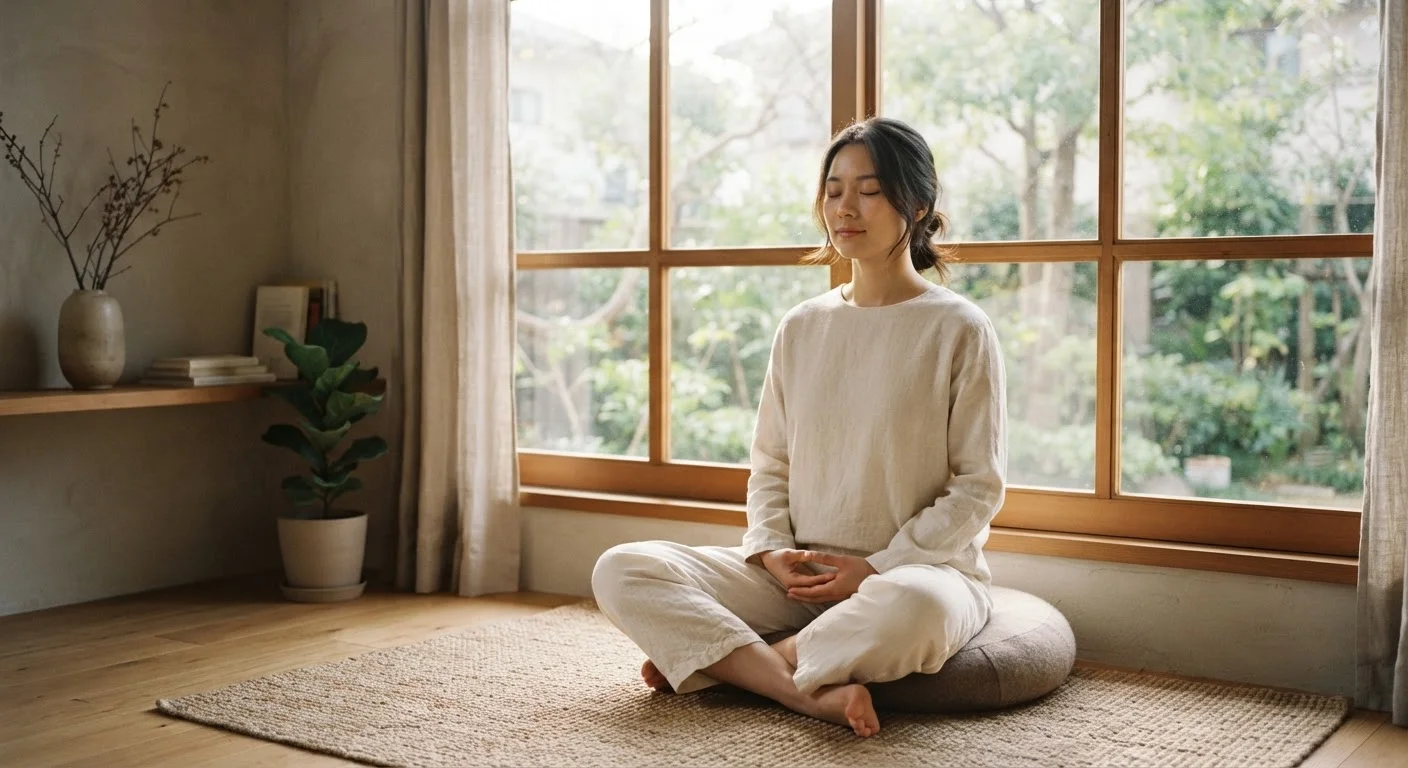
Option A
Mindfulness
An ongoing quality of awareness you can bring to any moment.
Best for: People who want a continuous, everyday approach to reducing stress and staying present without setting aside dedicated practice time.
Option B
Meditation
A structured, intentional practice with a defined beginning and end.
Best for: People seeking a focused, time-bounded mental training exercise to build concentration, emotional regulation, or relaxation skills.
The Core Distinction: State vs. Practice
Mindfulness and meditation are often used as though they mean the same thing — but understanding how they differ can help you use each one more intentionally. The clearest way to separate them: mindfulness is a mental quality, while meditation is a deliberate practice.
Mindfulness refers to the state of paying attention to the present moment — your thoughts, feelings, bodily sensations, and environment — with openness and without judgment. It's something you can bring to almost any activity. Eating slowly and noticing each flavor, listening carefully without mentally rehearsing your reply, feeling your feet on the ground as you walk — all of these are expressions of mindfulness.
Meditation, by contrast, is a set of structured mental exercises performed at a specific time and in a specific way. You sit, you focus, you follow a method. Meditation often cultivates mindfulness — but it can also target other goals, such as deep relaxation, visualization, loving-kindness, or body-scan awareness. This is an important distinction: not all meditation is mindfulness meditation, and you don't need to meditate formally to be mindful.
Just as mobility and flexibility describe different physical qualities that are easy to conflate, mindfulness and meditation describe different — though overlapping — aspects of mental training.
How Each One Works in Practice
Informal mindfulness doesn't require you to sit still or clear your mind. It asks only that you redirect attention to what's happening right now — your breath, the sensations in your body, the sounds around you — whenever you notice your mind has drifted. Over time, this redirection becomes more automatic.
Formal meditation involves setting aside time — typically anywhere from five to forty-five minutes — to engage in a structured mental exercise. Common formats include:
- Breath-focused meditation: Anchoring attention on the physical sensation of breathing and gently returning to it when distracted.
- Body scan: Systematically moving awareness through different regions of the body to notice tension or sensation.
- Loving-kindness (Metta): Deliberately cultivating feelings of warmth and goodwill toward oneself and others.
- Open monitoring: Observing thoughts and sensations as they arise without attaching to them — a more mindfulness-oriented style.
Research published in journals such as JAMA Internal Medicine and Psychological Science suggests both practices are associated with reductions in perceived stress, improvements in attention, and modest benefits for emotional regulation. However, effects vary by individual, practice consistency, and the type of meditation used. These findings represent correlations observed in study populations — not guaranteed outcomes for every person.
| Criterion | Mindfulness | Meditation |
|---|---|---|
| What it is | A quality of present-moment awareness | A structured mental exercise |
| When it happens | Anytime, during any activity | Dedicated, scheduled sessions |
| Time required | None — woven into daily life | Typically 5–45 minutes per session |
| Goal | Present-moment attention and non-judgment | Varies: focus, calm, awareness, compassion |
| Includes the other? | Can exist without formal meditation | May or may not cultivate mindfulness |
| Barrier to entry | Very low — no technique required | Low — guidance apps or classes helpful |
| Evidence base | Associated with reduced stress and better focus | Studied for stress, sleep, and emotional regulation |
Overlap, Misconceptions, and When to Seek Guidance
One common misconception is that meditation requires emptying the mind. It doesn't — and neither does mindfulness. Both involve noticing thoughts rather than suppressing them. The goal is awareness, not silence.
Another misconception is that these practices are inherently spiritual or religious. While both have roots in Buddhist contemplative traditions, secular, clinically adapted versions — such as Mindfulness-Based Stress Reduction (MBSR) and Mindfulness-Based Cognitive Therapy (MBCT) — have been widely studied in non-religious contexts. That said, individuals with specific religious concerns may want to explore how various traditions approach these practices.
Clinically Adapted Programs Worth Knowing
Mindfulness-Based Stress Reduction (MBSR) and Mindfulness-Based Cognitive Therapy (MBCT) are structured, evidence-informed programs that blend mindfulness and meditation techniques. MBCT, in particular, has been studied as a tool to help prevent depressive relapse in people with recurrent depression. These programs are typically delivered by trained instructors and are distinct from casual app-based practice. Ask a healthcare provider whether a structured program might be appropriate for you.
If you're managing a diagnosed mental health condition — such as anxiety, depression, or trauma-related disorders — it's worth discussing mindfulness or meditation with a qualified mental health professional before relying on them as primary tools. Just as anxiety and stress call for different care approaches, different mental health presentations may respond differently to these practices. A therapist can help you integrate them appropriately. For more on finding the right professional, see the differences between therapy, counseling, and psychiatry.
This article is for general informational and educational purposes only and does not constitute medical or mental health advice. Always consult a qualified healthcare or mental health professional for guidance specific to your situation.
The content on this site is for informational purposes only and is not a substitute for professional advice. Always consult a qualified professional for guidance specific to your situation.