

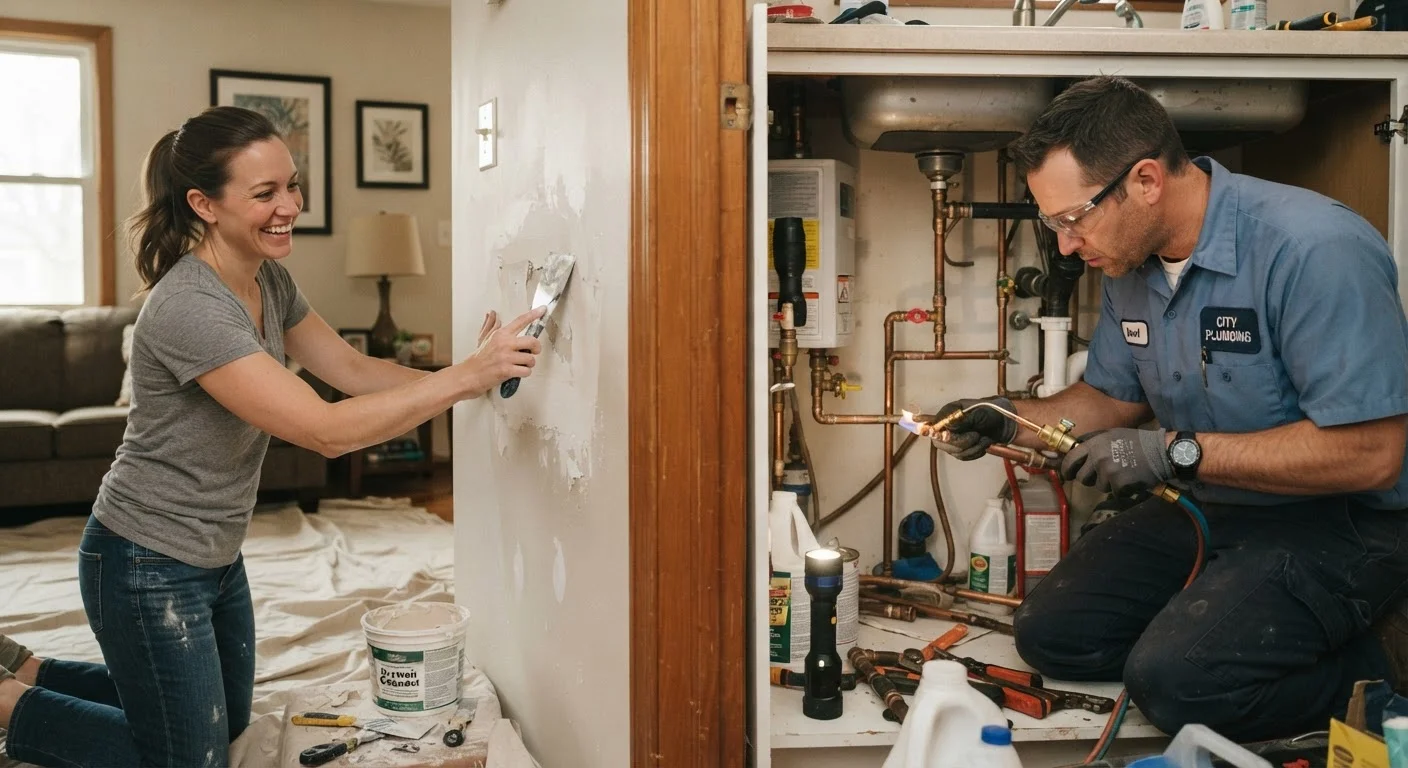
Option A
DIY Repairs
The hands-on, cost-saving approach for capable homeowners.
Best for: Low-risk, low-complexity tasks where mistakes are easily corrected and no permits or specialized licensing are required.
Option B
Calling a Pro
The licensed, liability-protected path for complex or hazardous work.
Best for: Jobs involving electrical systems, gas lines, structural elements, or any work that requires permits, inspections, or specialized tools.
The Core Question: Risk, Skill, and Code
Most homeowners fall somewhere between "I can fix anything" and "I'll call someone for everything." The smartest approach lives in between — and it starts with three honest questions: What is the actual risk if this goes wrong? Do I have the skill and tools to do this correctly? Does local code require a licensed professional?
Low-risk, low-complexity tasks — patching drywall, replacing a faucet cartridge, repainting trim — are strong candidates for DIY. The consequences of a minor misstep are limited, corrections are manageable, and no permit is typically required. Compare that to replacing a breaker panel or rerouting gas lines, where an error can cause injury, fire, or a failed inspection that creates problems for years.
Understanding the terminology used during inspections and repair estimates also helps you make smarter calls. Our plain-language glossary of home maintenance terms can help you decode what contractors are actually telling you before you decide whether to DIY or delegate.
| Criterion | DIY Repairs | Calling a Pro |
|---|---|---|
| Typical cost | Materials only | Labor + materials |
| Permit & code compliance | Homeowner's responsibility | Contractor typically manages |
| Liability if something goes wrong | Homeowner bears full risk | Contractor's license & insurance apply |
| Insurance implications | Improper work may void coverage | Licensed work generally insurable |
| Suitable complexity level | Low to moderate | Any level, including high-risk |
| Time investment | Variable; often longer for novices | Typically faster with experience |
| Resale impact | Unpermitted work can complicate sale | Permitted work adds documented value |
What's Typically Safe to DIY
A wide range of routine maintenance and cosmetic repairs fall comfortably within the DIY category for most homeowners:
- Interior painting and patching: Filling nail holes, touching up paint, and patching small drywall sections require modest skill and widely available materials.
- Basic plumbing fixtures: Swapping a showerhead, replacing a toilet flapper, or installing a new faucet are tasks most homeowners can complete with standard tools and manufacturer instructions.
- Caulking and weatherstripping: Sealing drafts around windows and doors is a high-value preventive task with minimal risk and a direct impact on energy costs.
- Gutter cleaning and minor roof inspection: Removing debris and checking visible flashing (the metal strips that seal roof edges and joints) can be done safely with proper ladder technique — though walking on the roof itself carries fall risk.
- Appliance maintenance: Cleaning refrigerator coils, replacing dryer vent hoses, or changing HVAC filters are routine tasks that extend appliance life without requiring specialized training.
Pairing these efforts with a proactive schedule — as outlined in our seasonal home maintenance guide — keeps small issues from compounding into costly emergencies.
~$3,300
Average water damage claim cost
According to the Insurance Information Institute, water damage and freezing claims are among the most common and costly for homeowners, often stemming from preventable maintenance failures.
6 in 10
Home fires linked to electrical failures
The U.S. Fire Administration has reported that electrical failures or malfunctions are a leading cause of residential structure fires, underscoring the risk of unlicensed electrical work.
When You Should Always Call a Licensed Professional
Certain categories of work are off-limits for DIY — not because of confidence, but because the stakes and regulatory requirements demand it.
Electrical Work Beyond Fixtures
Replacing a light fixture or outlet cover is generally low-risk. But adding circuits, upgrading a panel, or rewiring rooms requires an electrician in virtually every jurisdiction. Faulty electrical work is a leading cause of residential fires, and unlicensed work typically won't pass a home inspection at resale.
Gas Lines and Appliances
Any work on natural gas or propane lines — including connecting gas appliances — should only be performed by a licensed plumber or gas fitter. Even small leaks create explosion and carbon monoxide risks. Most municipalities require permits and inspections for this work regardless of who performs it.
Structural Modifications
Removing or modifying load-bearing walls, altering a foundation, or adding structural supports requires engineering review and permits. Mistakes can compromise the integrity of the entire structure.
Main Plumbing and Sewer Lines
Drain-side repairs (like unclogging a sink) are often DIY-friendly. But work connecting to the main water supply or sewer system — including water heater replacements in many states — typically requires a licensed plumber and inspection.
Skipping professional help on these systems doesn't just create safety risks. As detailed in our article on maintenance mistakes that can void your insurance coverage, improper repairs can give insurers grounds to deny claims when damage occurs.
Permits Protect You, Not Just the City
Many homeowners view permits as bureaucratic friction, but they serve a direct protective function. Permitted work is inspected by a third party, giving you documentation that the job was completed to code. This matters when filing an insurance claim, selling your home, or resolving a dispute with a contractor. Check with your local building department before starting any project that modifies a home's systems or structure.
The Hidden Cost of Getting It Wrong
The appeal of DIY is real — labor is often the largest portion of a contractor's bill. But the calculation changes when a repair goes sideways. Water damage from a poorly seated supply line, mold behind an improperly ventilated bathroom fan, or a failed inspection that requires tearing out finished work can quickly dwarf what professional labor would have cost.
There's also a deferred maintenance risk: homeowners who attempt repairs beyond their skill level sometimes partially complete a job and then stall — leaving systems in a compromised state for months. Our analysis of why deferred maintenance costs homeowners more over time shows that incomplete or improperly done repairs are among the most financially damaging patterns in home ownership.
A practical rule: if fixing your fix would cost more than the original repair, the job was probably beyond DIY territory. When in doubt, get a professional assessment before starting — most licensed contractors offer estimates at little or no cost.
This article is for general informational purposes only and does not constitute legal, financial, or professional contracting advice. Code requirements, permit thresholds, and licensing rules vary significantly by state and municipality. Always verify local regulations with your local building department and consult a licensed professional before undertaking significant home repairs.
The content on this site is for informational purposes only and is not a substitute for professional advice. Always consult a qualified professional for guidance specific to your situation.