

Start here
How Residential Plumbing Is Organized
Next
Shutoff Valves: Know Where They Are
Then
Water Pressure and What It Tells You
Go deeper
Drains, Traps, and Vents
Watch for
Early Warning Signs Every Homeowner Should Recognize
Know your limits
When to Call a Licensed Plumber
How Residential Plumbing Is Organized
A home's plumbing is really two separate systems working in parallel. The supply system delivers pressurized fresh water from a municipal main or private well to every fixture, appliance, and hose bib in the house. The drain-waste-vent (DWV) system relies on gravity — not pressure — to carry wastewater and sewage away to a municipal sewer or septic tank, while a network of vent pipes keeps air flowing so drains empty cleanly.
Supply lines branch off a single entry point and typically split into a cold-water line and a line routed through the water heater for hot water. Pipes in older homes are commonly galvanized steel or copper; newer construction often uses cross-linked polyethylene tubing, known as PEX, for its flexibility and freeze resistance. Understanding this basic layout helps you trace a problem to its source rather than guessing.
Supply system
The pressurized network of pipes that delivers fresh cold and hot water from the source — municipal main or well — to every fixture and appliance in your home.
Drain-waste-vent (DWV)
The gravity-fed system of pipes that carries used water and sewage out of the home while vent pipes maintain airflow so drains empty properly.
P-trap
A curved pipe section beneath every drain fixture that holds a small amount of water, forming a seal that prevents sewer gases from entering living spaces.
Shutoff valve
A valve that stops water flow to a specific fixture, appliance, or the entire house — used during repairs or emergencies to cut off supply quickly.
Pressure-reducing valve (PRV)
A device installed on the main supply line that automatically lowers incoming water pressure to a safe, consistent level for the household.
Water hammer
A banging or knocking sound in pipes caused by a sudden pressure surge when water flow is stopped abruptly, which can stress pipe joints over time.
PEX tubing
Cross-linked polyethylene, a flexible plastic piping commonly used in modern residential plumbing for its ease of installation and resistance to freezing damage.
Anode rod
A sacrificial metal rod inside a water heater tank that corrodes slowly to protect the tank lining from rust — it requires periodic inspection and replacement.
If you're new to homeownership overall, our first-time buyer's guide walks through the broader responsibilities that come with owning a home.
Shutoff Valves: Know Where They Are
The most valuable plumbing skill a homeowner can develop costs nothing: knowing where every shutoff valve is located before an emergency happens. A burst pipe or appliance failure that might cause thousands of dollars in damage can be contained in seconds if you know which valve to turn.
- Main shutoff valve: Controls all water entering the house. Typically found where the supply line enters near the foundation, or in a utility room. Turning it off stops water to every fixture simultaneously.
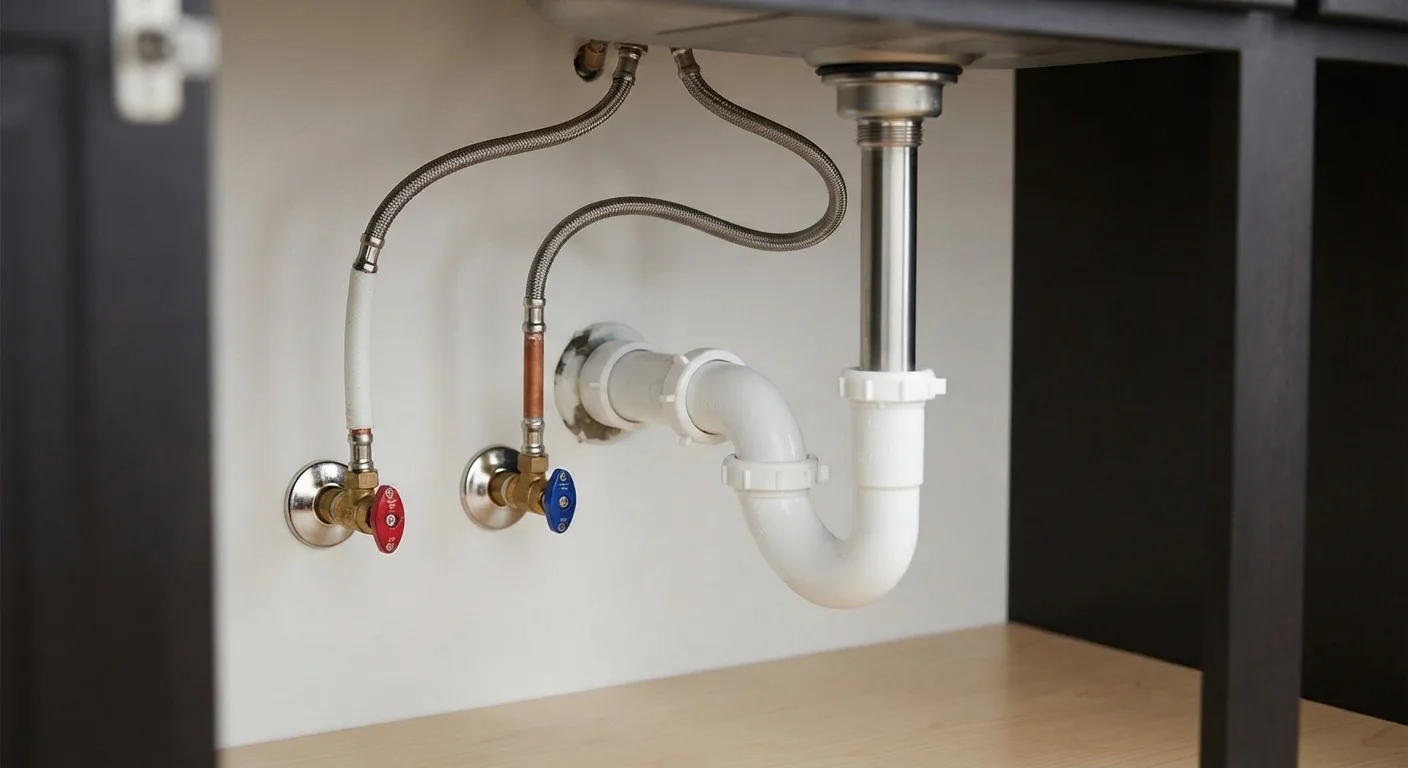
- Fixture shutoffs: Small valves located under sinks, behind toilets, and behind washing machines. They isolate a single fixture without cutting water to the rest of the house.
- Appliance shutoffs: Dishwashers, refrigerators with ice makers, and water heaters each have a dedicated valve nearby.
Map Your Valves Before You Need Them
Take ten minutes to walk through your home and physically locate every shutoff valve — under sinks, behind toilets, at appliances, and at the main entry point. Label each one with a small tag so anyone in the household can act fast during a leak. Testing them annually by turning them a half-rotation confirms they haven't seized from disuse.
Walk through your home and locate each valve. If any are stiff or corroded, have a plumber service them — a valve that cannot turn during an emergency offers no protection. Our seasonal maintenance guide includes a reminder to test shutoff valves annually.
Water Pressure and What It Tells You
Water pressure is measured in pounds per square inch (psi). The typical healthy range for a home is 40–80 psi, with many plumbers preferring 50–60 psi as the target. Pressure that is too low makes showers weak and appliances slow to fill. Pressure that is too high — commonly above 80 psi — stresses pipe joints, wears out valve seats in faucets faster, and can shorten the life of a water heater.
An inexpensive pressure gauge that threads onto an outdoor hose bib can give you a reading in under a minute. If pressure is consistently high, a pressure-reducing valve (PRV) — installed where the main supply enters — brings it into range. PRV installation involves the main supply line and is work for a licensed plumber. Also note that banging or knocking noises when a faucet closes sharply (called water hammer) are a pressure-related sign worth investigating.
Drains, Traps, and Vents
Every drain fixture in your home — sink, tub, shower, floor drain — connects to the DWV system through a curved pipe section called a P-trap. The bend holds a small reservoir of water that creates a seal blocking sewer gases from migrating back up through the drain. If a fixture goes unused for weeks, that water can evaporate and the seal breaks, producing a sewage odor. The fix is simply running the fixture briefly to refill the trap.
Vent pipes extend from the drain lines up through the roof. They equalize air pressure so drains empty efficiently — without vents, water draining from one fixture can siphon the traps of nearby fixtures. A slow drain in a single fixture usually points to a local clog; slow drains throughout the house suggest a blockage deeper in the drain line or a venting problem.
Plumbing Terminology Can Be Confusing
Terms like P-trap, DWV, and PRV appear frequently in inspection reports and contractor quotes. Understanding what they mean helps you have more informed conversations with professionals and catch potential misunderstandings early. Our home maintenance terms reference is a useful companion while reading this guide.
Our home maintenance terminology guide defines P-trap, venting, and other plumbing terms you may encounter during inspections or when speaking with a plumber.
Early Warning Signs Every Homeowner Should Recognize
Plumbing problems rarely appear without warning. Catching them early is the difference between a minor repair and a major remediation project. Watch for:
- Slow or gurgling drains — partial blockage building in the line
- Discolored or rusty water — can indicate pipe corrosion or a failing water heater anode rod
- Running toilet — a flapper or fill valve that doesn't seat properly; often audible and visible by adding food coloring to the tank
- Unexplained spike in water bills — frequently caused by a silent leak at a toilet or a supply line
- Soft spots, staining, or bubbling on walls or ceilings — suggests an active or chronic leak inside the structure
- Musty odors near fixtures — may point to a dried trap or a slow leak behind a wall
A proactive eye during routine cleaning is one of the most effective forms of home maintenance. For broader context on protecting your home's water management, see our article on gutters, downspouts, and drainage.
When to Call a Licensed Plumber
Some plumbing tasks are well within a handy homeowner's reach — replacing a toilet flapper, installing a new faucet, or clearing a single clogged drain with a plunger. But a clear line exists between those jobs and work that requires professional expertise, proper tools, and in many jurisdictions, a permit.
Don't Skip Permits on Major Plumbing Work
Work on main supply lines, water heater replacement, and sewer connections typically requires a permit and inspection in most US municipalities. Unpermitted work can affect your ability to sell the home, may not be covered by homeowner's insurance in the event of a loss, and could create genuine safety hazards. Always check with your local building department before starting.
Contact a licensed plumber for: main supply line repairs or rerouting, water heater installation or replacement, sewer line inspection or repair, any work involving gas-fired appliances, and situations where walls or floors must be opened to reach pipes. Attempting these without the right skills or credentials can create safety hazards, void homeowner's insurance coverage, or fail to pass inspection when you sell. Always verify local permit requirements with your municipal building department before beginning any significant plumbing project.
Keeping your home's systems in good working order goes well beyond plumbing. The winter weatherproofing guide addresses pipe insulation and freeze prevention — a critical companion topic before cold weather arrives.
This article is for general informational purposes only and does not constitute professional plumbing, legal, or financial advice. Always consult a licensed plumber and your local building authority before undertaking plumbing work in your home.
Frequently Asked Questions
In most homes, the main shutoff valve is located where the water supply line enters the house — often near the front foundation wall in a basement, crawl space, or utility room. In warmer climates it may be outside near a meter box. Locate it before any emergency occurs so you can act quickly.
Typical residential water pressure falls between 40 and 80 pounds per square inch (psi). Many plumbers consider 50–60 psi an ideal range. Pressure consistently above 80 psi can stress pipes and fixtures; a pressure-reducing valve (PRV) can be installed to bring it into range.
A sewer-gas odor usually means a P-trap has dried out, allowing gases to travel up through the drain. Running water in rarely used fixtures — floor drains, guest bathroom sinks — refills the trap and restores the seal. Persistent odors despite refilled traps may indicate a cracked vent pipe or other issue requiring a plumber.
Minor clogs in a single fixture can often be cleared with a plunger or a manual drain snake. Avoid chemical drain cleaners, which can corrode older pipes over time. If multiple fixtures drain slowly at once, the blockage is likely in a branch line or main drain — a situation for a professional.
A sharp bang or knock when a faucet closes quickly is called water hammer — a pressure surge caused by water stopping abruptly. It can stress pipe joints over time. Water hammer arrestors, available at hardware stores, can be installed at the affected fixture, though a plumber should assess recurring or severe cases.
Many jurisdictions require permits for work beyond simple fixture replacements — including water heater installation, rerouting supply lines, and anything involving the sewer connection. Requirements vary by municipality. Contact your local building department before starting significant plumbing work to confirm what is required in your area.
The content on this site is for informational purposes only and is not a substitute for professional advice. Always consult a qualified professional for guidance specific to your situation.