

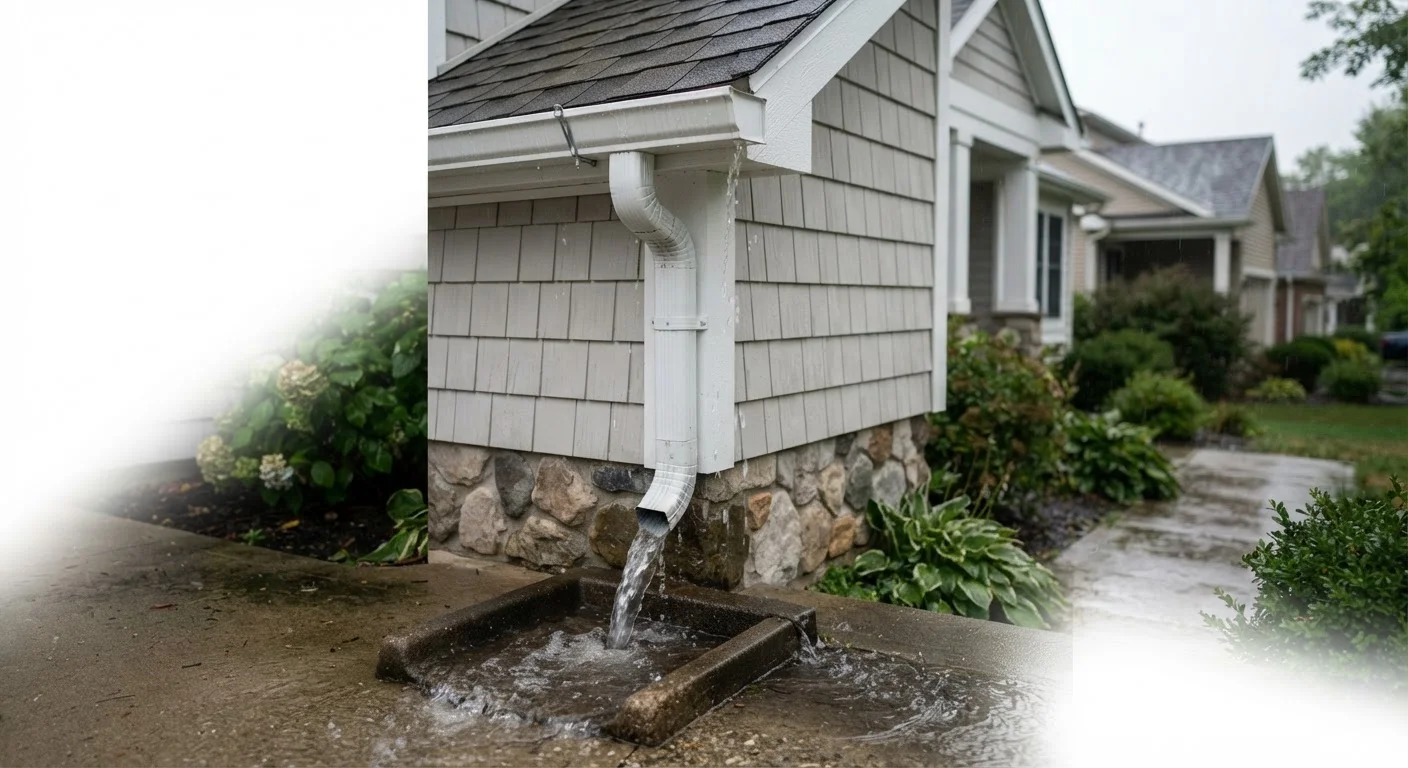
How the System Works as a Whole
Most homeowners think of gutters as a single feature. In practice, water management is a layered system: roof runoff enters the gutters, travels through downspouts, exits at grade level, and then moves away from the house through slope and, in some cases, underground drainage infrastructure. Each handoff point is an opportunity for failure.
When any one component is missing, undersized, blocked, or misdirected, water pools where it should not — against siding, beneath crawlspaces, or at the base of the foundation. Over time, that moisture causes wood rot, mold growth, basement leaks, and in the most serious cases, soil erosion that destabilizes the foundation itself.
Understanding how these systems connect is the first step toward effective preventive care. See our seasonal home maintenance guide for a broader framework of upkeep tasks that protect every system in your home year-round.
$10,000+
Typical cost of foundation repair from water damage
The American Society of Civil Engineers notes that water intrusion is among the leading causes of residential foundation deterioration in the US.
6 inches
Minimum recommended soil slope in 10 feet from foundation
This grading standard is widely cited by building professionals and home inspectors as the baseline for adequate surface drainage.
2x/year
Recommended gutter cleaning frequency
Most home maintenance authorities recommend cleaning gutters at least twice annually — once in spring and once in late fall.
Gutters: Types, Sizing, and Common Failures
Gutters collect rainwater and snowmelt from the roof and channel it toward downspouts. The two most common residential styles are K-style (which has a flat back and decorative front profile) and half-round (a traditional U-shaped trough). K-style gutters are standard on most modern homes; half-round gutters are more common on older or historic properties.
Sizing matters significantly. A standard 5-inch K-style gutter handles moderate rainfall for most residential rooflines, but homes with steep pitches, large roof surface areas, or high-rainfall climates often require 6-inch gutters. Undersized gutters overflow during heavy rain, defeating their purpose entirely.
Common Gutter Problems
- Clogs: Leaf debris, seed pods, and shingle granules accumulate and block flow. Standing water accelerates rust in steel gutters and adds weight that pulls hangers loose.
- Improper pitch: Gutters should slope approximately one quarter inch for every ten feet of run toward the downspout. A level or back-pitched gutter holds water instead of draining it.
- Sagging sections: Hanger failure — from corrosion, ice weight, or age — causes gutters to pull away from the fascia board, creating gaps where water infiltrates behind the gutter.
- Leaking seams: Sectional gutters have joints that can separate or corrode over time; seamless aluminum gutters eliminate most of this risk.
For terminology around gutters, fascia, and related components, the Common Home Maintenance Terms Explained article provides a useful plain-language reference.
Gutter Guards: Useful, But Not Maintenance-Free
Gutter guards and covers can significantly reduce debris accumulation, but they do not eliminate the need for inspection and periodic cleaning. Fine debris such as shingle granules and seed pods can still collect on top of or inside many guard styles. If you install guards, plan to inspect them at least once a year to confirm water is flowing through rather than over them.
Downspouts: Where Water Goes After the Gutter
A downspout's job is deceptively simple: carry water from the gutter to the ground. But where and how that water is discharged determines whether your drainage system succeeds or fails.
Standard guidance calls for downspouts to be placed at least every 40 feet of gutter run and to discharge water a minimum of four to six feet from the foundation. Splash blocks — the sloped concrete or plastic pads placed at the base of downspouts — help direct that initial discharge further from the wall, but they are not sufficient on their own if the surrounding grade does not slope away.
Downspout Extensions and Underground Connections
Simple elbow-and-pipe extensions are the most common and affordable solution for directing flow further from the house. More robust options include flexible underground drainpipes that carry water to a daylight outlet at the edge of the yard or to a dry well. These buried systems are especially useful on properties where surface drainage space is limited. Any underground pipe connection should include a cleanout access point so blockages can be cleared without excavation.
Install a hinged downspout extension that flips up when mowing and down during rain — it keeps discharge away from the foundation without being a tripping hazard on a day-to-day basis.
Fixed extensions are frequently removed or knocked aside by lawn maintenance, defeating their purpose. A hinged version maintains compliance with the drainage plan consistently.
When inspecting gutters, run a garden hose from the far end of each run and watch how quickly water moves to the downspout — sluggish flow reveals pitch problems that visual inspection alone can miss.
Sag and pitch issues are often invisible from below; the hose test reveals functional failures that lead to overflow and standing water inside the gutter.
Downspouts that feed into older underground drains connected to municipal storm systems may be regulated in some jurisdictions. Check local ordinances before making changes to how your downspout terminates.
Yard Drainage and Foundation Protection
Even a perfectly maintained gutter system cannot compensate for inadequate yard grading. Grading refers to the slope of the soil surrounding your home. The general standard is a drop of at least six inches over the first ten feet away from the foundation — enough slope to carry surface water away before it can saturate the soil against the wall.
Over years, soil settles. Landscaping beds trap water. Compacted clay soils resist absorption and redirect flow toward the house. These are gradual changes that many homeowners don't notice until water appears in the basement or crawlspace.
Drainage Solutions for Problem Areas
- Swales
- Shallow, grass-lined channels that redirect surface water around or away from structures. Low-cost and effective for moderate drainage challenges.
- French drains
- Perforated pipe buried in a gravel trench that captures subsurface water and carries it to a discharge point. Effective for persistently wet areas but requires careful installation to avoid creating new problems.
- Dry wells
- Underground chambers that collect runoff and allow it to percolate slowly into surrounding soil. Useful where surface discharge is impractical.
Foundation waterproofing — whether applied to exterior walls or managed through interior drainage systems — is a separate and more involved category of work. If you are seeing water intrusion inside the foundation walls, consult a licensed waterproofing contractor rather than treating it as a simple drainage correction.
Don't Discharge Water Toward Neighbor's Property
Redirecting runoff through swales, extensions, or drainage pipes must account for where that water ultimately goes. Channeling increased flow toward a neighboring property or public right-of-way may violate local ordinances and create liability. Always confirm discharge points with your local municipality before modifying drainage patterns.
Maintenance Schedule and Warning Signs
Preventive maintenance is straightforward once you establish a routine. The following schedule covers the basics for most residential properties:
- Spring: Clean gutters after pollen season and following any late-season tree debris. Inspect downspout connections and confirm splash blocks are properly positioned after winter frost heaving.
- Fall: Clean gutters after the majority of leaves have fallen — typically late October through November depending on your region. Inspect for sagging, hanger failures, and seam separations before winter rain and ice loads arrive.
- After major storms: Check for debris blockages and confirm downspouts are clear and flowing.
Warning Signs That Need Attention
- Water staining or rot on fascia boards behind the gutter
- Gutters visibly pulling away from the roofline
- Erosion channels in soil directly beneath downspout outlets
- Basement dampness or efflorescence (white mineral deposits) on foundation walls
- Pooling water within two feet of the foundation after rain
- Peeling paint or mold on exterior siding near ground level
Our weatherproofing guide covers additional steps to take before winter, including checking that drainage paths are clear before freeze-thaw cycles begin.
Gutter Cleaning Frequency Varies by Site
Homes surrounded by mature deciduous trees — especially pine, sweet gum, or oak — may need gutter cleaning three or four times per year rather than twice. Properties in low-tree areas with asphalt shingle roofs should still inspect annually for shingle granule buildup, which can silently accumulate and reduce flow capacity over time.
When to Call a Professional
Many gutter cleaning and minor repair tasks are within reach for a confident homeowner with a stable ladder and the right tools. However, several scenarios call for a licensed contractor:
- Rerouting or adding downspouts on multi-story homes where ladder work is high-risk
- Installing French drains or underground drainage systems, which require proper grading, pipe slope, and sometimes permits
- Regrading around the foundation, particularly if it involves moving significant soil volume or working near utility lines
- Any signs of foundation movement — cracks in the foundation wall, sticking doors, or uneven floors — should be evaluated by a structural engineer before addressing drainage
Roof-level gutter work is also directly connected to roof condition. Loose gutters can damage fascia and soffit; and blocked gutters contribute to ice dam formation in cold climates. Our annual roof inspection guide explains what to look for in that zone as part of your yearly walkthrough.
Understanding your home's plumbing system also provides useful context — particularly if downspouts connect to interior drain lines. The plumbing basics guide offers a grounded introduction to how residential water systems work.
“Water is the single most destructive force acting on a residential structure over time. The good news is that most water-related damage is preventable with consistent attention to where water goes when it leaves the roof.”
— National Association of Home Inspectors, Professional standards body for residential home inspection
This article is for general informational and educational purposes only. Costs, local code requirements, and appropriate solutions vary by region and property. Consult a licensed contractor or structural professional for advice specific to your home's conditions.
The content on this site is for informational purposes only and is not a substitute for professional advice. Always consult a qualified professional for guidance specific to your situation.