

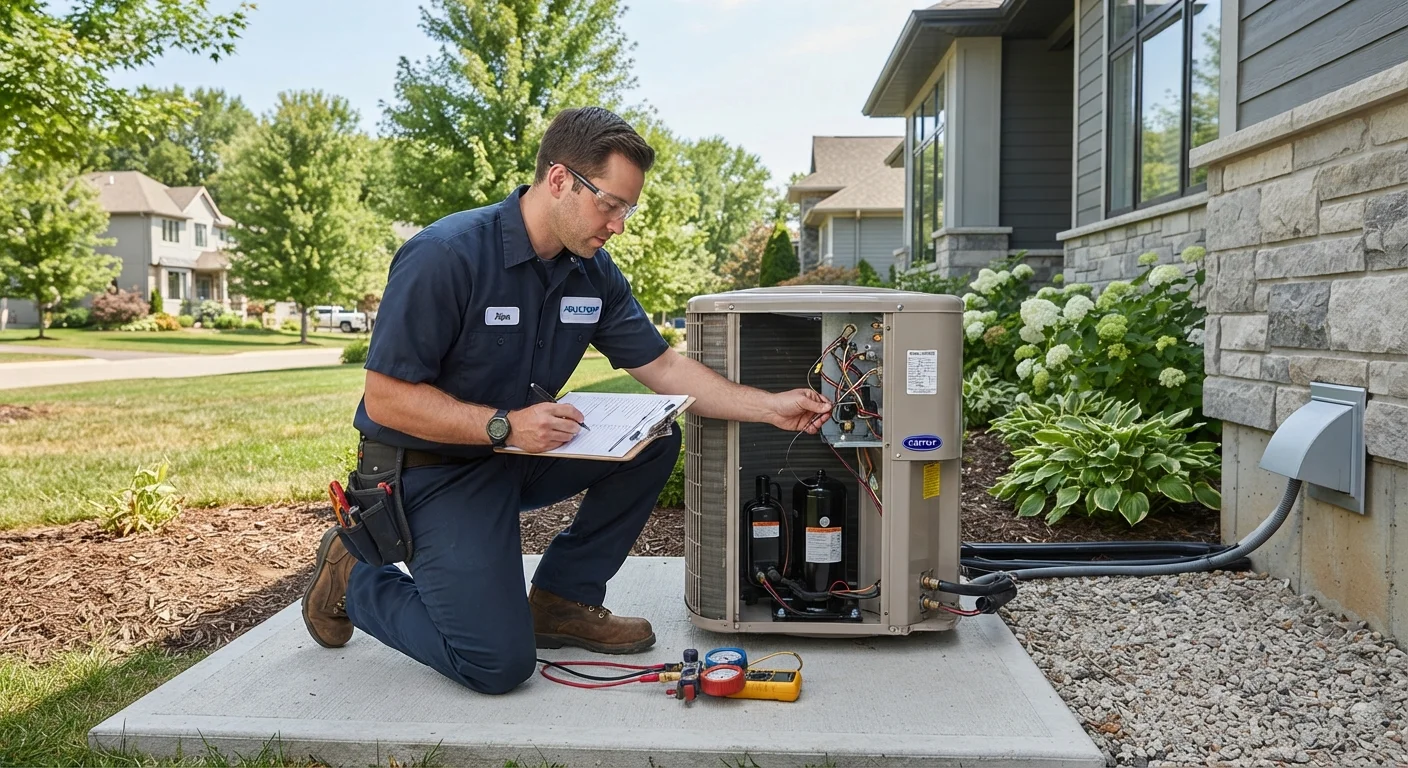
Why HVAC Myths Cost Homeowners Money
Your heating and cooling system accounts for roughly half of your home's total energy use — making it one of the most consequential systems to maintain correctly. Yet well-intentioned but inaccurate advice leads many homeowners to skip critical tasks or adopt habits that quietly shorten equipment lifespan and inflate utility bills.
The myths below are among the most common misconceptions the Home & Real Estate Editorial Team encounters. Clearing them up is the first step toward smarter, more cost-effective home upkeep. For a broader look at how HVAC maintenance fits into your overall routine, see our seasonal home maintenance calendar.
Myth
You only need to change your air filter once a year — or whenever you remember.
Fact
Most households should replace standard 1-inch filters every one to three months, depending on use, pets, and indoor air quality.
A clogged filter forces the blower motor to work harder, restricts airflow across the evaporator coil, and can cause the system to overheat or freeze up. Over time, the added strain accelerates mechanical wear. Thicker media filters (4–5 inches) may last longer, but even these have a recommended replacement interval set by the manufacturer. Check your filter monthly and replace it before it becomes visibly gray or compacted.
Myth
Closing vents in rooms you don't use saves energy and reduces wear on the system.
Fact
Closing supply vents increases static pressure in the duct system, which can damage the blower, cause duct leaks, and actually raise energy costs.
Central HVAC systems are designed and balanced for a specific total airflow. When you close vents, the air has nowhere to go — pressure builds, duct seams flex and separate, and the system runs less efficiently. In some cases, excess pressure can push unconditioned air from attics or crawl spaces into the living area through gaps in ductwork. Leave all supply and return vents open and unobstructed by furniture or rugs.
Myth
If the system is blowing air and the house feels comfortable, no maintenance is needed.
Fact
Many HVAC issues — low refrigerant, dirty coils, weak capacitors — develop silently and only become apparent when the system fails, often at the worst time.
Comfort is not the same as efficiency or mechanical health. A system running with low refrigerant will still cool your home initially, but it works harder, consumes more electricity, and risks compressor burnout. Dirty evaporator and condenser coils reduce heat-transfer efficiency measurably before you notice any change in comfort. Annual professional inspections exist precisely to catch these hidden degradation patterns before they compound into major repairs.
Myth
A brand-new HVAC system doesn't need maintenance for the first few years.
Fact
New systems require regular maintenance from day one to perform as rated, maintain efficiency, and preserve manufacturer warranty coverage.
Most manufacturer warranties include a clause requiring documented professional maintenance on a defined schedule. Skipping early tune-ups can void warranty coverage if a component fails. Beyond the warranty, new equipment still accumulates dust on coils, requires periodic filter changes, and benefits from having refrigerant charge verified after the first full cooling season. Starting good habits early is far less expensive than repairing problems that could have been prevented.
Myth
Setting the thermostat to a very low temperature cools your home faster.
Fact
HVAC systems cool at a fixed rate regardless of thermostat setting; cranking it lower only makes the system run longer, not faster.
A central air conditioner removes heat at a rate determined by its capacity and the conditions inside the home — not the thermostat set point. Setting the thermostat to 60°F instead of 72°F won't accelerate cooling; it simply means the system runs until it reaches 60°F, consuming more energy and adding runtime hours. Using a programmable or smart thermostat to pre-cool before peak hours is a more efficient strategy than aggressive manual adjustments.
What Good HVAC Maintenance Actually Looks Like
Understanding the myths is only half the work. Building a consistent maintenance habit is what protects your investment over the long haul.
~50%
Share of home energy use from heating and cooling
The U.S. Department of Energy estimates that heating and cooling account for approximately half of a typical American home's total energy expenditure.
25%
Potential energy waste from a dirty or clogged filter
The U.S. Department of Energy notes that a neglected air filter can increase energy consumption by up to 15–25% by restricting airflow and forcing the system to work harder.
A reliable baseline includes replacing filters on a schedule matched to your household conditions (pets, allergies, and dusty climates all shorten filter life), scheduling one professional tune-up per year for each system, keeping outdoor condenser coils clear of debris, and ensuring supply and return vents remain open and unobstructed throughout the home.
It's also worth knowing that poor attic performance directly affects how hard your HVAC system works. Our guide on attic ventilation and insulation explains how these systems interact and where gaps commonly appear.
Don't Attempt Refrigerant Work Yourself
Handling refrigerant requires EPA Section 608 certification and specialized equipment. Attempting to add or recover refrigerant without proper credentials is illegal under federal regulations and can damage your compressor. Always hire a licensed HVAC technician for any work involving refrigerant lines, charge verification, or leak repair.
Finally, neglected maintenance can have consequences beyond equipment failure. Skipping documented upkeep tasks may affect your ability to file a successful home insurance claim. Our article on maintenance oversights that can void coverage outlines which gaps insurers look at most closely.
The content on this site is for informational purposes only and is not a substitute for professional advice. Always consult a qualified professional for guidance specific to your situation.