

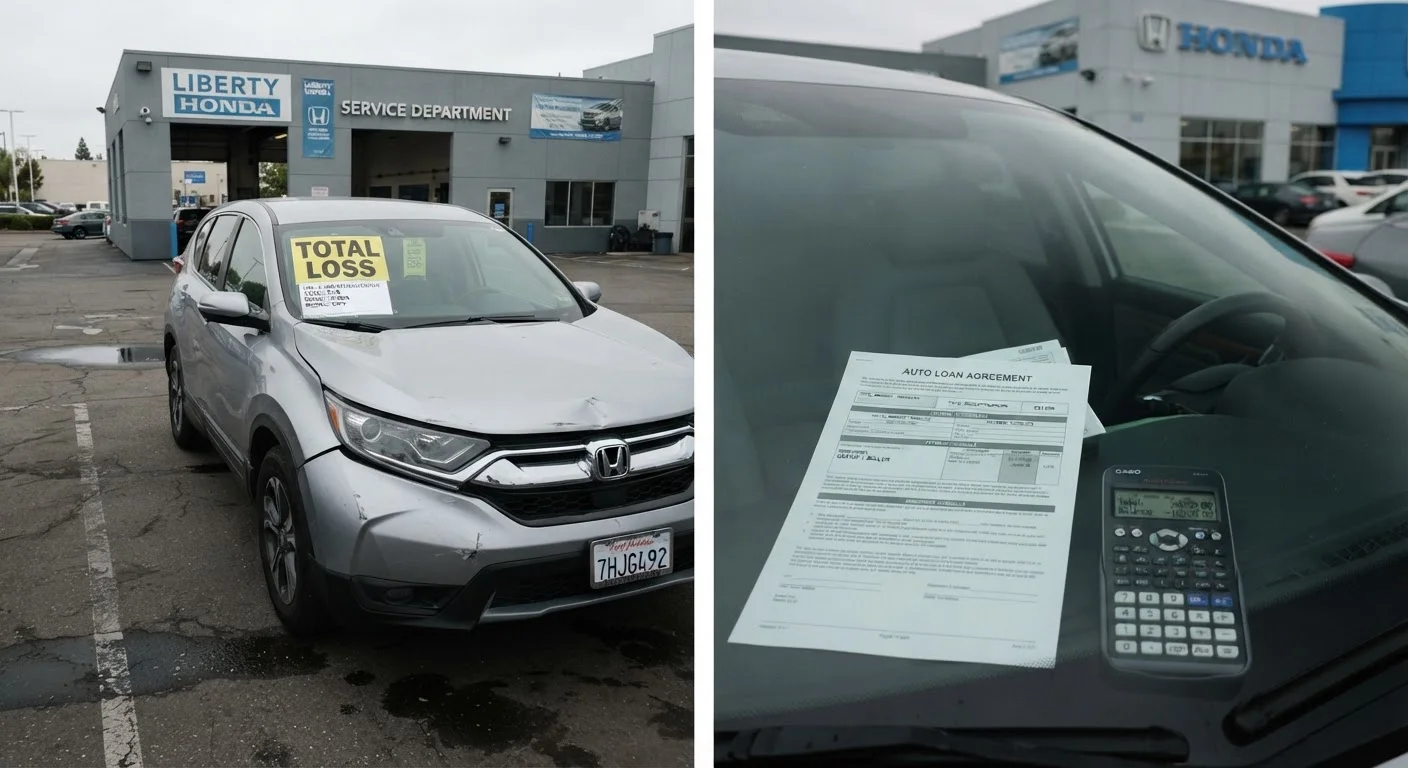
Why Standard Auto Insurance Isn't Always Enough
Most drivers know that collision and comprehensive coverage pay out when a car is totaled or stolen. What many don't realize is that these policies pay based on the vehicle's actual cash value (ACV) — its current market value at the time of the loss, not what you originally paid or what you still owe.
New vehicles depreciate quickly. A car can lose 15–20% of its value within the first year alone. If you financed a vehicle with a small down payment, stretched the loan over five or six years, or rolled negative equity from a previous loan into the new one, there's a real chance your loan balance will exceed the car's ACV for a meaningful stretch of time.
That gap — between what your insurer pays and what you owe your lender — comes out of your pocket unless you have gap insurance. See our breakdown of auto insurance coverage types for a full picture of how standard policies are structured.
15–20%
Typical first-year vehicle depreciation rate
Industry estimates consistently place new vehicle depreciation in this range during the first 12 months of ownership, creating an immediate gap for buyers with minimal down payments.
~70%
New car buyers who finance their purchase
According to Experian's State of the Automotive Finance Market reports, the large majority of new vehicle purchases in the U.S. involve financing, making loan-balance exposure a common concern.
How Gap Insurance Works in Practice
Gap insurance is straightforward in concept. If your car is declared a total loss, here's how the math typically plays out:
- Your primary insurer pays out the vehicle's actual cash value, minus your deductible.
- Your lender applies that payment toward your remaining loan balance.
- If a balance still remains after that payment, gap insurance covers it — up to the limits of the policy.
It's important to understand what gap insurance does not cover. It generally won't pay your deductible, cover missed loan payments, apply to mechanical repairs, or extend to a replacement vehicle. It is narrowly designed to eliminate the loan shortfall after a total loss or theft claim.
For a broader look at where standard auto policies leave drivers exposed, see what auto insurance actually covers and where it stops.
Check Your Loan Balance vs. Car Value Periodically
You can estimate your vehicle's current market value using resources like the Kelley Blue Book or NADA Guides, then compare it to your remaining loan balance. When the loan balance consistently falls below the car's value, gap coverage no longer provides meaningful protection and can typically be dropped.
Who Is Most Likely to Benefit
Gap insurance isn't necessary for every driver. Its value depends largely on the relationship between your loan balance and your vehicle's market value at any given time. You may want to consider it if:
- You made a down payment of less than 20% on a new vehicle.
- Your loan term is 60 months or longer.
- You're leasing — many lease agreements require gap coverage, and some include it automatically.
- You rolled negative equity from a previous vehicle into your current loan.
- You purchased a vehicle that depreciates rapidly.
Conversely, if you paid cash or put down a substantial down payment, or if your loan is nearly paid off, gap coverage likely provides little to no practical benefit. The coverage gaps drivers often overlook include gap insurance alongside other commonly missed protections worth reviewing.
Where to Get It and What to Watch For
Gap coverage is available through three main channels: your auto insurer as a policy endorsement, your lender or bank, or the dealership at the time of purchase. Each comes with different pricing structures and terms.
Adding gap coverage through an auto insurer tends to be the most cost-flexible option, as it's typically priced as a modest addition to an existing collision premium and can be cancelled when it's no longer needed. Dealership-offered gap products are often bundled into the financing and paid over the life of the loan, sometimes at a higher total cost.
Regardless of where you purchase it, read the policy terms carefully. Pay attention to coverage caps — some gap policies cap the payout at a percentage over the vehicle's ACV, which matters if you're significantly upside-down on a loan. Also note whether the policy includes a deductible waiver.
For drivers with specialized vehicles, it's worth knowing that similar considerations apply to other vehicle types. Our article on what RV insurance actually covers explores how coverage gaps show up in that context too.
This article is for general informational purposes only and does not constitute personalized insurance, financial, or legal advice. Coverage terms, eligibility, and availability vary by provider and state. Always read your actual policy documents and consult a licensed insurance agent or adviser for guidance specific to your situation.
Frequently Asked Questions
No state requires gap insurance by law. However, some lenders or leasing companies may require it as a condition of financing. Always review your loan or lease agreement to see if it's contractually obligated.
Gap insurance typically does not cover your collision or comprehensive deductible. Your out-of-pocket deductible is subtracted from your primary payout first, and gap coverage then addresses the remaining shortfall between that payout and your loan balance. Some specialized gap products do include a deductible waiver, but this varies by provider.
Gap insurance loses its practical value once your loan balance falls below the vehicle's current market value. At that point, a total-loss payout would exceed what you owe, eliminating any financial gap. Many drivers find this happens within two to three years of purchase, depending on the loan term and vehicle depreciation rate.
Yes, gap coverage generally applies if your car is stolen and declared a total loss after a set period — typically 30 days — without recovery. Your comprehensive coverage pays the actual cash value first, and gap covers any remaining loan balance beyond that amount.
In most cases, yes. If you purchased gap coverage through your auto insurer as a policy add-on, you can typically remove it when your loan balance no longer exceeds the car's value. If you paid for it upfront through a dealership, you may be entitled to a prorated refund — check your contract for cancellation terms.
The content on this site is for informational purposes only and is not a substitute for professional advice. Always consult a qualified professional for guidance specific to your situation.