

The Core Coverages in a Standard Auto Policy
A personal auto insurance policy is not a single blanket protection — it is a bundle of separate coverage types, each triggered by different circumstances. Understanding each component is the first step to knowing where you are actually protected.
The most common components found in U.S. personal auto policies include:
- Liability coverage — pays for injuries and property damage you cause to others
- Collision coverage — pays to repair or replace your vehicle after a crash, regardless of fault
- Comprehensive coverage — pays for vehicle damage from non-collision events such as theft, fire, or hail
- Medical payments (MedPay) or Personal Injury Protection (PIP) — covers medical costs for you and your passengers after an accident
- Uninsured/Underinsured Motorist (UM/UIM) coverage — protects you when the at-fault driver has no insurance or insufficient coverage
Not every policy includes all of these. Some are legally required; others are optional add-ons. The combination you carry — and the dollar limits attached to each — determines what your policy will actually do when you file a claim.
~13%
Estimated share of U.S. drivers who are uninsured
According to the Insurance Research Council, roughly one in eight drivers on U.S. roads carries no auto insurance.
50+
Different state minimum liability requirements
Each U.S. state sets its own mandatory minimum liability limits, creating significant variation in baseline coverage across the country.
~20%
Drivers carrying only liability coverage
Industry estimates suggest a notable share of insured drivers carry liability-only policies, leaving their own vehicles unprotected.
What Liability Coverage Pays For
Liability is the foundation of almost every auto policy in the United States. Every state requires some minimum level of it, though requirements vary considerably. See our guide to state minimum requirements for a breakdown of what those floors actually mean in practice.
Liability coverage is split into two parts:
- Bodily injury liability
- Pays for the medical expenses, lost wages, and legal costs of people you injure in an at-fault accident. It does not pay your own medical bills.
- Property damage liability
- Pays to repair or replace another person's vehicle or property you damaged. It does not pay to fix your own car.
Liability limits are typically expressed as three numbers — for example, 25/50/25 — representing the per-person bodily injury limit, the per-accident bodily injury limit, and the property damage limit, all in thousands of dollars. Meeting a state minimum is a legal obligation, not a guarantee of adequate protection. A serious accident can easily exceed those limits, leaving you personally responsible for the remainder.
Liability Limits Can Leave You Exposed
State minimums are legal requirements, not protection benchmarks. A single serious accident with injuries can generate medical and legal costs well into six figures. If your liability limits are exhausted, your personal assets — savings, wages, property — may be at risk for the remaining balance. Most insurance professionals suggest evaluating limits well above the state minimum for this reason.
Collision and Comprehensive: Your Vehicle's Protection
While liability protects others, collision and comprehensive coverage protect your own vehicle. These are distinct coverages that address different types of damage.
Collision coverage applies when your car is damaged in an accident involving another vehicle or object — a guardrail, a telephone pole, or a parking lot barrier. It pays the repair cost up to your vehicle's actual cash value (ACV), minus your deductible. ACV reflects depreciation, which means an older vehicle may receive a payout lower than what you expect.
Comprehensive coverage handles damage from events outside of driving collisions: weather events, falling objects, theft, vandalism, or contact with an animal. Like collision, it pays up to ACV minus your deductible.
Neither coverage is legally mandated by states, but if you are financing or leasing your vehicle, your lender almost certainly requires both. Once a vehicle is paid off, drivers sometimes drop one or both — a calculation that depends on the vehicle's value versus the combined cost of premiums and deductible.
When comparing deductible options, calculate how long it would take your premium savings to offset the higher deductible amount — if that break-even point exceeds two or three years, a lower deductible may serve you better.
A higher deductible reduces your premium but increases your out-of-pocket cost at claim time. This simple calculation helps calibrate that trade-off based on your own savings cushion.
Review your coverage limits every time you make a major financial change — paying off a car, adding a teen driver, or starting a side gig that involves driving — rather than waiting for annual renewal.
Life changes routinely create coverage gaps that renewal reviews alone don't catch in time; proactive check-ins align your policy with your actual risk exposure.
Where Standard Auto Policies Fall Short
The most consequential coverage gaps tend to appear in situations drivers assume are covered — but aren't.
Gap between loan balance and vehicle value: If your car is totaled and you owe more on the loan than the ACV payout, you are responsible for the difference. Gap insurance addresses this, and it is worth understanding when it applies. See our explainer on gap insurance for details.
Rental car costs during repairs: Standard policies do not automatically include rental reimbursement coverage. Without it, you pay out of pocket while your car is in the shop.
Rideshare and delivery driving: Using your personal vehicle for rideshare or delivery services typically falls into a coverage gap between your personal policy and the app company's commercial coverage. Many personal policies exclude commercial-use incidents unless you have a specific endorsement.
Uninsured drivers: Your liability coverage offers no protection if an uninsured driver hits you. That is the role of UM/UIM coverage, which is explored in depth in our guide to uninsured and underinsured motorist coverage.
For a comprehensive look at these and other common blind spots, see our article on gaps drivers often overlook. And if you want to separate fact from common misconceptions about auto coverage, our auto insurance myths guide is a useful companion read.
Rideshare and Delivery Use Can Void Coverage
Using your personal vehicle for rideshare or delivery platforms creates a coverage gap that catches many drivers off guard. Personal auto policies typically exclude incidents that occur while the vehicle is being used for commercial purposes. If you drive for a platform, check whether your policy includes a rideshare endorsement or whether a separate commercial policy is needed. Assuming your existing policy covers all driving scenarios is one of the most common and costly mistakes.
How to Read Your Policy Before a Problem Arises
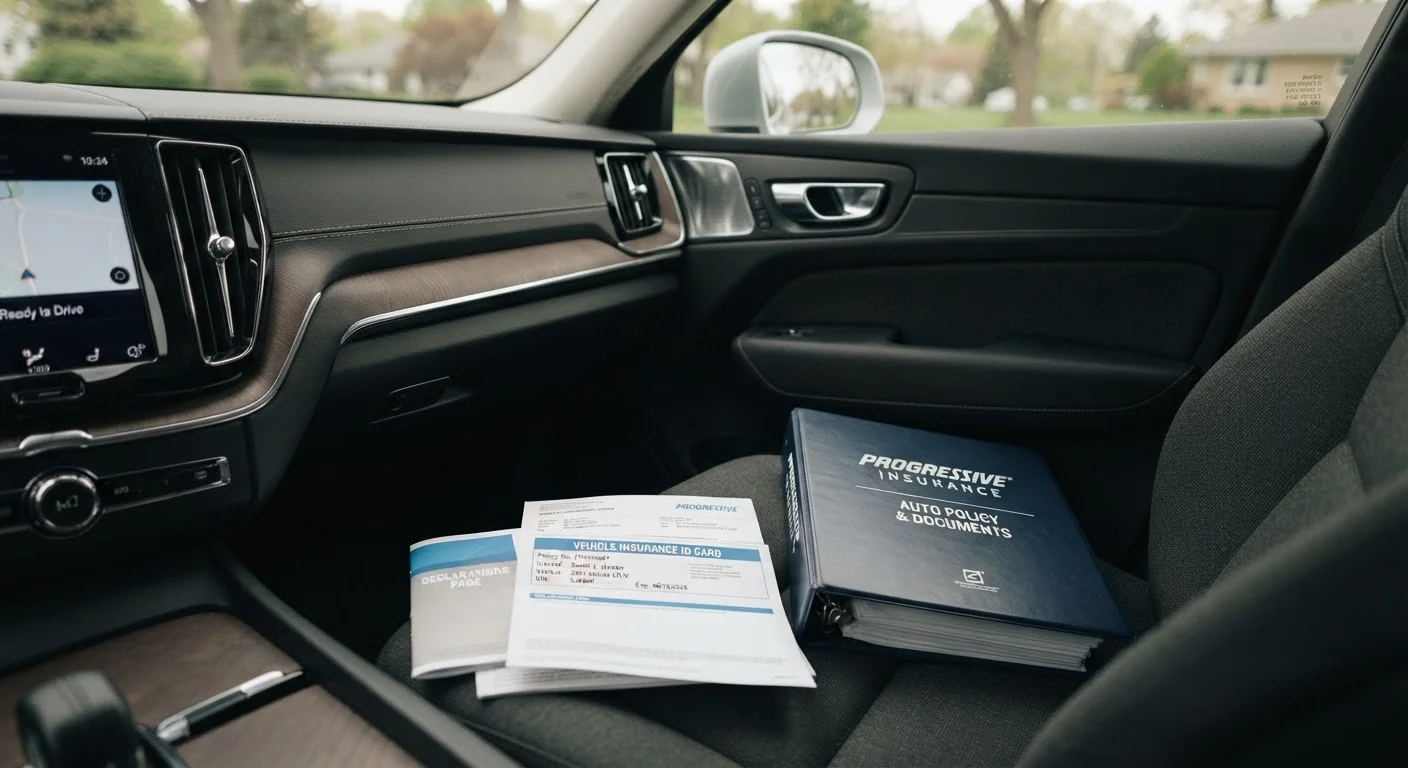
Your declarations page — sometimes called the dec page — is the single-page summary of every coverage type you carry, the limits attached to each, and your deductibles. It is the first document to review after any purchase or renewal. Our guide to reading your declarations page walks through every line item and how to spot errors before they matter.
Beyond the dec page, the full policy document contains the exclusions section — the legally binding list of what is not covered. Common exclusions include intentional damage, using a personal vehicle for business purposes, and driving outside the U.S. without specific endorsements.
Check Your Policy's Exclusions Section
Many coverage surprises come not from missing coverages but from unread exclusions. The exclusions section of your policy document — not just the declarations page — specifies exactly what your insurer will not pay for. Reading it once, when you are not under the stress of a claim, is one of the most practical steps you can take to understand your actual protection.
If you own an RV or a classic vehicle, be aware that standard auto policies typically do not apply. Those vehicles carry their own coverage structures, as detailed in our RV insurance guide and our classic car insurance explainer.
This article is for general informational purposes only and does not constitute personalised insurance, financial, or legal advice. Coverage terms, exclusions, and requirements vary by insurer and by state. Always read your full policy documents and consult a licensed insurance professional for guidance specific to your situation.
The content on this site is for informational purposes only and is not a substitute for professional advice. Always consult a qualified professional for guidance specific to your situation.